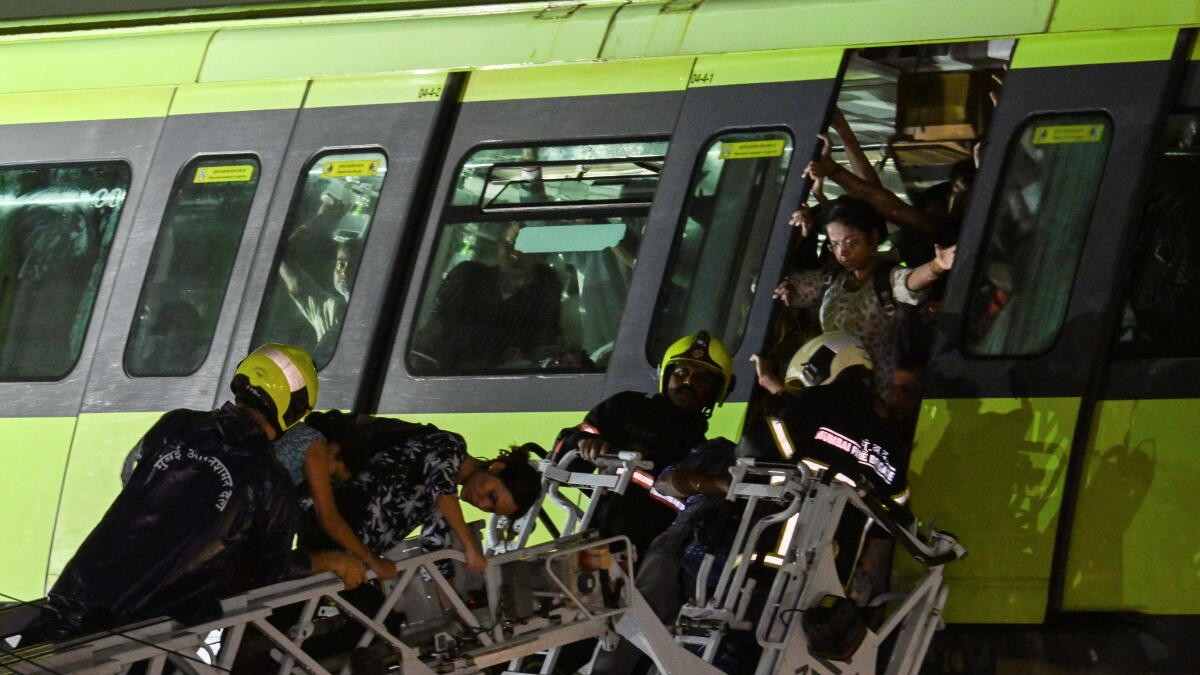
Mumbai’s transport network came under sharp scrutiny this week after a major disruption on the Monorail system left nearly 800 passengers stranded during torrential rains, exposing serious gaps in operational safety and emergency preparedness. The episode has triggered a high-level inquiry by the city’s transport authority, along with swift disciplinary action against senior officials linked to the incident.
The disruption occurred on 19 August, when a technical malfunction halted Monorail services between Mysore Colony and Bhakti Park, trapping 582 commuters mid-route. Rescue teams were deployed to evacuate passengers, while another 200 stranded individuals on a separate train were towed back safely to Wadala station. Although no casualties were reported, the incident stirred widespread concern over the reliability of a system that was once billed as a sustainable, congestion-easing solution for Mumbai.
Officials confirmed that two senior managers responsible for signal systems and commuter safety have been suspended pending investigation. A specially constituted committee of experts, led by senior bureaucratic leadership, has been tasked with examining operational lapses and proposing corrective measures. The review will focus on adherence to standard operating procedures, emergency drills, and overall system resilience under extreme weather stressan increasingly frequent challenge for Mumbai.
Transport analysts note that the Monorail, launched as an eco-friendly urban transit alternative, has long struggled to establish itself as a reliable commuting mode. Frequent breakdowns, patchy ridership, and cost overruns have clouded its promise. The August disruption, however, stands out for its scale, drawing attention not just to technical shortcomings but also to governance and accountability within the operating authority.The mishap also sparks wider questions about how India’s megacities can safeguard investments in sustainable transport infrastructure.
With climate change intensifying extreme rainfall events, the resilience of systems like the Monorail, Metro, and suburban rail becomes critical to ensuring equitable and safe urban mobility. Experts argue that without strong maintenance frameworks, disaster preparedness, and accountability mechanisms, the promise of green transport risks being undermined.While the inquiry proceeds, commuters remain wary. The Monorail, though intended to reduce congestion and pollution, has seen limited trust from passengers due to its inconsistent service. This latest breakdown risks further eroding public confidence unless reforms are implemented swiftly. The coming weeks will reveal whether the inquiry results in systemic course correction or remains another episode of temporary damage control.
For Mumbai, a city striving to balance growth with sustainability, the Monorail episode is a stark reminder that building eco-friendly infrastructure is only the first step; ensuring its safe, equitable, and reliable operation is the real test.
Mumbai Monorail Mishap Strands 782 Passengers, Sparks Inquiry And Suspensions