


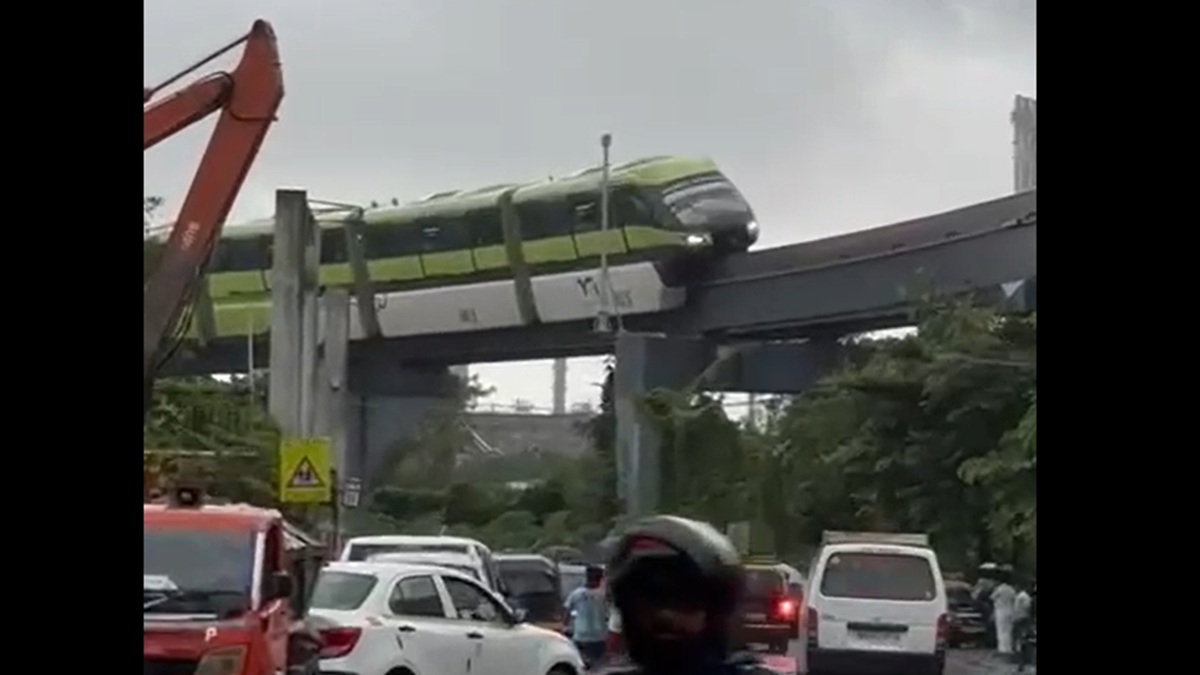
Mumbai’s troubled monorail project has once again hit a crisis point, with experts urging authorities to scrap the system entirely and replace it with more sustainable transport alternatives. The call comes after over 500 passengers were stranded mid-air when a train broke down earlier this week, reviving questions about the project’s design, efficiency, and viability.
According to transport analysts, the monorail was never designed to handle peak-hour rush or the city’s daily commuter demand. Officials admitted that the stalled train was carrying 109 tonnes—beyond its rated capacity of 104 tonnes—triggering a mechanical failure that cut power and immobilised services. The situation worsened when a second train brought in to tow it also failed. Stranded commuters were left in stifling conditions, reigniting concerns about both safety and accountability. Civic activists have argued that commuters should demand compensation for the ordeal. Citing international practices, they note that advanced transit systems offer fare refunds or even public apologies for delays as short as a minute. They insist that Mumbai commuters should not be left to bear the brunt of poor planning.
Experts say the problem lies not in accidents, but in the system’s very design. The monorail, they argue, was introduced as a prestige project rather than a practical mobility solution. While it was pitched as a modern supplement to the overburdened suburban rail network, ridership has remained far below expectations. Despite an investment of more than ₹3,000 crore, the monorail carries barely a fraction of its intended passenger load, leaving taxpayers to fund its operations. Urban mobility specialists have suggested repurposing the elevated corridor into a Bus Rapid Transit System (BRTS). According to them, a BRTS would provide immediate, efficient, and low-cost mobility, while also reducing carbon emissions and fuel consumption. They point to successful bus lane experiments in other parts of Mumbai, where dedicated lanes enabled faster commutes compared to cars. Experts stress that a well-managed bus system could serve more passengers, reduce congestion, and align better with the city’s sustainability goals.
Meanwhile, officials have announced a series of short-term and long-term measures to prevent further mishaps. Passenger loads will be strictly monitored, additional staff will be deployed on trains, ventilation windows are being reviewed, and safety signage is being enhanced. Ten new rakes are also under trial to strengthen the fleet. While these measures may offer temporary relief, experts argue they do little to address the systemic flaws that have plagued the monorail since its inception. For a city that depends on mass transit, the debate over the monorail highlights a broader question—should investments be directed towards costly, underperforming projects, or towards efficient, sustainable systems that genuinely ease daily commuting? For now, the monorail continues to run, but public patience and expert opinion suggest its days may be numbered.
Also Read : BMC Gets Three Applications Seeking Removal Of Pigeon Feeding Ban Across Mumbai Areas
