


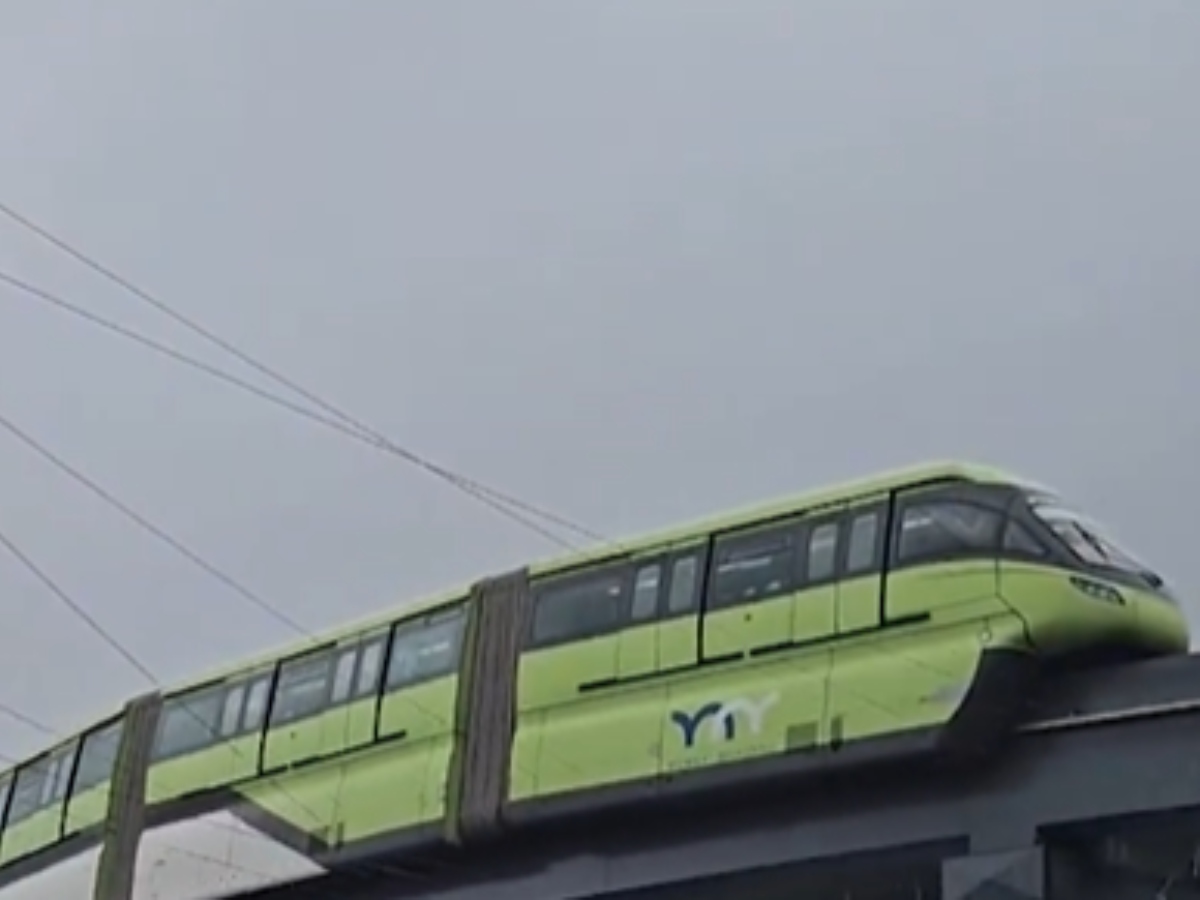
Mumbai’s already stretched urban transport network faced another blow this week as two monorail trains were forced out of service during peak hours, leaving hundreds of commuters stranded. The incident occurred on a day when torrential rain and large public protests had already crippled road and rail connectivity across the city, pushing more passengers to rely on the monorail.
Officials confirmed that at 8.22 am, a rake travelling from Chembur to Wadala developed a traction motor fault and was moved to the depot for inspection. Passengers were asked to alight and board the next train. Barely half an hour later, another rake at the same station was withdrawn due to abnormal mechanical noise, once again disrupting passenger flow. Both trains were restored to service within an hour, but not before significant delays left commuters frustrated. The Mumbai Monorail currently operates with just five rakes, leading to a standard frequency of 22–25 minutes. When two trains were pulled out simultaneously, the frequency dropped to nearly an hour, causing bottlenecks at stations. Experts noted that in a city where over 75 lakh daily commuters rely on suburban and alternative networks, such service interruptions not only affect passenger convenience but also undermine public confidence in sustainable transport systems.
Officials from the operating agency explained that these interruptions were precautionary safety measures, ensuring that any fault was immediately addressed to avoid risk to passengers. They emphasised that rectification was completed swiftly and that services resumed within a short window. However, frequent glitches continue to highlight the fragile state of the system, which was once envisioned as a modern and eco-friendly transit alternative for Mumbai’s congested corridors. Seven newly acquired rakes are currently stationed at Wadala Depot and undergoing safety trials. At least two of them are expected to join active service by October. Transport planners believe this could bring much-needed relief to commuters, cutting waiting times and easing operational stress on the existing fleet. Yet, until certification and deployment are complete, the monorail remains vulnerable to recurring disruption.
Recent months have seen multiple incidents that have raised concerns about the reliability of the monorail. Earlier in August, over a thousand passengers had to be rescued when two overcrowded trains halted between stations during a rainstorm. Days later, another service was interrupted due to overloading, forcing passengers to deboard mid-journey. While officials continue to assure commuters of safety-first operations, urban mobility experts argue that the system requires urgent structural upgrades and consistent maintenance if it is to play a meaningful role in Mumbai’s sustainable transport future. The city’s shift towards green, efficient, and equitable public transport cannot be achieved if monorail services remain irregular and unpredictable. For daily commuters, the promise of faster, safer, and cleaner travel continues to feel more like an aspiration than reality.
Also Read: Undri to get its first public garden as PMC clears development plans
