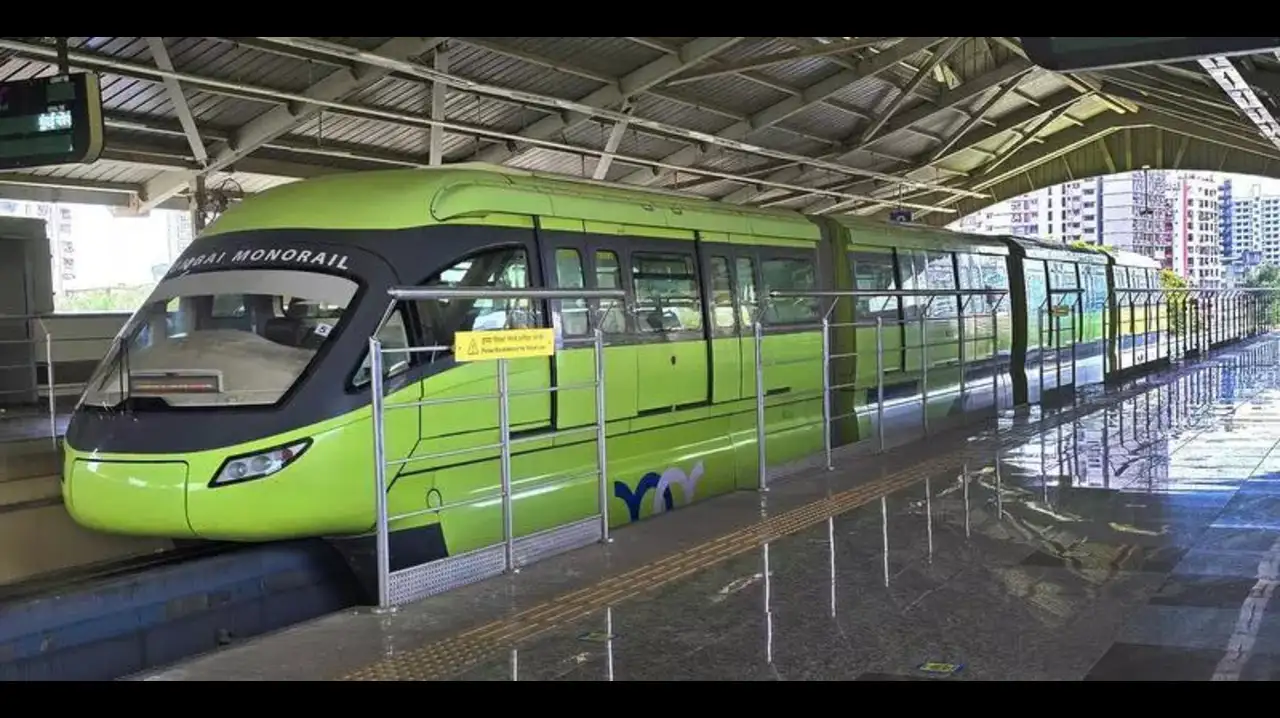
Mumbai Monorail delay Raises Questions On Transport Investment
Mumbai’s ambition of offering modern, sustainable transport through the country’s only monorail has once again been overshadowed by delays, cost overruns and questions of accountability. Despite an outlay of nearly ₹580 crore towards a new fleet of advanced trains, commuters continue to wait for relief as technical clearances and certification hurdles push the project further behind schedule.
The city’s monorail system, introduced with great promise in 2014, was designed to complement suburban rail and metro services. Yet, its limited reach and absence of strong integration with major stations have kept ridership low. This week, when heavy rains disrupted suburban rail, passengers turned to the monorail, only to find one of the older trains stalling mid-route. Passengers were forced to evacuate in unsafe conditions, raising concerns about both reliability and safety.
According to senior officials, the new rakes built on advanced European technology are awaiting extensive trials and regulatory certification before induction. While these trains are designed with driverless features, upgraded engines, and computerised safety systems, they remain out of reach for the public. The delay, experts say, highlights the growing disconnect between infrastructure investment and delivery timelines.
The operational fleet today is reduced to seven trains, most of which are over a decade old. Engineers confirm that these rakes, procured in 2013, are technologically outdated, making maintenance both costly and challenging. With passenger demand rising during weather-related rail disruptions, the absence of additional capacity exposes the fragility of Mumbai’s urban mobility network. Urban transport planners argue that beyond procurement delays, the larger challenge lies in policy vision. The monorail has never been fully integrated with other modes of mass transit in the city. Unlike the metro, which now connects with key railway hubs, the monorail’s isolation limits its potential. “The delay is not just about new trains. It is about the failure to create a seamless, sustainable transport network,” said an independent transport researcher.
For a city grappling with rising pollution, carbon emissions, and mounting road congestion, the setbacks also cast doubt on its ability to transition to climate-friendly mobility. Investments in cleaner technologies lose impact if projects are delayed indefinitely, leaving commuters dependent on outdated systems. Officials maintain that trials of the new fleet will intensify in coming months. However, with certification and infrastructure modifications still pending, there is little clarity on when commuters will benefit. For citizens, the wait symbolises more than just technical delays—it is a reflection of missed opportunities in building an efficient, equitable and eco-friendly urban transport system.