


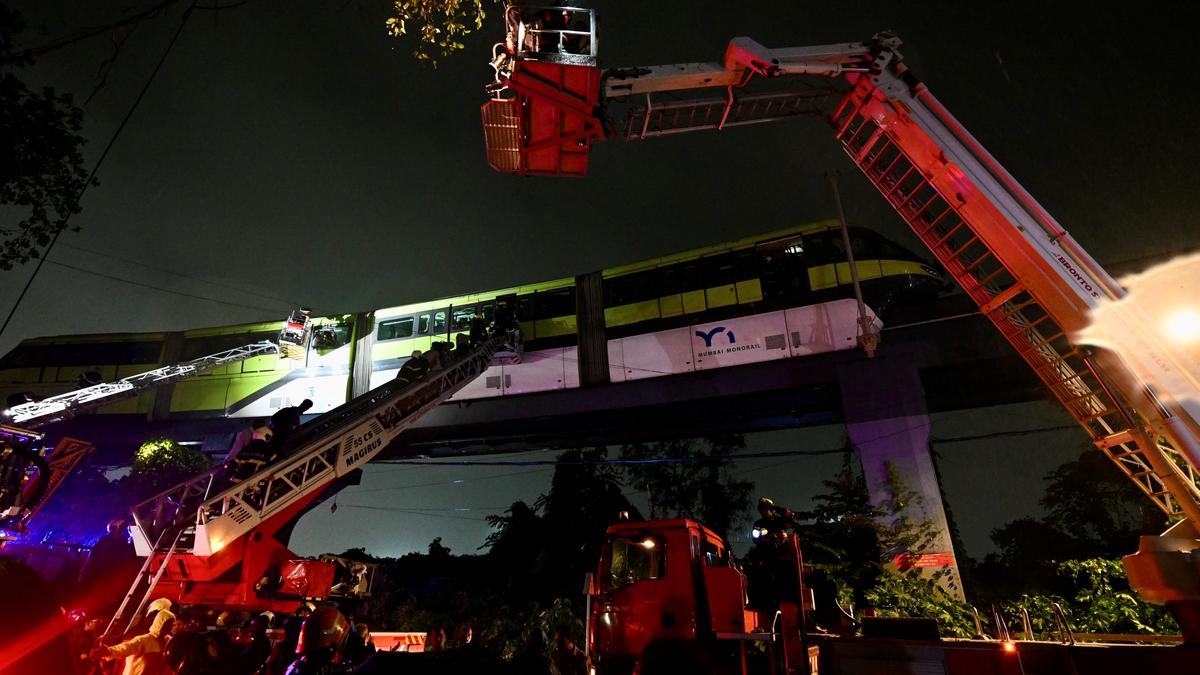
Mumbai faced another test of its fragile urban infrastructure on August 20, 2025, as relentless rains brought parts of the city to a standstill, with a stalled Monorail service and rising dam levels adding to the pressure on emergency services. The India Meteorological Department (IMD) raised a fresh red alert for Mumbai and adjoining districts, forecasting intense rainfall accompanied by gusty winds, urging citizens to exercise caution.
A Mumbai Monorail train, running between Bhakti Park and Chembur, came to a halt on its elevated track after overcrowding reportedly exceeded the designed load limit of 104 metric tonnes. The disruption, triggered by the diversion of thousands of commuters from the suspended Harbour Line, overwhelmed the system’s low-capacity design. With towing attempts proving futile due to the excess weight, the Fire Brigade and disaster response units executed a rescue operation in coordination with the Brihanmumbai Municipal Corporation (BMC) and Mumbai Metropolitan Region Development Authority (MMRDA). All passengers were safely evacuated, though many reported distress due to the prolonged delay. Officials emphasised that the Monorail was conceptualised as a supplementary transit option, not a high-capacity commuter carrier. They assured citizens of a technical review of the incident and reiterated that cooperation with security personnel remains vital to avoid unsafe crowding during emergencies. The breakdown once again sparked debate over Mumbai’s need for resilient, scalable, and sustainable mass transit systems to cope with extreme weather shocks.
Beyond transport woes, Mumbai’s water reservoirs are also nearing critical levels. The Modaksagar Dam in Thane district has reached 98 per cent of its capacity, raising concerns of overflow into the Vaitarna River. Villages downstream have been placed on high alert, with preventive measures in place for potential water discharge. The situation underscores how heavy rainfall, when coupled with inadequate watershed management, can intensify flood risks across peri-urban and rural zones surrounding Mumbai. Meanwhile, Maharashtra has recorded 21 fatalities linked to rain-related incidents between August 15 and 19, highlighting the human cost of a climate-stressed monsoon season. The IMD’s red alerts issued through the day reflected the rapidly shifting weather conditions, with forecasts warning of sustained downpours and wind speeds of 40–60 kmph.
Experts argue that Mumbai’s recurring crises reveal the urgent need to integrate climate resilience into infrastructure planning. Investment in sustainable stormwater drainage, eco-friendly transport alternatives, and river basin management is increasingly being recognised not just as an environmental priority but as an economic imperative. With the city repeatedly tested by extreme weather, officials stress that climate-smart urban planning is no longer optional but central to safeguarding both citizens and livelihoods.
Also Read : Mumbai Under Orange Alert Today Trains Roads Offices Operations Disrupted Alert Issued
