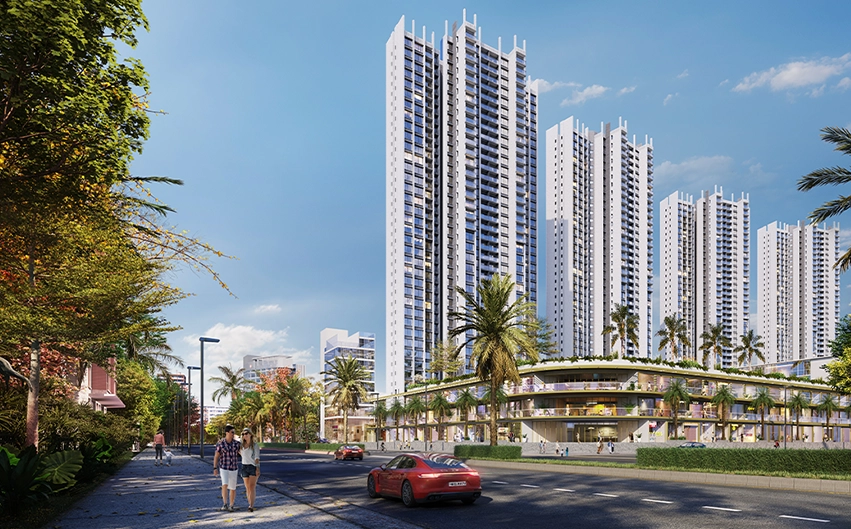
Mira Road, in the northern stretch of the Mumbai Metropolitan Region (MMR), is witnessing a steady transformation into a premium housing market as large infrastructure upgrades and relative affordability reshape residential demand. The suburb, long viewed as a mid-income housing cluster, is drawing renewed interest from homebuyers and developers seeking larger homes within commuting distance of Mumbai’s commercial districts.Urban planners say the shift reflects a broader rebalancing of housing demand across Mumbai’s western corridor, where escalating property prices in established neighbourhoods are pushing both buyers and builders toward emerging micro-markets.
Connectivity has become the strongest catalyst behind Mira Road’s changing residential profile. The suburb already benefits from proximity to the Western Express Highway, one of the region’s most critical north–south mobility corridors. Future transport investments including expanded metro links connecting to employment centres and regional projects such as the Borivali–Thane tunnel are expected to significantly cut travel times between western suburbs, Thane and Navi Mumbai. Transport economists note that improved cross-city connectivity tends to trigger residential demand in peripheral districts by making longer-distance commuting more practical. For many professionals working in commercial hubs such as the Bandra–Kurla Complex and Andheri’s technology parks, Mira Road now represents a location where travel time and housing costs can be balanced more effectively.
The pricing differential remains one of the suburb’s biggest draws. Residential property rates in Mira Road continue to be substantially lower than those in nearby Borivali and Kandivali. Market analysts estimate that homes in the area can be priced between one-third and one-half below comparable apartments in those established suburbs, allowing buyers to access larger living spaces at a similar overall investment. This affordability advantage has encouraged developers to experiment with larger apartment configurations and lifestyle-focused amenities. Recent projects increasingly feature flexible interior layouts designed for hybrid work patterns, including additional utility rooms, balcony extensions and shared community facilities.
Urban designers say such design changes reflect shifting expectations among metropolitan homebuyers, many of whom now prioritise open spaces, social infrastructure and wellness amenities alongside traditional factors such as location. At the same time, the suburb’s evolving residential profile is accompanied by gradual improvements in social infrastructure. New schools, healthcare facilities and neighbourhood retail clusters are emerging as population density increases and developers plan mixed-use projects to serve expanding residential communities.
Urban policy researchers argue that this pattern of decentralised residential growth is critical for the long-term sustainability of the Mumbai region. By encouraging development across multiple suburban nodes, planners can reduce pressure on overcrowded central districts while creating more balanced urban growth. With major infrastructure projects still under development and land availability relatively higher than in inner-city neighbourhoods, Mira Road’s premium housing market may continue expanding in the coming years. However, urban experts caution that careful planning, transport integration and climate-resilient infrastructure will be essential to ensure that the suburb’s growth remains sustainable and inclusive.