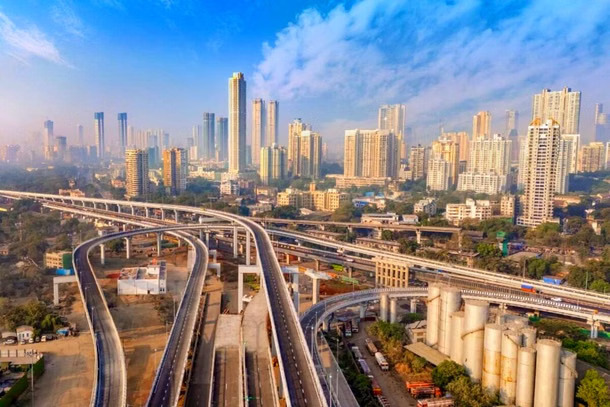
The Mumbai Metropolitan Region Development Authority will present the Mumbai Metropolitan Region’s evolving urban development model at a major global forum on cities in Singapore later this year, marking growing international interest in how one of the world’s most densely populated regions is reshaping its infrastructure, governance, and economic geography.
The invitation to participate in the 10th World Cities Summit, scheduled for mid-June 2026, reflects how the Mumbai Metropolitan Region has emerged as a reference point for large-scale metropolitan transformation in the Global South. For urban policymakers and investors alike, the platform signals recognition of the region’s attempt to balance rapid growth with long-term resilience, mobility integration, and environmental accountability. The summit invitation was extended by the Centre for Liveable Cities, a government-linked institution that curates global urban best practices and research-led policy exchange. According to officials familiar with the discussions, the focus will be on how the Mumbai Metropolitan Region is coordinating transport, housing, and economic infrastructure across multiple municipal and planning jurisdictions—an enduring challenge for megacities worldwide.
Over the past decade, the Mumbai Metropolitan Region has seen unprecedented capital investment in mass transit, regional road connectivity, logistics corridors, and satellite urban nodes. Metro rail expansion, multimodal transport integration, and large-scale transit-oriented development have begun reshaping commuting patterns and land use across the region. Urban planners note that these shifts are not merely about speed or scale, but about reducing spatial inequality between the urban core and peripheral growth centres. Industry experts say the global interest lies in how the region is attempting to align infrastructure delivery with climate adaptation goals. Flood resilience planning, coastal risk management, and low-emission public transport have become increasingly central to metropolitan policy, particularly as climate volatility intensifies along India’s western coast. While implementation challenges remain, the region’s planning framework is being closely watched for lessons applicable to other high-growth coastal cities.
The presence of the Mumbai Metropolitan Region at a forum hosted in Singapore also has economic implications. Global city summits increasingly function as informal marketplaces for capital, technology partnerships, and institutional collaboration. For real estate, infrastructure finance, and urban services firms, the visibility offers opportunities to benchmark projects against international standards of sustainability and governance. Urban analysts caution, however, that global recognition must translate into local outcomes. Affordable housing delivery, last-mile connectivity, and inclusive access to public infrastructure will determine whether metropolitan growth benefits residents across income groups. As the Mumbai Metropolitan Region steps onto a global stage, the next phase will be judged less by announcements and more by measurable improvements in urban liveability.
Mumbai Metropolitan Region Draws Global Urban Attention