


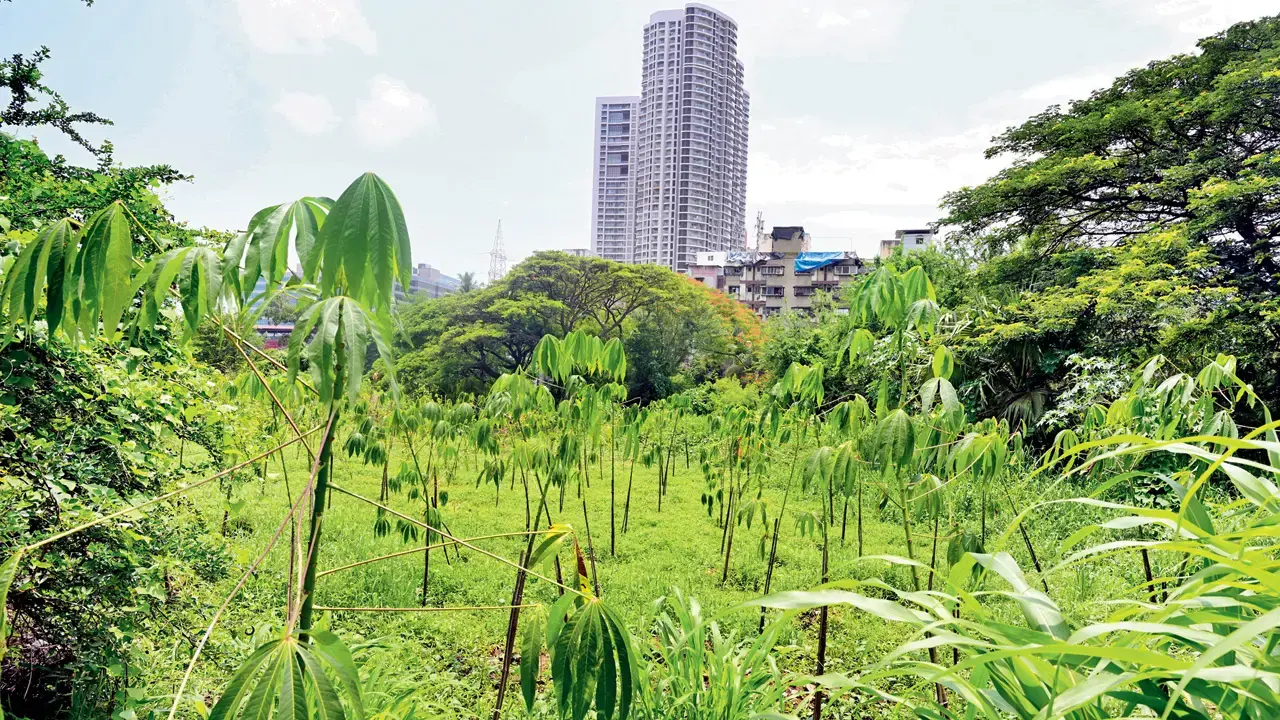
Mumbai’s much-publicised compensatory afforestation undertaken by the Mumbai Metro Rail Corporation Limited (MMRCL) has hit a major roadblock, with only half of the trees planted inside Sanjay Gandhi National Park (SGNP) managing to survive. The data, submitted by the Maharashtra government in an affidavit before the Supreme Court, highlights significant lapses in maintenance and monitoring of the re-greening efforts linked to the Aarey Metro Car Shed project.
According to officials, the affidavit—filed as part of the ongoing suo motu case on tree felling in the Aarey forest—includes assessments by the SGNP Forest Department and the Indian Institute of Technology (IIT)-Bombay. These evaluations were commissioned to measure the ecological compliance of MMRCL’s compensatory afforestation and tunnelling activities, which were intended to offset large-scale deforestation caused by metro infrastructure works. The inspection report, submitted in mid-October, found that out of 20,460 saplings planted between 2018 and 2019 under MMRCL’s compensatory afforestation and corporate social responsibility schemes, barely 10,230 have survived. Officials observed that large portions of the Malad Round in Krushnagiri Upvan Range, where the saplings were planted, displayed stunted growth and irregular vegetation patterns.
The forest department’s on-ground evaluation revealed severe gaps in irrigation and soil health management. Many plantations lacked functional water pipelines, while the protective fencing around the sites had deteriorated. Certain designated plantation areas, including Ramgad, showed no evidence of actual plantation despite being recorded in official documents. An official from the forest department confirmed that the agency has recommended extending MMRCL’s plantation maintenance contract for another three years to ensure the surviving trees are nurtured and protected. The official emphasised the need for continuous monitoring and scientific management if the compensatory afforestation programme is to yield tangible ecological benefits.
In an attempt to address the deficit, the SGNP authorities have handed over 15 hectares of new forest land in the South Magathane Beat to MMRCL for further afforestation activities. The land transfer took place in late September as part of ongoing environmental compliance obligations. Environmental experts argue that the situation reflects the broader shortcomings in India’s compensatory afforestation policy. They note that while large infrastructure projects routinely promise “green offsets,” the lack of accountability, inadequate ecological expertise, and minimal community participation often render such initiatives ineffective in restoring biodiversity.
The Supreme Court is expected to review the state’s compliance report in the coming weeks. The findings are likely to reignite the debate over balancing urban infrastructure expansion with ecological preservation in India’s financial capital. For a city already grappling with shrinking green cover and rising pollution levels, the survival of these saplings is not merely an environmental concern—it’s a test of Mumbai’s commitment to sustainable urban development.
Also Read : Texas Welcomes Wells Fargo’s 850000 Sq Ft Net Positive Sustainable Campus Launch
