


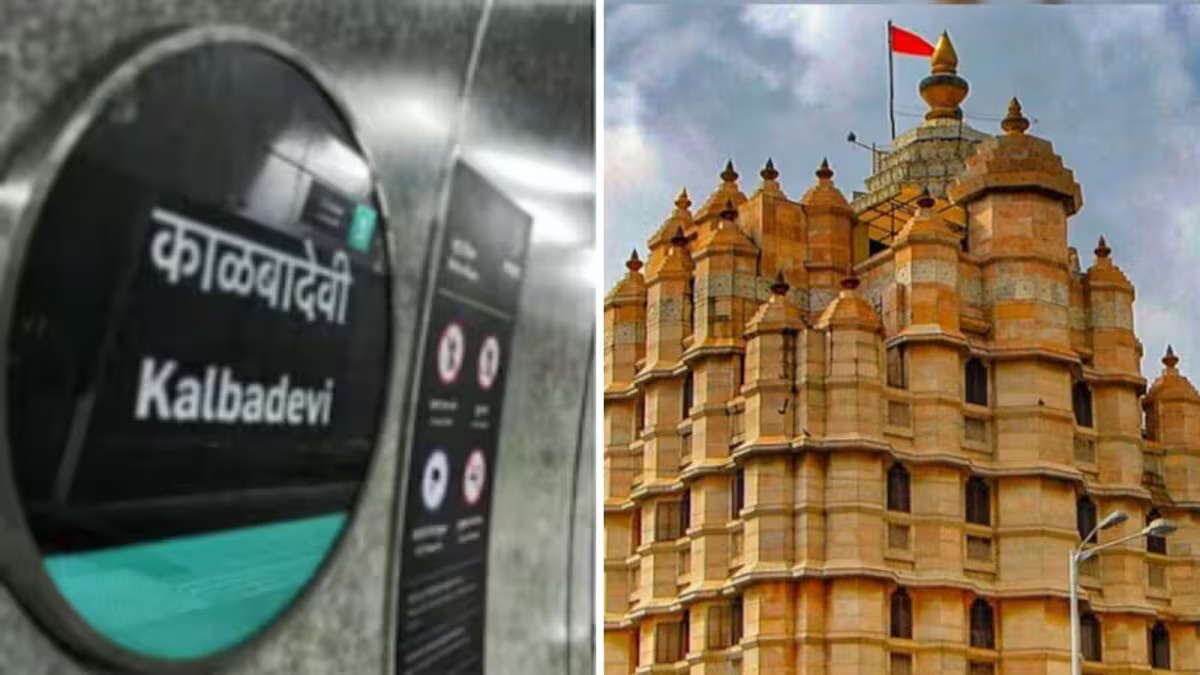
Mumbai Metro Line 3 has emerged as a transformative addition to the city’s public transport ecosystem, connecting Kalbadevi in the heart of South Mumbai to Siddhivinayak Temple in Dadar for just Rs 40. The new service, which forms part of the 27-station corridor spanning Aarey Depot to Cuffe Parade, aims to provide a sustainable, cost-effective, and fast alternative to road travel in one of India’s most congested urban centres.
The corridor ensures direct connectivity from central business and residential hubs to religious, commercial, and airport nodes. Commuters can board at Kalbadevi or Girgaon and reach Siddhivinayak Temple without transfers, saving both time and effort. First trains commence at 5:55 AM from terminal stations, with the last service departing at 10:30 PM, facilitating flexible travel for office-goers, devotees, and students. Ticketing has been modernised to align with digital urban mobility trends. Passengers can purchase tickets through the Mumbai One app, Metro Connect3 app, WhatsApp, station counters, ticket vending machines, or via QR-enabled National Common Mobility Cards. Officials highlighted that the system integrates with multiple transport modes, including suburban rail, other metro lines, monorail, and bus services, providing a seamless journey across the metropolitan region.
For onward connections, Metro Line 3 intersects Line 1 at Marol Naka, while nearby railway stations such as Ghatkopar and Santacruz allow commuters to access the Western Railway network. Airport connectivity has also been prioritised, with shuttle and walkway systems under construction to link Terminal 2 directly with the metro. These multimodal interchanges are designed to reduce dependency on private vehicles, thereby lowering carbon emissions and easing road congestion. Experts in sustainable urban mobility have observed that such integrated public transport solutions are essential for Mumbai to evolve into a greener, more equitable city. By offering affordable and environmentally responsible options, Metro Line 3 not only enhances commuting convenience but also aligns with the broader agenda of zero net carbon urban development.
City planners and officials emphasise that the Metro system is more than a transit option—it represents a shift in urban infrastructure planning, prioritising speed, accessibility, and sustainability. With enhanced last-mile connectivity via buses, e-rickshaws, and mini-shuttles, the city is moving toward a comprehensive network that connects residential areas, commercial hubs, religious sites, and transport terminals efficiently. As Mumbai continues to expand its metro network, Line 3 stands out for its ability to blend affordability, convenience, and environmental responsibility, offering residents a practical alternative to traditional travel. The corridor is expected to play a crucial role in shaping a greener, more connected, and citizen-friendly metropolitan transport landscape.
Also Read : Delhi Howrah Rail Route Hit as Goods Train Derails Near Kanpur
