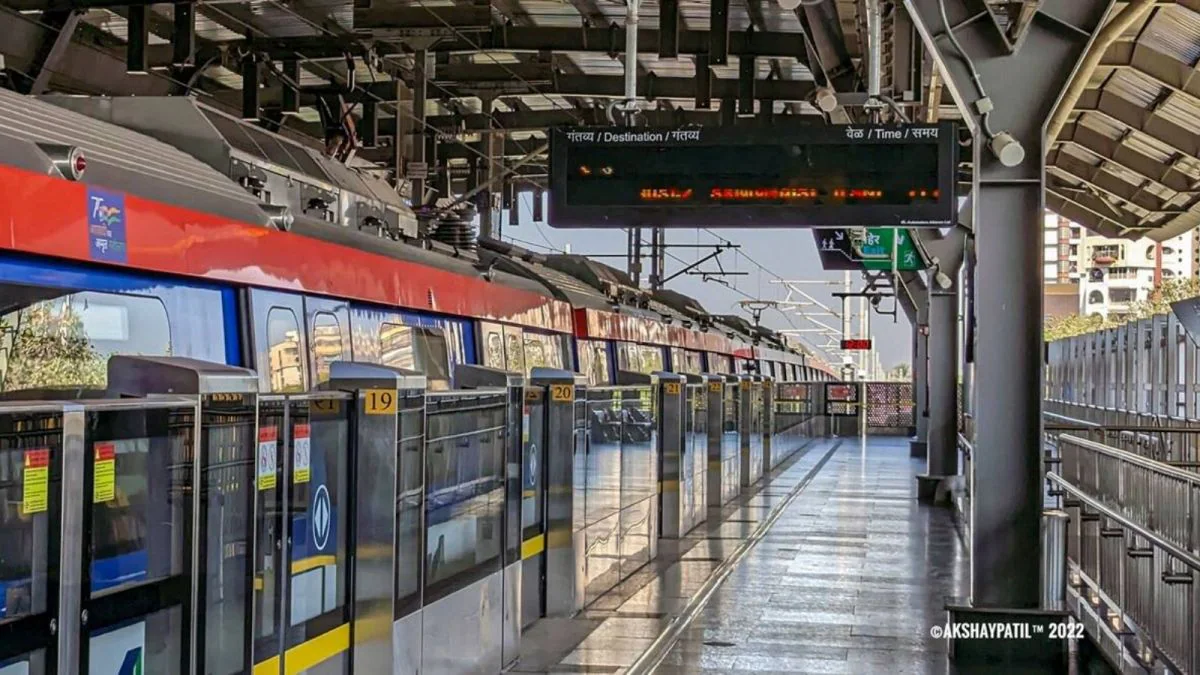
Mumbai’s expanding metro network has marked a significant sustainability milestone, with all stations under Phase 1 of Metro Line 2B securing the highest level of green building certification under a nationally recognised framework. The development underscores how large-scale urban transport projects are increasingly being designed not just for mobility, but for long-term environmental resilience in one of India’s most densely populated regions.
The certification applies to five elevated stations located across the eastern corridor, forming a critical segment of Mumbai’s broader metro expansion. Urban transport officials involved in the project said the recognition reflects a deliberate shift towards embedding low-carbon principles at the construction stage itself, rather than retrofitting sustainability measures later. For a city grappling with air pollution, heat stress and rising energy demand, such infrastructure choices carry implications well beyond daily commuting. The stations were assessed under a specialised rating system for mass rapid transit projects, which evaluates how efficiently public infrastructure manages energy, water, materials and waste across its lifecycle. Industry experts note that metro stations, often operating for extended hours and serving thousands daily, can become major energy consumers if not planned carefully. Integrating efficient lighting, natural ventilation strategies and water-saving systems helps reduce long-term operational costs while lowering emissions.
According to urban planners tracking metro-led development, the achievement is also relevant from a real estate and land-use perspective. Green-certified transit nodes tend to support more compact, transit-oriented neighbourhoods, reducing dependence on private vehicles and cutting last-mile emissions. This is especially critical along eastern suburban corridors, where road congestion and uneven access to public transport have historically limited economic mobility. Officials overseeing metro implementation indicated that sustainability benchmarks are now being treated as standard design requirements rather than optional enhancements. Earlier metro corridors in Mumbai have already demonstrated that carbon-neutral operations are achievable at scale when renewable energy sourcing and efficient systems are prioritised. The Line 2B stations build on that experience, signalling a continuity in policy rather than a one-off intervention.
From a civic standpoint, the focus on environmentally responsible construction also addresses growing public concern about infrastructure-led disruption. Measures such as sustainable material use and construction waste management help reduce the local environmental footprint during building activity, an issue frequently raised by residents living near major transport projects. As Mumbai prepares for further metro extensions across both eastern and western suburbs, the Line 2B certification sets a precedent for future corridors. Urban development specialists argue that aligning transport investment with climate goals will be essential as cities attempt to balance growth with livability. The challenge ahead lies in ensuring that green design principles translate into consistent operational performance over time, delivering cleaner, more efficient mobility for millions of daily commuters.
Mumbai Metro Stations Achieve Highest Green Certification