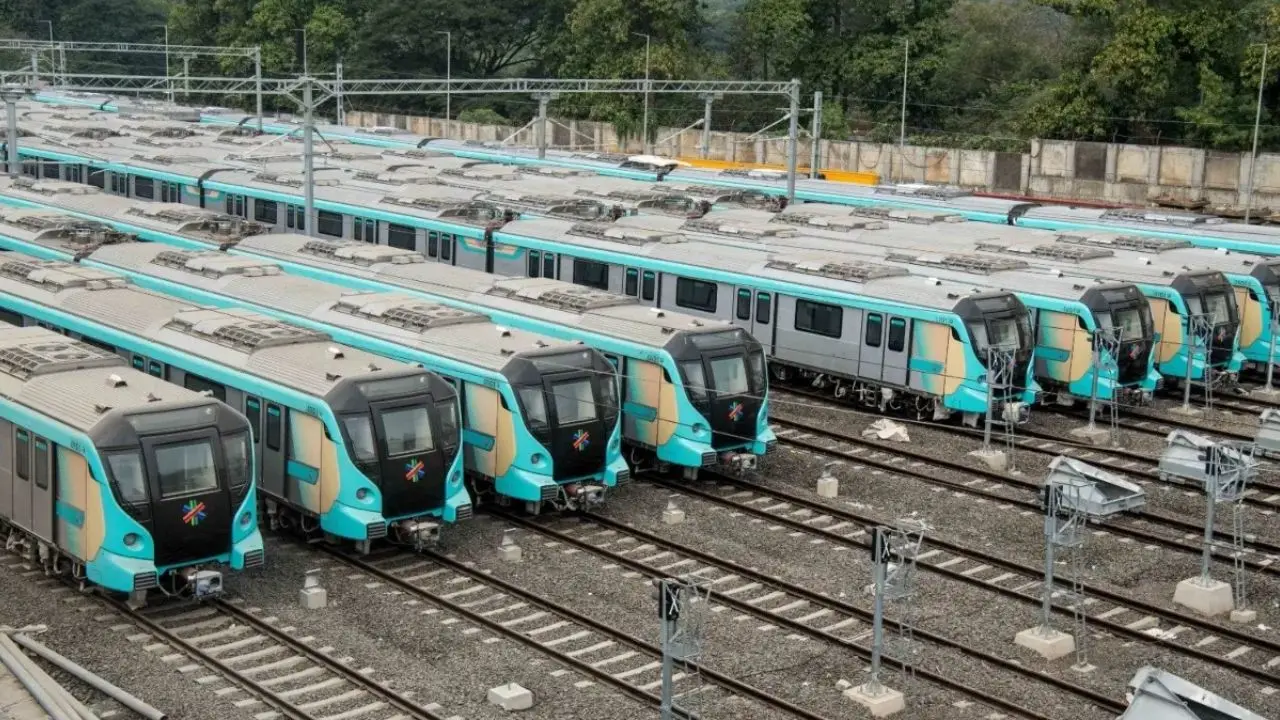
Mumbai’s elevated Metro corridors on Lines 2A and 7 returned to regular operations on Sunday evening after a temporary technical fault triggered widespread delays and congestion across several stations. The disruption, which unfolded during peak weekend movement, highlighted both the network’s growing ridership pressure and the urgent need for more resilient systems as the city expands its mass transit footprint.
According to operational teams, the slowdown was caused by a momentary systems malfunction that reduced the frequency of services. This resulted in longer headways and overcrowding at interchange stations, particularly on stretches connecting Andheri, Dahisar and the Link Road belt. Officials from the operating agency stated that engineering teams were deployed immediately and full services began stabilising shortly after the fault was isolated. An official overseeing the operations said the issue was “minor but required a temporary reduction in train movements to maintain commuter safety”. The official added that such incidents, while infrequent, demonstrate why high-density cities must invest in both robust maintenance regimes and digital monitoring systems to ensure uninterrupted mobility.
The operator issued timely advisories urging passengers to plan their journeys in advance, a move that helped reduce cascading delays. Transport analysts noted that the quick restoration reflects improvements in operational coordination compared with earlier years, when disruptions often took longer to resolve. They argued that predictable service reliability is essential for encouraging sustainable travel choices in a region still heavily dependent on private vehicles. The incident arrives at a moment when the Maharashtra government is exploring a more unified approach to managing urban transit. Earlier in November, the State Urban Development Department established a high-level committee to examine whether metro rail functions scattered across multiple agencies can be consolidated under a single integrated authority. Experts believe such streamlining could reduce coordination gaps, accelerate decision-making and strengthen long-term planning—critical factors as the region moves towards cleaner, low-carbon mobility.
Industry observers also emphasise that as Mumbai’s metro network expands, operational resilience must advance at the same pace. With millions relying on public transport daily, even short service interruptions have social and economic implications, particularly for hourly-wage earners and shift workers. By improving system redundancy and strengthening emergency response protocols, the region can build a more commuter-centric and equitable mobility ecosystem. While Sunday’s disruption was managed efficiently, the episode serves as a reminder of the delicate balance required to operate a high-frequency urban system in a city as complex as Mumbai. For the region’s broader sustainability goals, ensuring that public transport remains dependable will be key to reducing road congestion, lowering emissions and supporting a more inclusive urban future.
Mumbai Metro Services Restored After Technical Glitch As Trains Resume Normal Operations