


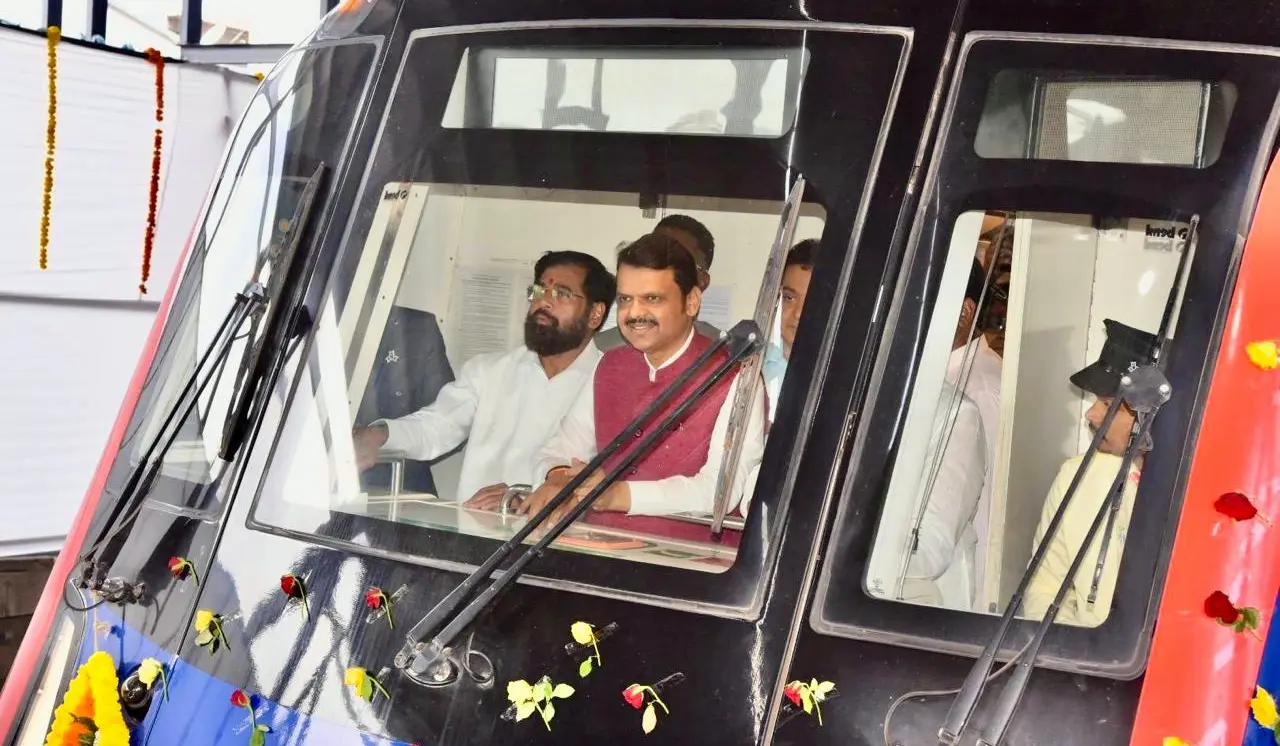
The long-awaited Phase-1 trial of Mumbai Metro’s Route 9 between Kashigaon and Dahisar commenced this week, marking a critical milestone in the city’s effort to ease road congestion and transition towards greener public transport.
The trial run was launched from Kashigaon, located about 20 kilometres from Thane, and is a part of the broader vision to strengthen connectivity across the Mumbai Metropolitan Region (MMR) while ensuring climate-friendly, accessible and equitable urban mobility. Officials confirmed that the stretch is now in the final phase of technical validation. Once certified, it will be thrown open to the public, significantly reducing pressure on the overburdened Western Express Highway. The highway currently handles a staggering volume of traffic daily, especially during peak office hours, often pushing carbon emissions to unhealthy levels. Metro Route 9 is expected to not only decongest this arterial road but also cut average commute times drastically for thousands of residents living in Mumbai’s northern and western suburbs.
According to senior government officials, this particular stretch forms a vital north-western link in the larger Mumbai Metro network, connecting emerging residential nodes to major urban centres. The goal is to deliver seamless end-to-end public transport without adding more private vehicles on the road. This new line will integrate key zones along the Western Express Highway, including the busy Andheri corridor and the NS Bose Maidan-Bandra region, in its full phase rollout. What makes Route 9 especially significant is its inclusion of an engineering innovation—a first for Mumbai’s urban transport system. A double-decker bridge, currently under construction, will carry both metro rail and vehicular traffic, making more efficient use of vertical space in one of the most congested stretches in the MMR. This design, deployed at critical points such as Mira-Bhayandar, is being lauded for its space-saving potential and long-term sustainability benefits.
Urban transport experts believe that this kind of integrated infrastructure marks a shift in how Indian cities must approach mass transit—by designing for efficiency, climate resilience and inclusion. The Metro Line 9 is envisioned as a backbone of multi-modal integration, creating better first-mile and last-mile connectivity through future links to suburban rail and bus networks. Officials confirmed that planning is underway to extend metro connectivity further northward, potentially reaching Virar—another major residential and employment hub. The Mumbai Metropolitan Region Development Authority (MMRDA), the agency steering the metro expansion, has set ambitious targets for implementation. Officials revealed that 50 kilometres of metro infrastructure are scheduled for completion this year, followed by an additional 62 kilometres in 2026. The entire network, first conceptualised in 2015, is now slated for completion by the end of 2027. By then, a fully operational metro grid is expected to serve as Mumbai’s most sustainable and efficient mass transit alternative.
Transport planners and civic experts see this as a positive move towards achieving net-zero carbon mobility in Mumbai. With the city grappling with rising air pollution levels and a growing urban population, projects like Metro Route 9 offer a much-needed shift from private car dependency. Electrically powered metro trains emit far fewer greenhouse gases compared to fuel-driven private vehicles. More importantly, metro networks can move far greater numbers of commuters with lower land footprint and energy usage, making them indispensable for sustainable urbanisation. In addition to physical infrastructure, emphasis is being placed on integrating metro operations with smart mobility solutions. Digital ticketing systems, app-based trip planning, gender-sensitive safety measures and universal accessibility standards are being prioritised to ensure inclusivity. The forthcoming stations on Route 9 are designed with barrier-free access, CCTV surveillance, and designated spaces for bicycles and differently abled passengers, aligning with global benchmarks for public transport infrastructure.
An official from the state urban development department underlined that the successful trial run of Route 9 marks not just a transport breakthrough but a long-term investment in equitable mobility. “The metro allows for faster, safer, cleaner travel. But more importantly, it ensures that urban mobility is no longer a privilege for the few. This is a commitment to every commuter who has waited for hours in traffic or taken unsafe, overcrowded local transport.” The project also intersects with the national focus on infrastructure-led economic revival. Metro construction has generated thousands of direct and indirect employment opportunities, spurred growth in allied sectors, and added to the region’s real estate value. Beyond immediate commute benefits, this has implications for long-term urban economic competitiveness. Developers and city planners alike are factoring proximity to metro lines as a key value addition in future housing and commercial projects, which in turn will shape new urban agglomerations.
Integration with other national infrastructure projects is also part of the strategic vision. Officials confirmed that plans are underway to link the metro corridor with the proposed bullet train station near Vadhvan in Palghar. Such convergence is aimed at creating a cohesive, multi-modal transport ecosystem that can handle future surges in mobility demand without further stressing the environment. As the trial run progresses and technical clearances are secured, commuters and environmental advocates alike are keeping a close eye on the actual roll-out. The success of Route 9 will be a litmus test for sustainable transport policy implementation across Indian megacities. In a city where delays, cost overruns, and policy inertia have long haunted infrastructure delivery, the momentum seen on this project offers a refreshing change—and a glimmer of hope for a more liveable Mumbai.
The road to 2027, however, will require relentless focus, political will, and public cooperation. The promise of an efficient, zero-emission urban commute is within reach, but it must be protected from the vagaries of bureaucratic delay and short-termism. If executed as planned, Metro Route 9 could become not only a symbol of infrastructural success but a defining element in Mumbai’s journey towards becoming a sustainable, equitable, and future-ready metropolis.
Also Read : Mumbai Metro Bridges Forging Seamless Connectivity and Easing Urban Traffic Congestion
