


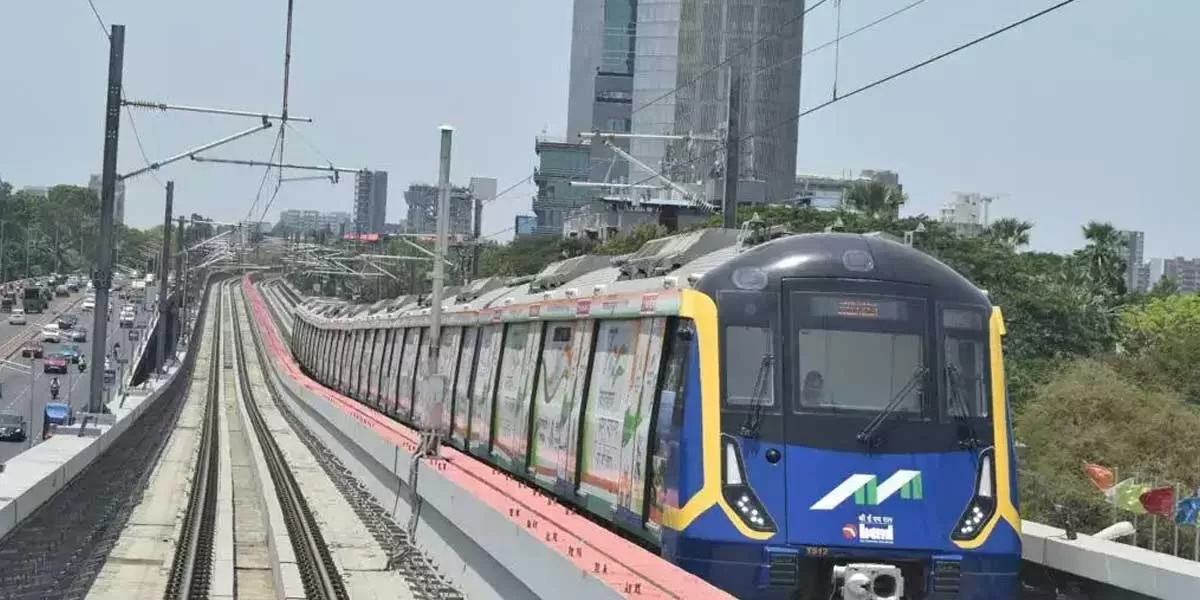
Mumbai’s suburban connectivity is set for a major leap with the arrival of the first metro rakes for Lines 4 and 4A in Thane, marking a significant step toward trial runs expected by September. The development signals that after prolonged delays caused by land disputes and construction hurdles, the long-awaited corridor is inching closer to operational readiness.
On Monday morning, heavy-duty cranes carefully lowered the trial train at Anand Nagar in Thane. For initial testing, rakes from the Yellow Line are being deployed, as their technical specifications match those planned for Line 4. Officials confirmed that a nearly 10-kilometre stretch between Cadbury and Gaimukh will serve as the first testing zone, covering 10 stations including Majiwada, Kapurbawadi, Manpada, and Kasarvadavli. Metro Line 4, extending 32.3 kilometres from Wadala to Kasarvadavli with 30 elevated stations, is designed to cut travel time by half or more while integrating with the Eastern Express Highway, Central Railway, Monorail, and upcoming Metro Lines 2B, 5, and 6. Its 2.7-kilometre extension, Line 4A, will push connectivity deeper into Thane up to Gaimukh, adding two stations to the network. Officials say the new line has the potential to emerge as the backbone of eastern suburban mobility, catering to lakhs of commuters daily.
Also Watch: An Exclusive Interview with Sanjeev Jaiswal (IAS), CEO MHADA
Although the designated depot at Mogharpada remains under construction, interim inspection facilities beyond Gaimukh are enabling trials to proceed on schedule. Experts underline that once operations commence, the new corridor could significantly reduce vehicular congestion on arterial roads, cutting carbon emissions and aligning with Mumbai’s long-term vision of sustainable urban mobility.Transport specialists emphasise that the metro’s impact goes beyond faster commutes. Reduced road traffic is expected to lower dependency on private vehicles, thereby addressing pollution levels and fuel consumption across the metropolitan region. For a city battling deteriorating air quality and growing urban heat, shifting passenger movement towards efficient mass transit is seen as an essential step in building equitable, climate-conscious infrastructure.
Authorities also highlight the socio-economic impact of the project. With stations located across dense residential and commercial zones, Line 4 is expected to boost local economies by improving accessibility for small businesses, reducing travel fatigue for office-goers, and enhancing real estate values along the corridor.Despite persistent challenges, officials remain confident that the successful execution of upcoming trial runs will pave the way for commissioning the line sooner rather than later. If achieved, Mumbai will move one step closer to creating an urban transport ecosystem that is sustainable, inclusive, and capable of matching the mobility needs of a growing metropolis.
