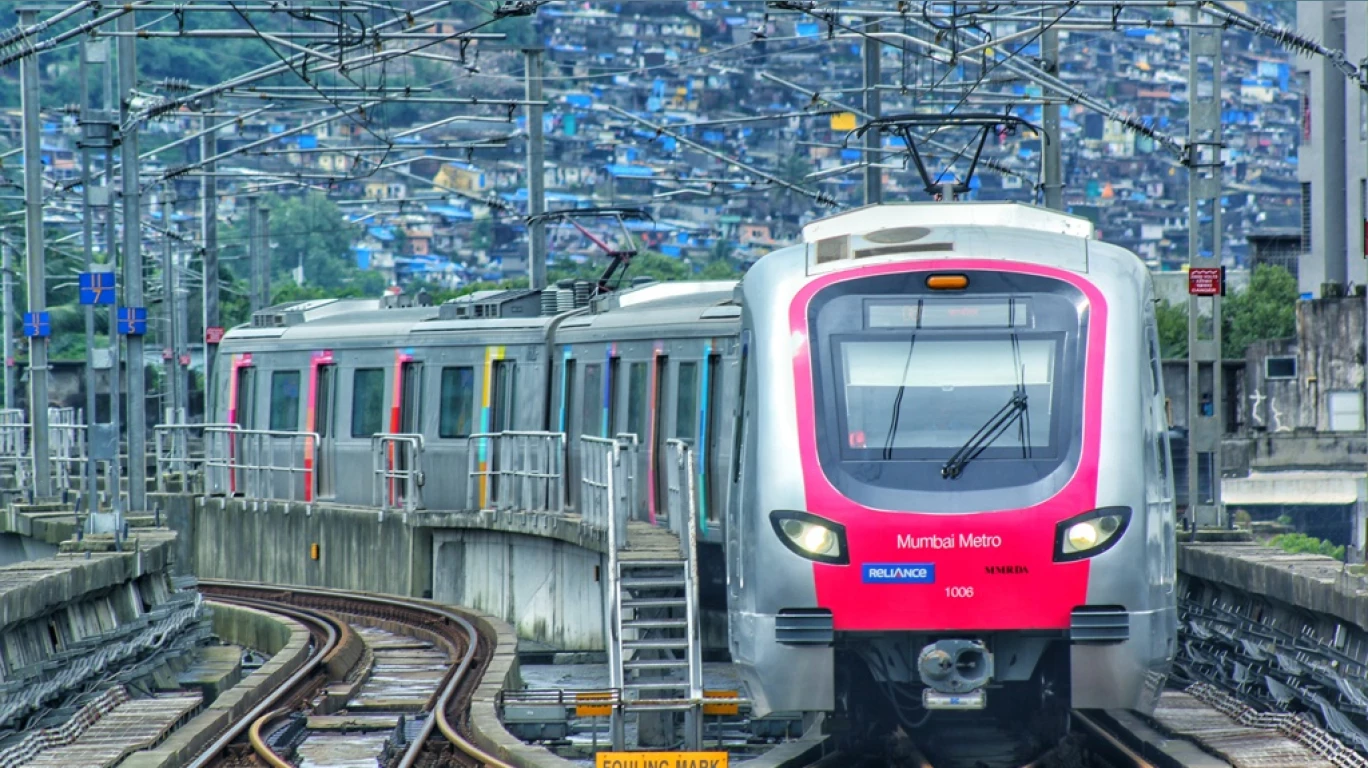
The Maharashtra government has earmarked ₹4,897 crore for metro and road infrastructure development in the Kalyan-Badlapur corridor, aiming to relieve chronic congestion on Mumbai’s suburban rail network. The investment, announced under the Mumbai Metropolitan Region Development Authority’s (MMRDA) latest budget, is expected to provide residents with alternative transit options while supporting sustainable urban growth in one of the region’s fastest-expanding residential belts.
Metro development accounts for a significant portion of the allocation. Metro Line 5, linking Thane, Bhiwandi and Kalyan, has been provided ₹1,309 crore, while the extension Line 5A towards Ulhasnagar received ₹183 crore. Metro Line 12, covering Kalyan to Taloja, has been allocated ₹1,055 crore, and Metro Line 14, proposed between Kanjurmarg and Badlapur, is set to receive ₹500 crore. Officials say these corridors are expected to offer commuters a viable alternative to the Central Railway line, which experiences heavy crowding during peak hours. Alongside metro expansion, road infrastructure projects aim to improve east-west connectivity and support last-mile transit. The Kalyan-Shilphata junction to Bhiwandi flyover has been allocated ₹150 crore, while the long-pending Kalyan Ring Road project received ₹600 crore to streamline internal traffic flow. The Vitthalwadi-Kalyan Ahilyanagar elevated road has been given ₹200 crore to address bottlenecks in densely populated sections. Additionally, the Airoli-Katai Freeway Phase 3 project has been allotted ₹900 crore, improving connectivity between Navi Mumbai and the Kalyan belt.
Urban planners emphasise that integrated metro and road development is critical for regions experiencing rapid residential growth. Over the past decade, the Kalyan-Dombivli-Badlapur belt has seen steady housing development due to comparatively lower property costs. However, transport infrastructure has struggled to keep pace, leaving suburban rail lines overcrowded and road networks congested. Officials indicate that the funding allocations reflect sustained advocacy from local representatives and ongoing coordination with MMRDA, ensuring that both rail alternatives and road connectivity are prioritised. By creating parallel transit corridors, commuter pressure is expected to distribute more evenly, reducing travel times and enhancing the overall reliability of the city’s transport network.
Transport analysts note that these interventions are also aligned with sustainable mobility principles. By providing integrated metro and road solutions, the government aims to reduce dependency on private vehicles for short-distance travel while facilitating climate-conscious urban expansion. Moreover, improved infrastructure is expected to enhance last-mile access to key employment centres, educational institutions and residential hubs across the eastern suburbs. As work progresses, the focus will be on synchronising metro and road projects to maximise commuter convenience and minimise disruptions. The initiative underscores the importance of strategic, multimodal transport planning in fast-growing urban corridors where suburban expansion and population density continue to challenge conventional infrastructure.
Mumbai Metro Push To Reduce Kalyan Rail Congestion