


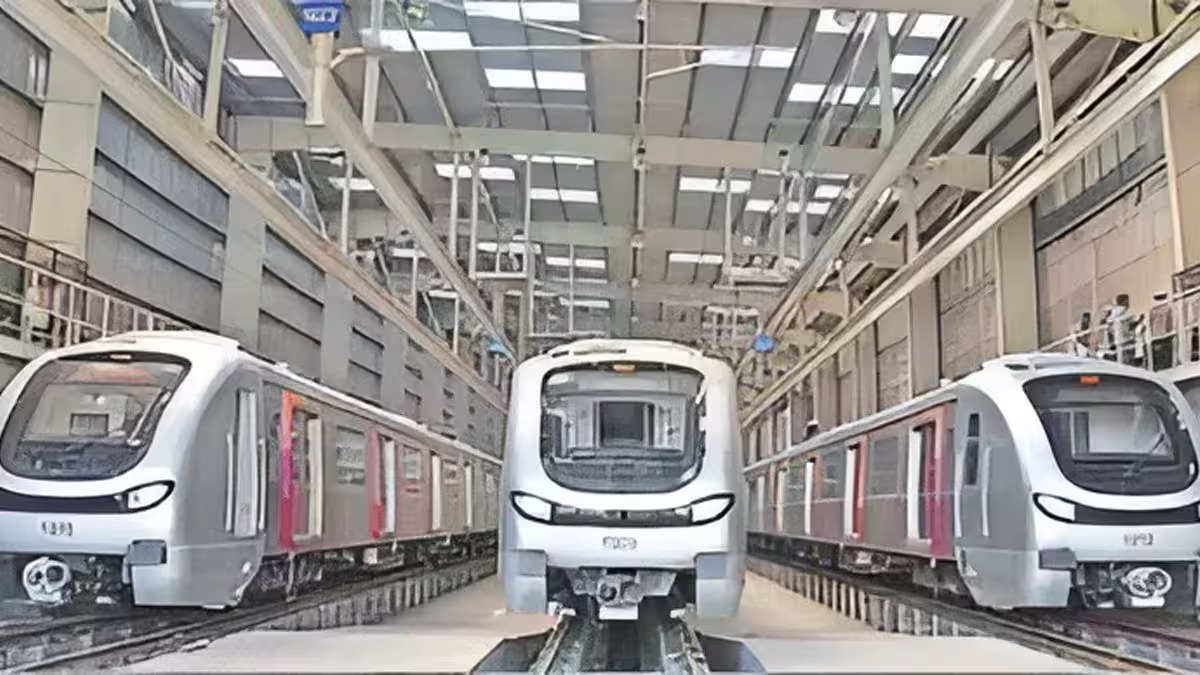
The Mumbai Metropolitan Region Development Authority (MMRDA) has greenlit more than ₹12,000 crore in infrastructure projects to fast-track metro development and enhance transport integration across Greater Mumbai. Approved during the 284th Executive Committee meeting chaired by the state Chief Secretary, the investments mark a strategic effort to design a more sustainable, inclusive, and low-carbon urban transport framework.
Among nearly 19 contracts, the standout award went to Larsen & Toubro—a ₹4,788 crore package for Metro Lines 4 and 4A, covering rolling stock, CBTC signalling, telecom, platform screen doors, depot infrastructure, and five‑year maintenance. Additionally, L&T secured a ₹188.6 crore contract for ballastless track works. On Metro Line 6, NCR Builders won a ₹2,269.7 crore deal for trains, signalling and depot systems, while IRCON International bagged ₹668.2 crore for traction and electrical‑mechanical infrastructure. These packages reflect a precise focus on seamless multimodal connectivity, efficiency, and timely delivery.
This surge in metro investment reflects Mumbai’s broader urban vision. The authorities envisage not only reducing carbon emissions and private vehicle use, but also improving gender-neutral accessibility, last-mile transport equity, and sustainable transit integration. Digital real-time monitoring, multi-modal stations, and automatic fare collection systems are central to this vision. The MMRDA’s Metropolitan Commissioner emphasised that each project has undergone thorough evaluation to ensure it advances integrated urban mobility—accelerating commissioning timelines and delivering commuter-centric infrastructure. Deputy Chief Minister and MMRDA Chair underlined the state’s ambition to cultivate a world-class, connected metropolitan ecosystem, citing enhanced economic activity and improved quality of life.
Strategically, the investment aligns with existing and upcoming networks—such as the Navi Mumbai airport metro link and the Mumbai Trans Harbour Link—aiming to knit peripheral suburbs into the core urban fabric. Notably, ₹535.1 crore has been earmarked for multi-modal integration at 32 Metro 4 and 4A stations via four joint ventures, addressing first/last-mile connectivity needs. Other significant allotments include ₹249.97 crore for automatic fare collection systems on lines 4 and 4A; ₹118.3 crore for overhead electrification and power distribution for Metro Lines 9 and 7A; ₹99.99 crore for ballastless trackwork on Line 2B; and ₹551.4 crore for intelligent transport systems and toll infrastructure tied to the MTHL project.
These carefully tailored investments reflect a broader commitment to sustainable infrastructure. Through modern track systems and energy-efficient stations, the MMRDA aims to promote low-carbon transit solutions—especially crucial as urban transport typically contributes significantly to city-level emissions. Digital monitoring and performance management tech further enhance operational sustainability and accountability. Yet the scale of these investments brings execution challenges. Coordinating multiple agencies, securing timely land access, and maintaining funding discipline are complex tasks. Urban development experts caution that success depends on timely integration with bus fleets, feeder networks, and non-motorised transport options like cycling and pedestrian zones—critical to ensuring equitable access for women, older adults, and persons with disabilities.
Environmental considerations are also at the fore. Metro civil works have historically impacted mangrove buffers and local ecosystems. Officials indicate that environmental mitigation—like mangrove restoration, rainwater harvesting, and green design standards—will be integral to each project. Embedding sustainability from project conception could set new benchmarks for eco-responsible infrastructure development. For commuters, these upgrades promise shorter travel times, higher reliability, and reduced congestion. However, success hinges on maintaining affordability and inclusivity. Experts emphasise that strong fare regulation, coupled with integrated ticketing and fare concessions for vulnerable users, will be essential to deliver equitable outcomes.
The MMRDA will need to demonstrate transparency and accountability as it progresses. Enabling community feedback channels, releasing real-time project updates, and publishing periodic environmental audits will help win public trust. These measures will be crucial in a region where civic scrutiny is high and delays can erode confidence. Additionally, this mega-investment positions Mumbai as a model for sustainable urban transit in India. Minimising carbon footprints through energy-efficient technologies, supporting gender-neutral amenities, and ensuring equitable access can turn these infrastructure projects into catalysts for broader urban transformation. The ability to replicate successful models in other Indian metros will be watched closely.
Looking ahead, the period up to 2028 will be pivotal. As phase-wise completion of Lines 4, 4A, 6 and associated systems draw nearer, success will depend on coordinated execution across civil works, technology, transit operations, and urban planning layers.
Also Read : Navi Mumbai Airport Flyers Will Now Pay UDF Of Rs 1225
