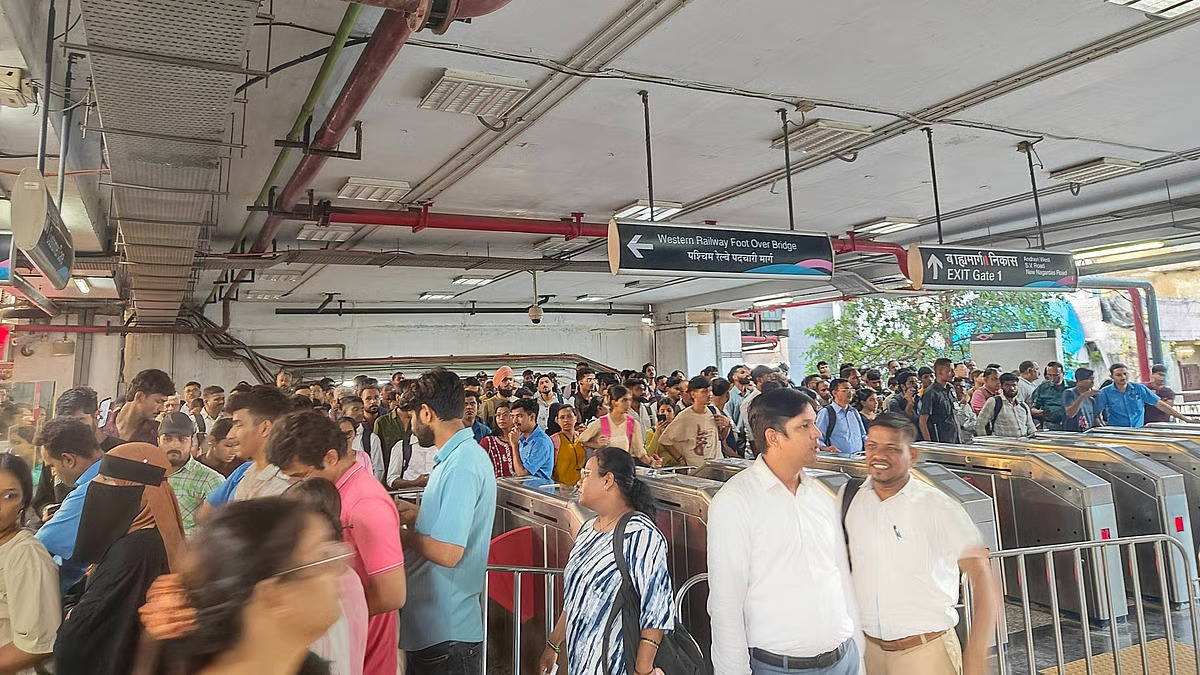
Evening commuters on the Versova–Ghatkopar Metro One corridor faced disruptions on Monday after a technical glitch halted a Ghatkopar-bound train at Andheri station around 5:10 pm. The affected rake was withdrawn from service, leading to a ripple effect that delayed several subsequent trains during one of the city’s busiest travel windows.
For nearly 45 minutes, platforms across key stations witnessed crowding as passengers waited for rescheduled trains. Metro officials confirmed that normal services were restored by 5:30 pm after technical teams resolved the fault and stabilised the service frequency. While operations resumed relatively quickly, commuters reported extended waiting times and overcrowded compartments—highlighting how even minor disruptions can have a large cascading impact on Mumbai’s mass transit network. An official from the Metro operating authority stated that the issue was identified as a “technical malfunction” in the train’s control system. The quick isolation and removal of the affected train helped minimise wider network disruption. “Safety remains our highest priority, and our maintenance team acted swiftly to restore service continuity,” the official said.
Mumbai Metro One, which connects the western suburb of Versova to Ghatkopar in the east through Andheri, carries over 400,000 passengers daily. As one of the city’s earliest operational metro corridors, it serves as a key east-west mobility link, significantly reducing travel time compared to road-based commuting. However, Monday’s glitch underscored the growing strain on the city’s older metro systems as passenger volumes rise and the network expands. Urban mobility experts note that such incidents point to the importance of predictive maintenance and real-time monitoring to improve service reliability. “As Mumbai’s metro network expands, maintaining resilience through advanced diagnostics and sustainable operations will be vital,” said a transport analyst. “Consistent commuter trust depends on how effectively the system handles these short-term disruptions.”
Despite the brief breakdown, the incident also demonstrated operational efficiency, with the operator restoring normalcy within 20 minutes and coordinating passenger communication through on-ground staff and station announcements. Metro systems across Indian cities are being positioned as climate-resilient, low-emission transport backbones. Ensuring technical reliability, passenger comfort, and quick service recovery remains central to promoting public transport as a viable, sustainable alternative to private vehicles. Monday’s episode serves as a reminder that as Mumbai transitions towards an expanded metro ecosystem, maintaining reliability and rider confidence will be just as critical as building new lines.
Also Read: Maharashtra Govt Pushes for Faster Completion of BDD Chawl Project by Declaring it an ‘Essential Project
Mumbai Metro One Services Affected During Rush Hour Owing To Technical Failure