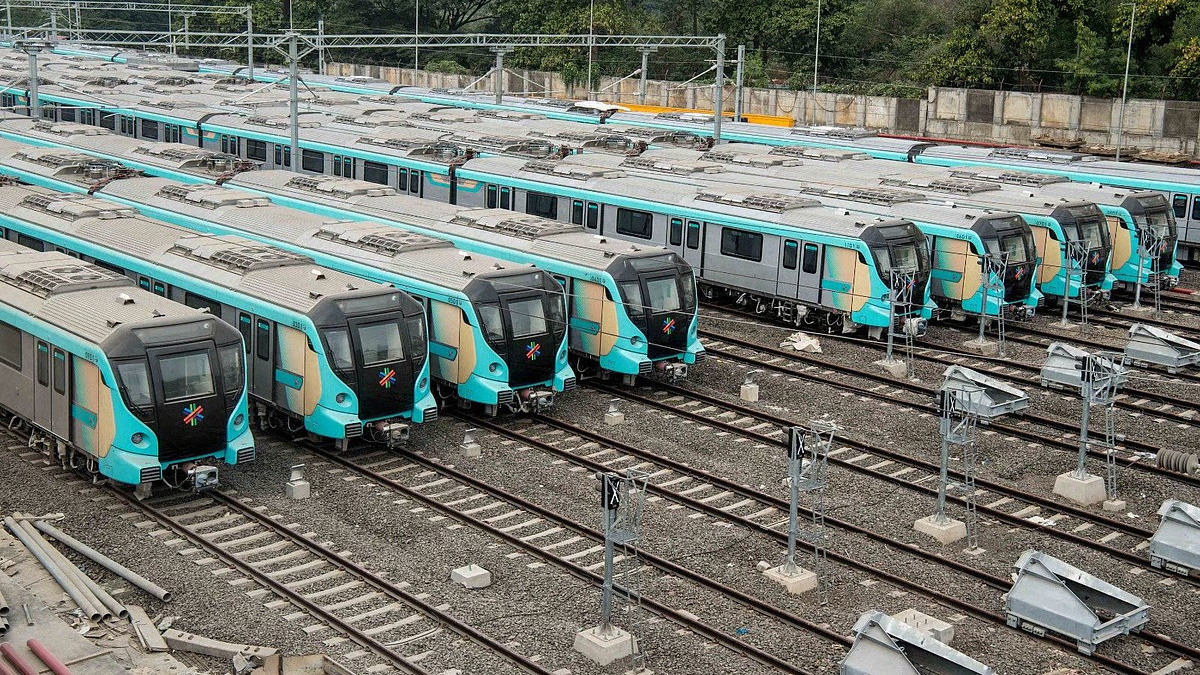
The Mumbai Metropolitan Region has crossed a significant public transport milestone, with its operational MMR metro network surpassing the 100-kilometre mark following the launch of new corridors connecting previously underserved areas. The expansion places the region among India’s largest metro systems, reinforcing its transition towards a more transit-oriented urban model.
The latest additions include new operational stretches that extend metro access to Thane district and the eastern suburbs of Mumbai—regions that have historically relied heavily on road-based transport and suburban rail. Urban mobility experts suggest that these new links could rebalance commuting patterns by offering faster, more predictable travel options across the metropolitan region. The growing MMR metro network is part of a larger plan to build an integrated rail-based system spanning multiple urban nodes, including business districts, residential clusters, and emerging economic zones. Officials indicate that several ongoing metro lines are nearing completion, with substantial portions expected to become operational over the next few years. Once fully realised, the network is projected to extend well beyond its current footprint, positioning Mumbai among cities with extensive rapid transit systems globally.
A key feature of the latest rollout is the inclusion of areas such as Mira-Bhayander and the eastern harbour belt, which are now being connected to the metro grid for the first time. Transport planners note that such expansions are critical for inclusive urban growth, as they bring peripheral communities into the city’s formal mobility network, reducing dependence on informal or congested transport systems. The expansion has also triggered operational changes across existing corridors, with inter-line connectivity being enhanced to enable smoother passenger transfers. While some routes may now require interchange at key junctions, authorities have ensured that these transitions remain within station premises, improving commuter convenience.
From an infrastructure perspective, the metro expansion is expected to reduce pressure on road networks and contribute to lower vehicular emissions over time. Sustainability experts emphasise that scaling up mass transit systems is essential for cities like Mumbai, where population density and economic activity continue to strain existing infrastructure. However, they caution that last-mile connectivity and feeder systems will play a decisive role in determining how effectively commuters shift from private vehicles to public transport. The broader vision for the MMR metro network also includes integration with airports, commercial hubs, and future corridors, creating a seamless urban mobility ecosystem. As new lines are added, the focus is gradually shifting from isolated project delivery to network-wide efficiency and accessibility.
With construction advancing across multiple corridors, the coming years will be crucial in translating infrastructure expansion into tangible commuter benefits. For Mumbai, the metro’s growth signals not just improved connectivity, but a structural shift towards a more sustainable, equitable, and resilient urban transport framework.
Mumbai Metro Network Crosses 100 Km Milestone