


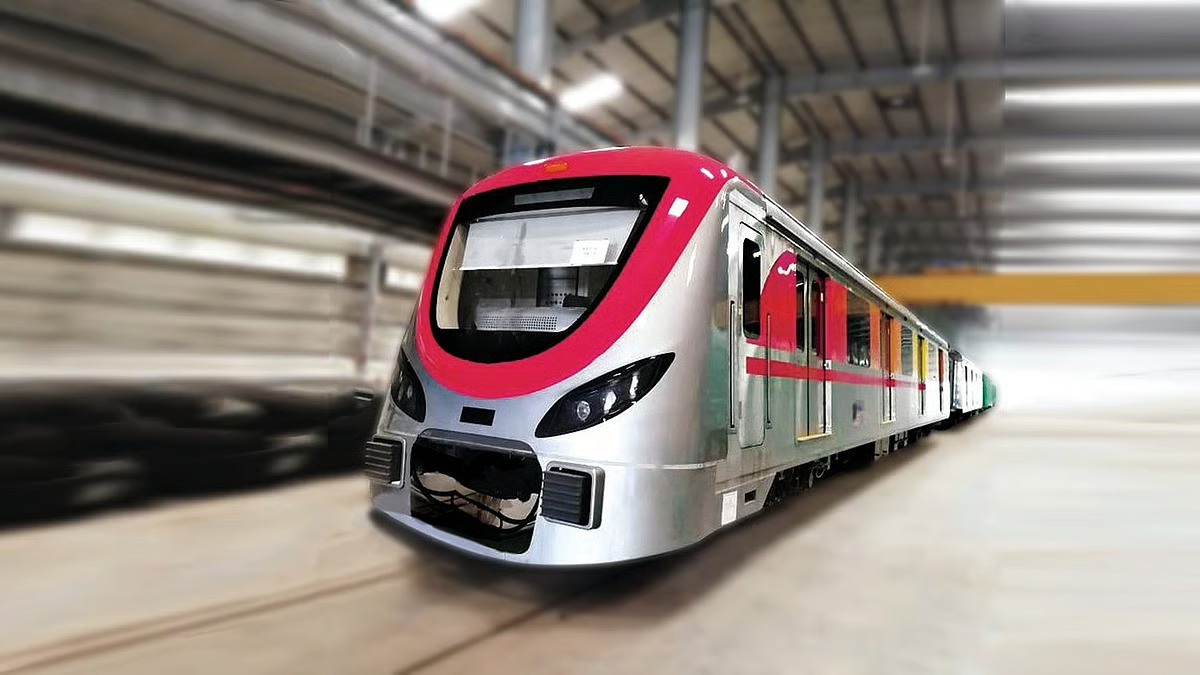
Mumbai’s rapid transit network is on the verge of a historic milestone, with Metro and Monorail services recording a combined daily ridership of 9.9 lakh on August 22, 2025. The figure falls just 9,668 short of the coveted 10-lakh mark, signalling robust adoption of public transport across the city. Experts say this surge highlights Mumbai’s growing reliance on mass rapid transit as a sustainable, eco-friendly solution to urban mobility challenges.
Metro Line 1, spanning Versova–Andheri–Ghatkopar, emerged as the busiest corridor with over 5.66 lakh daily passengers, translating to 47,237 riders per kilometre. Elevated Metro Lines 2A and 7, covering Dahisar–Andheri–Gundavali, together carried 3.35 lakh commuters, averaging 9,573 passengers per kilometre. Meanwhile, Metro Line 3, still in early operational stages, attracted 76,177 daily riders across its 22-kilometre stretch, averaging 3,463 passengers per kilometre. The city’s Monorail service, connecting Chembur and Sant Gadge Maharaj Chowk over 20 kilometres, logged 12,235 passengers, highlighting the need for network expansion and integration with metro corridors. Officials emphasise that these numbers reflect a growing public preference for cleaner, emission-free commuting options, in line with Mumbai’s broader sustainable transport objectives.
The Metro and Monorail infrastructure spans multiple phases and decades. Metro Line 1, operational since June 2014, comprises 12 stations and cost Rs 4,321 crore. Lines 2A and 7, with 30 stations, were launched in April 2022, becoming fully operational by January 2023, with an investment of Rs 12,618 crore. Metro Line 3, covering 16 stations, opened in two phases—October 2024 (Aarey to BKC) and May 2025 (Acharya Atre extension)—with a project outlay of Rs 37,000 crore. The 17-station Monorail, inaugurated earlier, involved an investment of Rs 2,460 crore. Looking ahead, the city is set to surpass the 10-lakh daily ridership benchmark with upcoming expansions. The final phase of Metro Line 3, linking Acharya Atre Chowk to Cuffe Parade, along with Phase I of Metro Lines 2B (Mandale to Diamond Garden), 9 (Dahisar to Kashigaon), and 4 (Gaimukh to Cadbury Junction), are expected to significantly increase commuter capacity. Officials project these additions will not only enhance coverage but also reinforce Mumbai’s transition towards a low-carbon, gender-neutral, and accessible urban transport system.
Experts note that higher ridership underscores the city’s readiness for sustainable mobility interventions and integrated transport solutions. With Mumbai’s metro and monorail network expanding steadily, public reliance on private vehicles may reduce, alleviating traffic congestion and contributing to cleaner air quality.
Also Read : Maharashtra Finally Announces Free Toll Passage For Electric Vehicles On Three Highways
