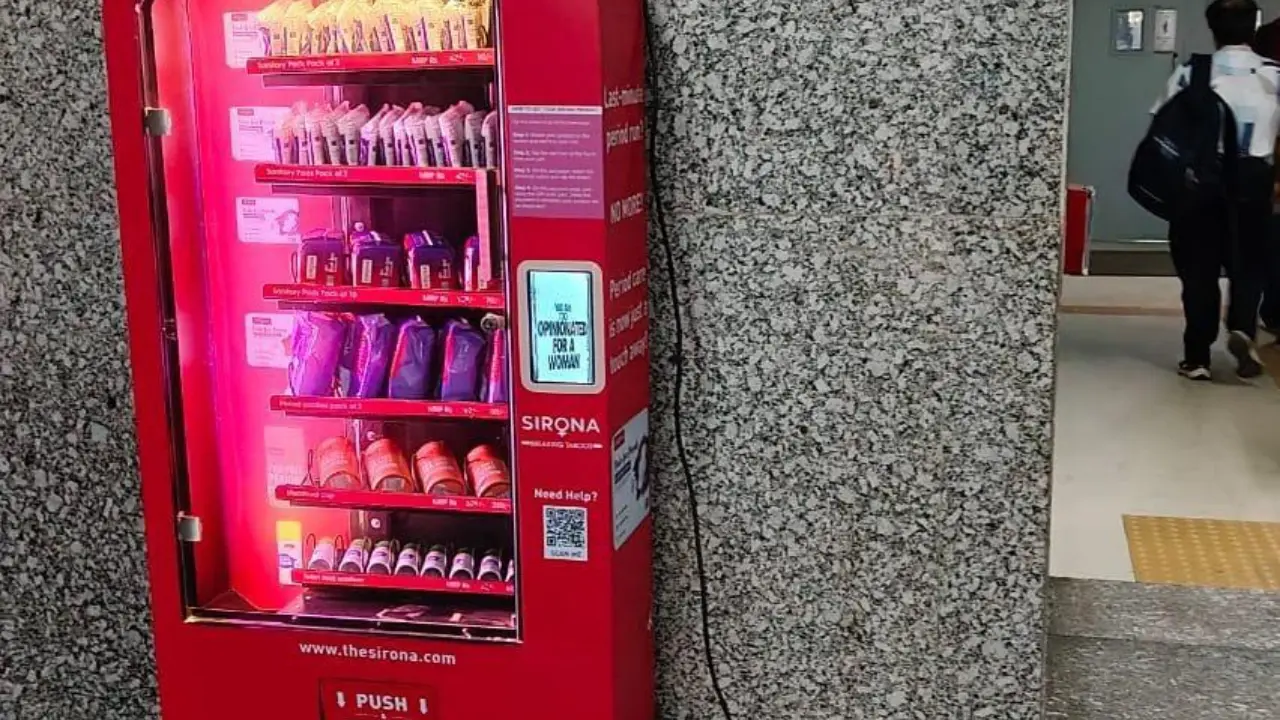
Mumbai’s oldest metro corridor has taken a quiet but consequential step towards making daily public transport more inclusive, as menstrual hygiene access becomes part of routine station infrastructure across the Versova–Andheri–Ghatkopar line. The move signals a shift in how urban mobility systems are beginning to account for the lived realities of women commuters, not as a special provision but as a basic service expectation in high-density cities.
Across all stations on the east–west metro corridor, multi-product menstrual hygiene vending units have been installed in station premises adjacent to women’s washrooms. The machines provide low-cost sanitary essentials designed for unplanned or emergency use during travel, addressing a gap that urban planners and transport experts have long highlighted but rarely operationalised within public transit systems. For a corridor that handles hundreds of thousands of passenger trips daily, the intervention reflects a growing recognition that transport efficiency is not limited to speed or frequency alone. Access to basic health and hygiene infrastructure directly influences how safe, comfortable, and reliable public transport feels—particularly for women navigating long commutes, irregular work hours, and last-mile travel challenges.
Officials associated with the metro operator said the initiative was informed by ridership data showing women form a substantial share of daily users. Industry observers note that embedding menstrual hygiene access within stations helps normalise a need that has historically been pushed to private or commercial spaces, reinforcing the idea that public infrastructure must respond to the full spectrum of citizen requirements. Urban policy specialists see this as part of a broader recalibration underway in Indian cities, where transport agencies are increasingly evaluated on social outcomes alongside operational metrics. Gender-responsive design—ranging from lighting and surveillance to sanitation and amenities—is now being viewed as essential to boosting public transport adoption, reducing private vehicle dependence, and lowering transport-related emissions.
The initiative also intersects with sustainability goals. Encouraging consistent metro use depends on reliability and comfort across demographic groups. When public transport meets everyday needs more comprehensively, it strengthens its role as a low-carbon alternative to private mobility, supporting wider climate and air quality objectives in a city grappling with congestion and pollution. From an economic standpoint, small-scale infrastructure interventions such as menstrual hygiene access carry outsized impact. They improve workforce mobility, reduce time lost to unplanned disruptions, and support greater participation of women in education and employment—outcomes closely linked to urban productivity and inclusive growth.
Transport analysts caution that the next phase will be ensuring upkeep, affordability, and replication across newer metro lines and other mass transit systems, including suburban rail and bus terminals. Consistency across the wider transport network, they argue, will determine whether such measures remain symbolic or evolve into standard practice. As Mumbai continues to expand its metro footprint, integrating menstrual hygiene access into station design may well become a benchmark for people-first infrastructure—where the success of mobility projects is measured not just in kilometres laid, but in how equitably they serve the city’s everyday users.
Mumbai Metro Menstrual Hygiene Facilities Reach Commuters