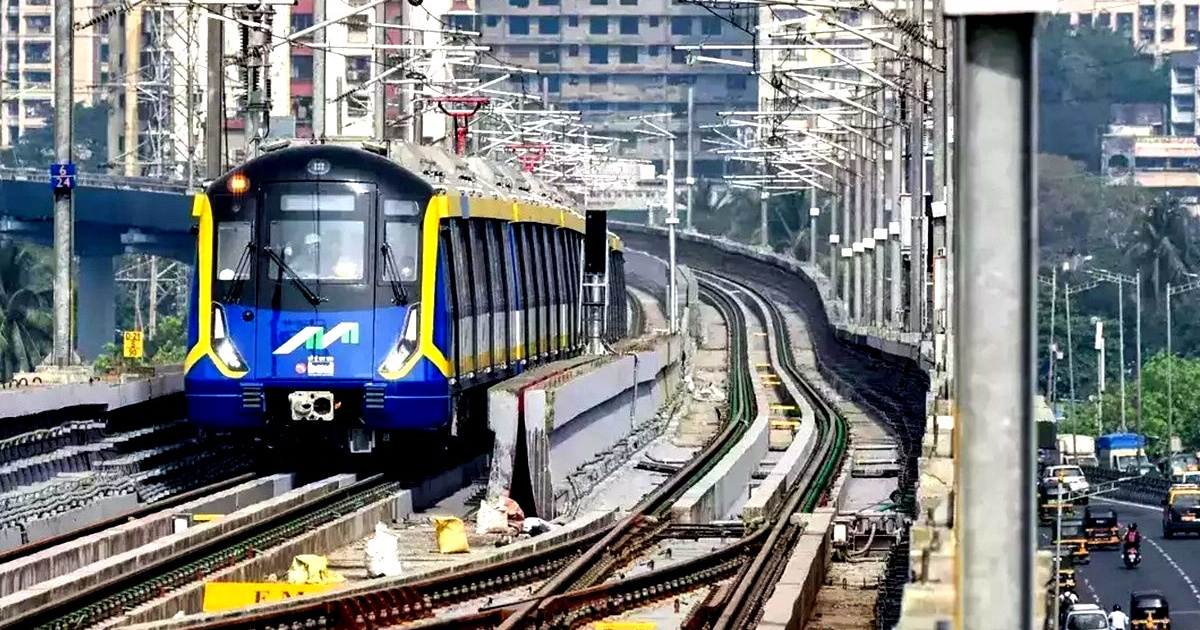
Mumbai and its surrounding metropolitan region are set for a dramatic expansion of urban rail connectivity, with the Metro network projected to grow more than fourfold over the coming years, positioning mass rapid transit as the backbone of future mobility across India’s financial capital.
Speaking during the concluding debate of the state legislature’s winter session, the state’s chief executive outlined plans to extend the Mumbai Metropolitan Region’s operational Metro network from the current 91 kilometres to approximately 374 kilometres. Officials said more than 280 kilometres of new corridors are planned, with 132 kilometres expected to become operational within the next two years and a further 151 kilometres to follow in subsequent phases. The expansion is aimed at strengthening both east–west and north–south connectivity, long considered a structural gap in the region’s transport grid. Urban transport planners say the scale of the proposed Metro rollout reflects a decisive shift away from car-dependent growth towards high-capacity, lower-emission public transport. With daily ridership already running into several lakh commuters, Metro systems are increasingly viewed as essential to managing congestion, reducing travel times and supporting inclusive access to jobs and services across the region.
Beyond urban mobility, the government used the legislative platform to underline the state’s fiscal position and investment outlook. According to official data presented in the House, Maharashtra’s public debt remains below 19% of gross state domestic product, comfortably under national prudential limits. The fiscal deficit has been maintained below 3%, even as the state continues to fund welfare schemes and farm power subsidies. Officials argued that this balance between social spending and capital investment has allowed sustained focus on infrastructure-led growth. The state also reiterated its leadership in attracting foreign investment, with inflows accounting for nearly a third of India’s total in the latest reporting period. A senior industry expert said consistent investment in transport, logistics and urban infrastructure has played a key role in sustaining investor confidence, particularly in the Mumbai region.
Alongside Metro expansion, several large road and tunnel projects across the metropolitan area are progressing, including expressway links, coastal road extensions and strategic tunnels connecting suburbs on opposite sides of the city. Planners say these projects are intended to work in tandem with mass transit, not as substitutes, by easing freight movement and last-mile connectivity while keeping commuter growth anchored to public transport. On the energy front, the government clarified that prepaid smart electricity meters will not be mandated for domestic consumers, while incentives remain in place for voluntary adoption. Urban policy analysts note that such assurances are important in maintaining public trust during periods of infrastructure transition.
Reaffirming the city’s place within the state’s long-term vision, the leadership dismissed speculation about Mumbai’s administrative status, framing the Metro expansion and allied investments as evidence of sustained commitment to the region’s future. As Mumbai continues to grow in scale and complexity, the success of its next development phase will depend on whether rapid infrastructure expansion can deliver cleaner mobility, equitable access and a more resilient urban fabric for decades ahead.
Mumbai Metro Lines Set To Grow 4x To Three Hundred Seventy Four Kilometres