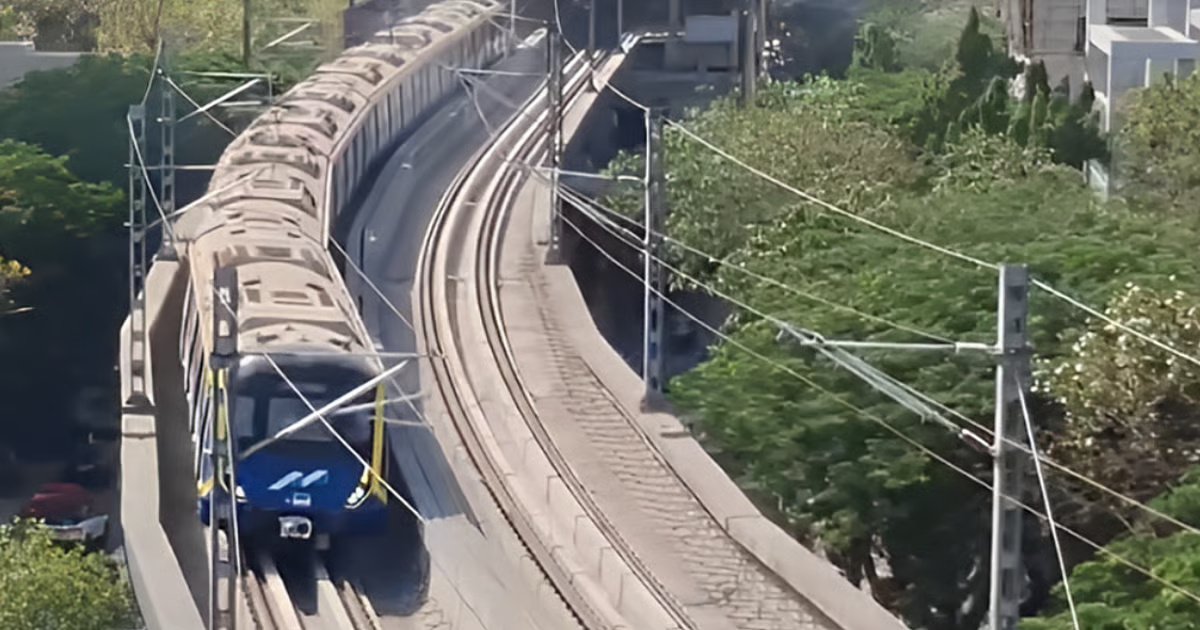
Mumbai’s rapidly expanding Metro network is set to cross another milestone, with Phase I of Metro Line 9 nearing passenger operations, even as some safety infrastructure remains incomplete. The corridor, connecting Dahisar East to Kashigaon in Mira Bhayandar, is undergoing its mandatory safety inspection by the national rail safety authority, marking the final regulatory step before public services can begin.
Metro Line 9 will become the first new Metro corridor in Mumbai in over a decade to start operations without platform screen doors. Since the launch of the city’s first Metro line in 2014, all subsequent corridors have opened with screen doors installed at stations. Their absence on Line 9 has drawn attention, particularly given the rising emphasis on commuter safety and crowd management in high-density urban transport systems. Officials involved in the project have indicated that the decision reflects a phased commissioning strategy rather than a permanent omission. Tenders for trains, signalling, telecommunications, depot systems and platform screen doors were floated earlier this year. However, the timing of the screen door installation remains unclear, with indications that they may be implemented later, potentially alongside the Line 7A airport extension to ensure network-wide operational integration.
Metro Line 9 has been designed as an extension of Line 7, enabling through connectivity across Mumbai’s western suburbs. Once regulatory clearance is granted, commuters will be able to travel from Kashigaon to Gundavali by interchanging at Dahisar and continuing on Line 7, which already operates with platform screen doors at all stations. Urban transport planners say this operational linkage is expected to significantly improve east–west connectivity in the northern metropolitan region. Platform screen doors are widely regarded as a key safety and efficiency feature in modern metro systems. They reduce the risk of accidental track intrusions, support crowd control during peak hours and help improve climate control within stations. In the absence of these systems, Line 9 stations will rely on conventional safeguards such as platform markings, surveillance cameras, warning systems and active staff supervision.
Across India, several metro networks have adopted platform screen doors, particularly in underground or high-footfall stations, reflecting a broader move towards safer, more inclusive public transport. Experts argue that while phased infrastructure delivery allows cities to accelerate mobility access, consistency in safety standards will remain critical as networks scale up. As Mumbai continues its push towards low-emission mass transit, the Line 9 launch highlights the balance city authorities must strike between speed, safety and long-term sustainability. How quickly remaining systems are completed will shape public confidence in the city’s evolving urban mobility framework.
Mumbai Metro Line 9 Phase I Launches Without Platform Screen Doors Ahead CMRS Review