Mumbai’s suburban transport network is set for a significant upgrade as two long-awaited metro corridors prepare to open for passenger services, marking a critical step in easing pressure on some of the city’s most congested travel routes. Safety clearance for the first phase of Metro Line 9 and Metro Line 2B has now been secured, allowing authorities to move towards the start of commercial operations, expected in early February 2026.
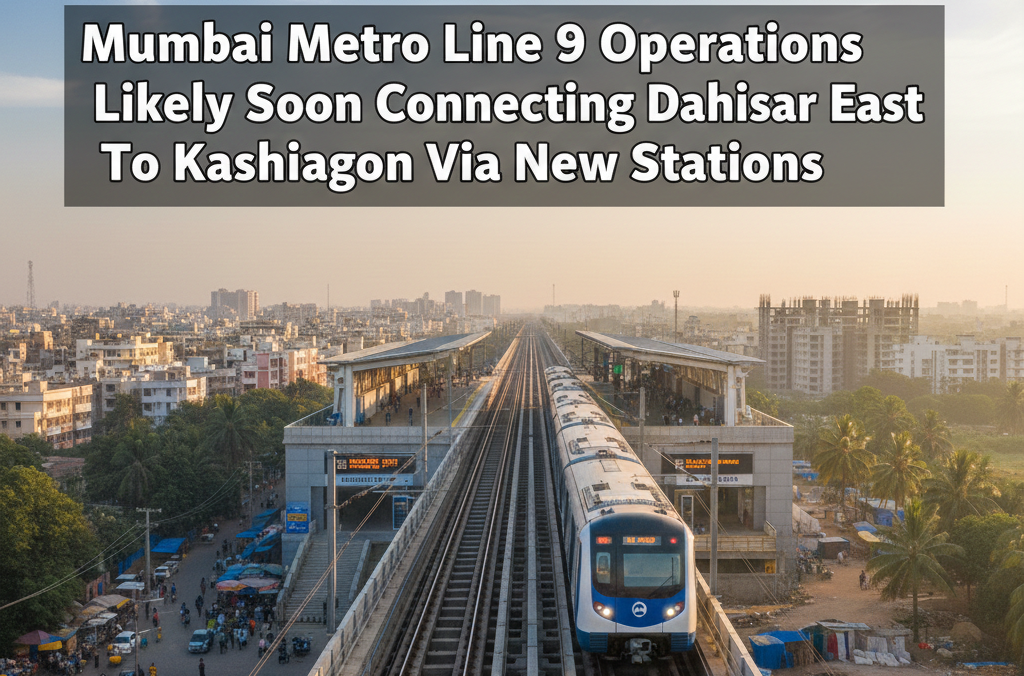
The development holds particular importance for daily commuters travelling between Mumbai’s northern suburbs and the adjoining Mira-Bhayander region. The initial stretch of Metro Line 9 will extend services beyond the existing Red Line network, enabling seamless metro travel from the western edge of the city into rapidly growing suburban zones. Urban mobility experts note that this connection could significantly reduce dependence on private vehicles and overcrowded road corridors, especially along the Western Express Highway. Metro Line 9’s first operational section spans approximately 4.5 kilometres and includes four stations between Dahisar East and Kashigaon in Mira Road. By integrating with the operational Red Line corridor, the extension allows passengers to travel deeper into the metropolitan region without switching trains, a change expected to save both time and cost for thousands of daily commuters. Transport planners say the corridor is also strategically placed to relieve chronic bottlenecks at Dahisar Checknaka, one of the busiest vehicular choke points in the city.
Alongside this, the eastern suburbs are set to benefit from the partial opening of Metro Line 2B. The approved section covers a five-kilometre stretch between Mankhurd and Chembur, connecting key residential and employment zones with the suburban railway network. Although construction on this segment was completed earlier, operational delays linked to safety certification and systems integration had postponed its launch. With approvals now in place, the corridor is expected to improve last-mile connectivity for large residential clusters in the eastern corridor. Urban infrastructure specialists highlight that the activation of the Mandale depot, tied to Metro Line 2B, is a crucial operational milestone. The depot will support maintenance and stabling for multiple metro corridors, strengthening the overall resilience and reliability of Mumbai’s expanding rapid transit system. This back-end infrastructure is considered essential as the city prepares for further metro additions over the next few years.
Officials overseeing the project indicated that staff deployment, trial runs, and operational preparedness are nearing completion. While an official inauguration date has yet to be confirmed, both corridors are expected to open around the same time, subject to administrative scheduling. Looking ahead, Metro Line 9 is planned to extend further north to Bhayander, eventually covering eight stations in total. Once completed, the corridor is expected to play a transformative role in shaping transit-oriented development across Mumbai’s northern growth belt, reinforcing public transport as the backbone of a more sustainable, accessible, and climate-resilient urban future.
Mumbai Metro Line 9 Operations Likely Soon Connecting Dahisar East To Kashigaon Via New Stations