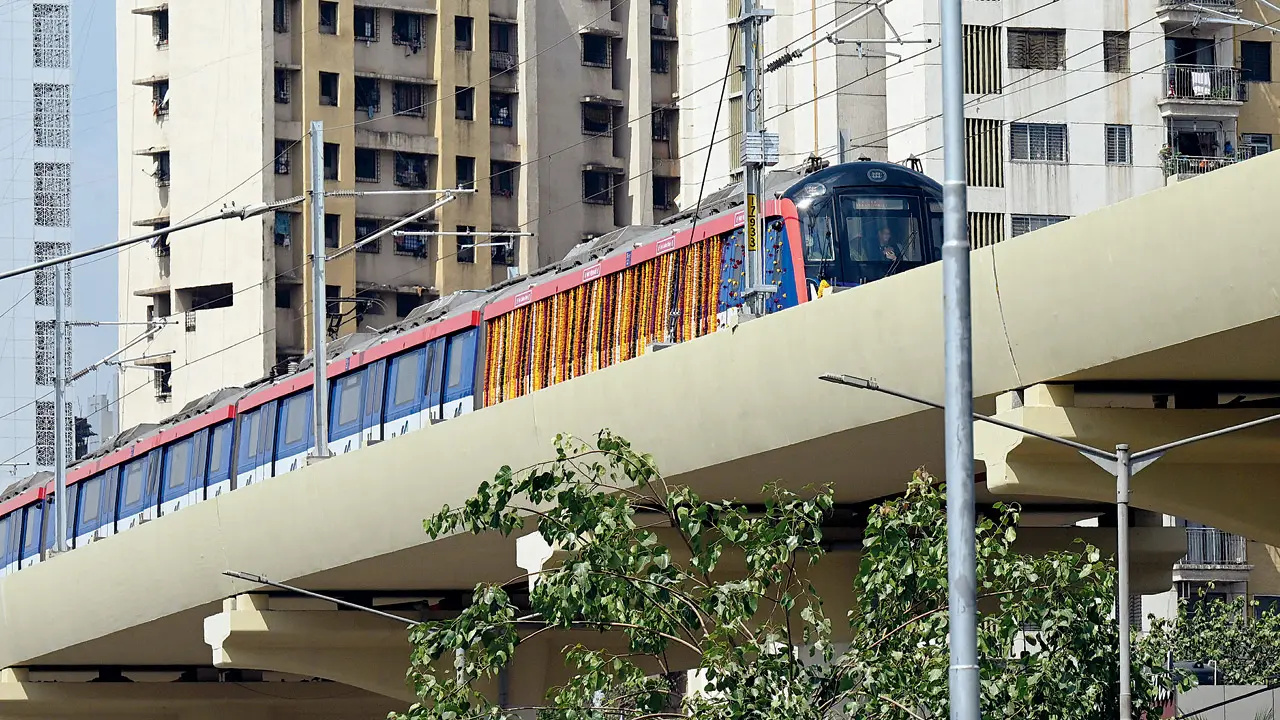
Mumbai’s expanding metro network has crossed another regulatory milestone, with Metro Line 9 securing mandatory safety clearance for its first operational segment. The approval confirms that the corridor meets statutory safety standards, yet daily commuters will have to wait longer, as authorities have not announced when passenger services will actually begin. The gap between technical readiness and public use once again highlights the complexities of urban transit rollouts in India’s largest metropolitan region.
The clearance applies to Phase 1 of Metro Line 9, a key extension planned to strengthen connectivity between Mumbai’s western suburbs and the rapidly growing Mira–Bhayandar belt. Trial operations were conducted on a nearly five-kilometre stretch linking Dahisar East with Kashigaon in Mira Road. With the safety certificate now in place, the infrastructure is formally ready for commercial operations from an engineering and regulatory standpoint. Urban transport planners see the corridor as critical for easing pressure on both road networks and the suburban railway system. Mira Road residents, in particular, face long daily commutes marked by overcrowded trains and frequent traffic congestion. Once operational, Metro Line 9 is expected to provide a faster, more predictable travel option while improving access to other metro corridors and major employment zones.
Despite these anticipated benefits, the absence of a confirmed launch timeline has drawn attention. Officials familiar with metro operations indicate that internal preparations, including staffing and operational planning, are underway, but no formal date has been communicated to the public. Similar delays on other newly cleared metro corridors have raised questions about coordination between project completion, administrative approvals, and political or logistical considerations. Metro Line 9 is designed as an extension of an existing operational line, enabling improved east–west movement across the western suburbs. In the interim, train maintenance and stabling arrangements are being managed through an existing depot already serving the adjoining corridor. Transport experts say such interim measures are common but underscore the need for long-term capacity planning as the network expands.
The delay has also revived broader debates around public accountability in urban infrastructure delivery. Mobility advocates argue that once safety approvals are granted, prolonged waits for passenger services dilute the public value of large capital investments. For a city grappling with air pollution, congestion, and inequitable access to jobs, timely activation of mass transit is seen as central to climate-resilient and inclusive growth. As Mumbai continues to invest heavily in rail-based mobility, the coming weeks will be closely watched for clarity on when Metro Line 9 will open to commuters. The challenge ahead lies not only in building infrastructure but in ensuring that completed, approved assets translate swiftly into everyday improvements in urban mobility and quality of life.
Mumbai Metro Line 9 Awaits Service Launch