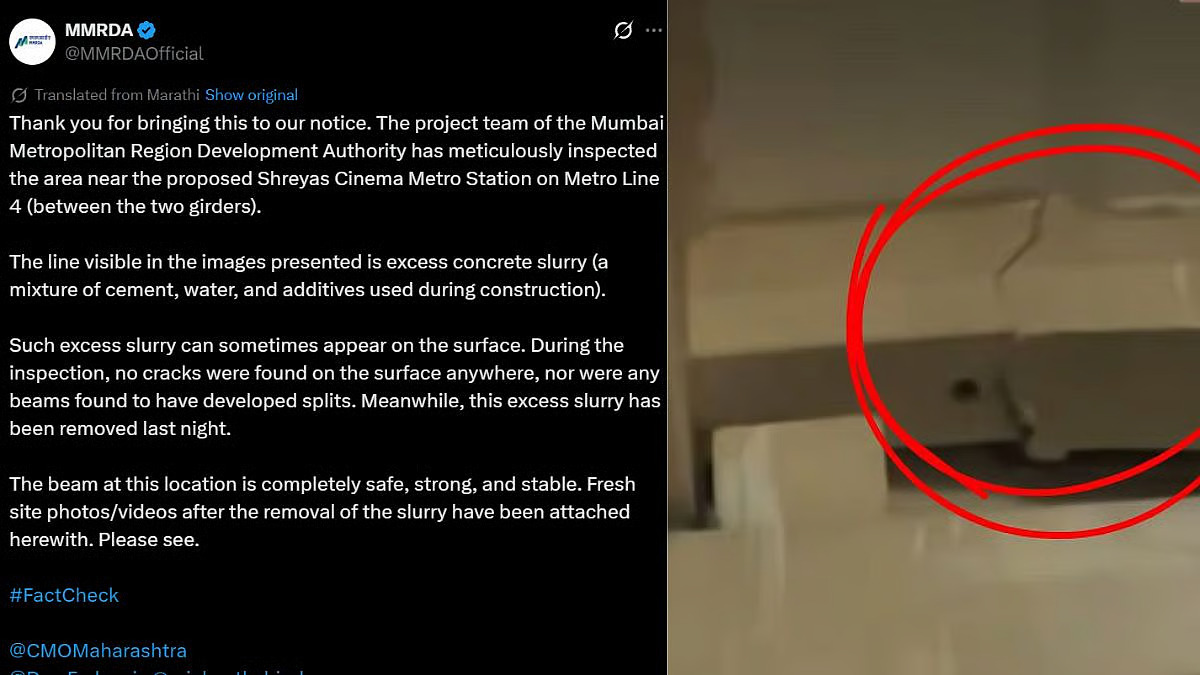
Heightened public scrutiny of Mumbai’s metro construction has led to a detailed technical inspection of an elevated beam along Metro Line 4, with authorities confirming that the structure is safe and free of structural defects. The assessment follows the circulation of construction visuals near the proposed Shreyas Cinema station, which raised concerns among residents already sensitised by recent infrastructure incidents elsewhere on the corridor.
Officials associated with the Mumbai Metropolitan Region Development Authority (MMRDA) said the inspection was carried out after a visible line was observed between two girders on an under-construction stretch near Shreyas Cinema. Given the location along a busy arterial road, the visuals prompted questions about whether the beam had developed a crack that could compromise safety. According to project engineers involved in the review, the marking was identified as excess concrete slurry — a surface residue formed during casting and curing processes when cement, water, and additives seep through shuttering joints. Such residues are common during elevated construction stages, particularly where precast elements are joined and finished on site. After verification, the surplus material was removed, and updated site images were recorded to document the condition of the beam post-clean-up.
Urban infrastructure experts note that the episode reflects a broader shift in how citizens engage with large public works. Elevated metro corridors, often constructed in plain view above densely populated neighbourhoods, are increasingly subject to real-time public observation. In a city where transport infrastructure failures can have immediate human consequences, even minor visual anomalies can trigger widespread concern. Officials confirmed that no surface-level or internal cracks were detected during the inspection, and that the beam continues to meet prescribed structural and safety standards. Routine quality checks, including visual inspections and engineering assessments, are conducted across Metro Line 4 as construction progresses in phases. Elevated sections remain exposed during execution, making interim appearances different from finished structures that commuters eventually see.
Metro Line 4, connecting Wadala to Kasarvadavali, is expected to play a critical role in reducing road congestion and dependence on private vehicles across Mumbai’s central and eastern suburbs. Urban planners view the corridor as essential to advancing low-carbon mobility by shifting daily travel from overcrowded roads and rail lines to electric mass transit. However, recent public reactions underline the importance of transparency alongside engineering rigour. Infrastructure specialists argue that timely clarifications, clear communication of construction stages, and visual documentation can help bridge the gap between technical processes and public understanding. This is particularly relevant as cities pursue climate-resilient infrastructure at scale, where trust in execution is as important as speed of delivery.
As work continues along Metro Line 4, authorities are expected to maintain closer engagement with citizens, ensuring that safety assurances are supported by visible accountability. For Mumbai’s metro expansion to achieve its intended social and environmental outcomes, consistent oversight and public confidence will remain central to its success.
Mumbai Metro Line 4 Beam Cleared After Review