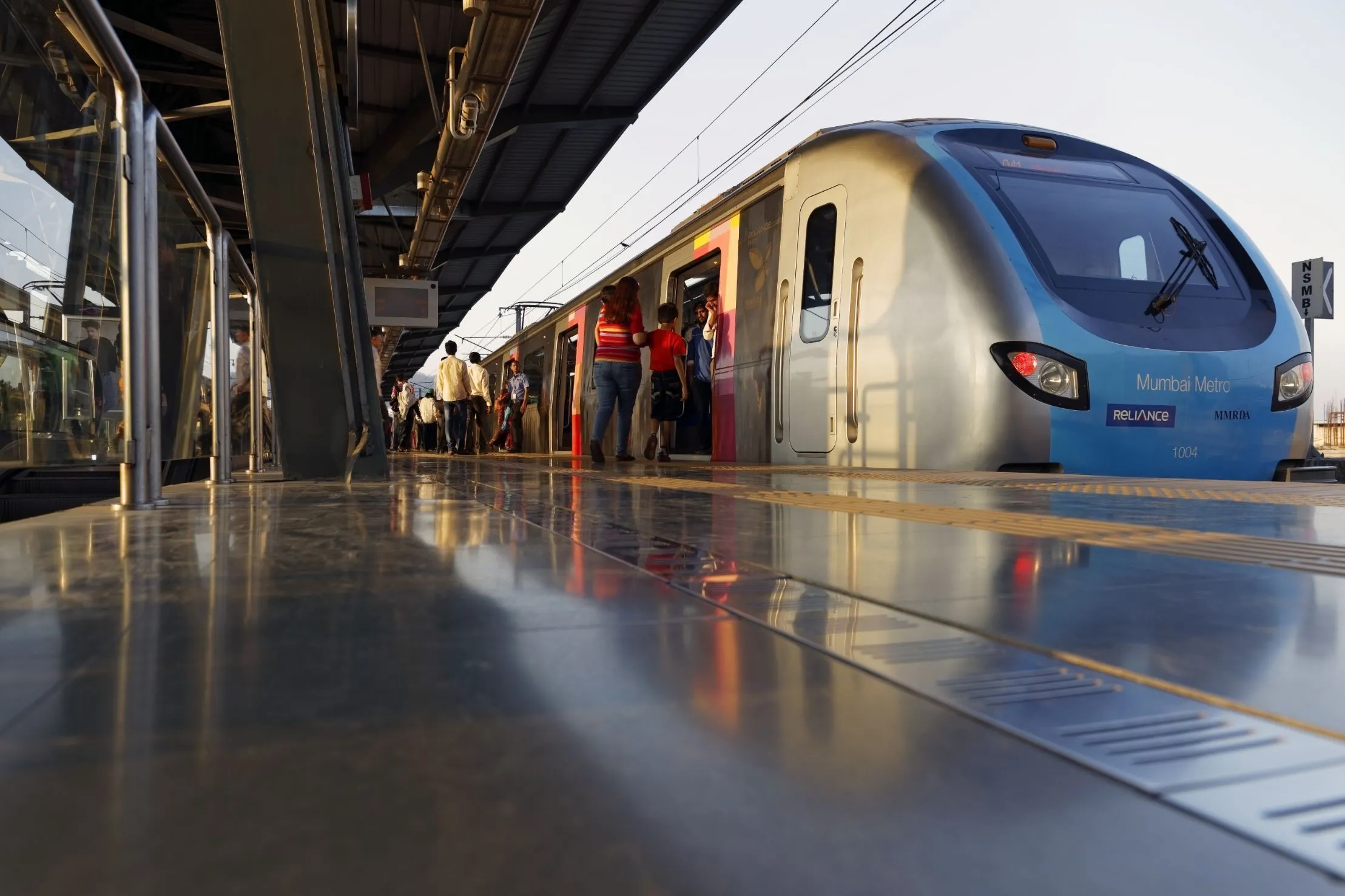
Mumbai’s fully underground Metro Line 3 is set to operate a denser timetable from January 5, 2026, as transport authorities move to address rising weekday demand and persistent peak-hour congestion along one of the city’s most critical transit corridors. The service enhancement will see a higher number of train runs on weekdays and Saturdays, reflecting changing commuter patterns as offices, commercial districts, and public institutions stabilise post-holiday operations.
Under the revised operating plan, weekday services on Metro Line 3 will increase to 292 train runs per day, up from the current 265. Saturday frequencies will also see a notable rise, with 236 trains scheduled daily compared to the earlier 209. Sunday operations will remain unchanged, indicating that demand pressures are most pronounced during work and business travel periods. Metro Line 3, often referred to as the Aqua Line, spans approximately 33.5 kilometres and forms a north–south spine connecting the western suburbs with Mumbai’s key employment and financial districts. The route links areas around Aarey and the Jogeshwari–Vikhroli Link Road to Bandra-Kurla Complex and further south to Cuffe Parade, cutting across some of the city’s most congested road and suburban rail corridors.
Urban transport experts note that increasing service frequency is a critical step in ensuring that high-capacity metro investments deliver intended benefits. With most of Line 3 located underground, the corridor offers a reliable alternative to road travel, particularly during monsoon months and peak office hours when surface congestion is at its worst. Higher train availability can reduce waiting times, distribute passenger loads more evenly, and improve overall travel comfort. The operational adjustment also has broader implications for Mumbai’s sustainability goals. Transport planners point out that encouraging a shift from private vehicles to mass rapid transit is essential for lowering urban emissions and improving air quality. By making the metro a more dependable option during peak periods, authorities aim to draw commuters away from cars, taxis, and overcrowded buses.
From an economic standpoint, improved reliability on Metro Line 3 is expected to support productivity in commercial hubs such as BKC and South Mumbai, where delays caused by traffic congestion carry tangible business costs. Better connectivity can also enhance labour mobility, allowing workers from different parts of the city to access employment opportunities more efficiently. Officials involved in metro operations indicate that service levels will continue to be reviewed based on ridership data and operational performance.Future adjustments may include tighter headways during peak hours and integration with feeder services to maximise network efficiency. As Mumbai continues to expand its metro footprint, the Line 3 service increase highlights a shift from merely building infrastructure to optimising its everyday use. For commuters, the immediate outcome is simpler: shorter waits, less crowding, and a more predictable journey through the heart of the city.
Mumbai Metro Line 3 Expands Peak Capacity