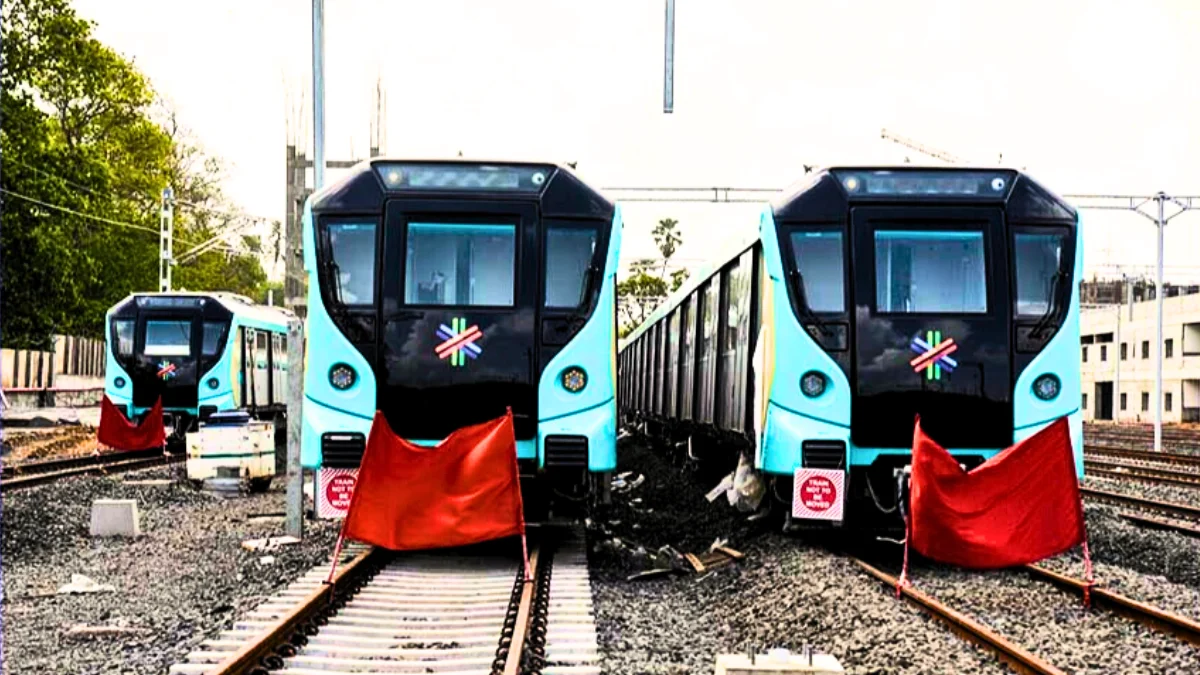
Mumbai’s newest underground transit corridor is set to carry more passengers each day as operating schedules are expanded across the city’s central spine. From January 5, additional train services will be introduced on Metro Line 3, strengthening capacity on one of India’s most closely watched urban mobility projects and signalling a shift from launch-phase operations to demand-led service planning.
The fully underground Aqua Line, running between Aarey JVLR and Cuffe Parade, will see a rise in weekday and Saturday services, according to officials overseeing operations. The increase reflects sustained growth in ridership since the corridor opened to the public late last year, particularly during peak commuting hours. Sunday operations will remain unchanged, aligning with comparatively lower travel volumes. Urban transport planners say the decision highlights a crucial moment in Mumbai’s transit transition. Metro Line 3 cuts through some of the city’s most employment-dense and congested districts, offering a faster alternative to overcrowded suburban rail and road-based travel. By increasing train frequency, the operator aims to reduce platform waiting times, distribute passenger loads more evenly, and improve travel reliability across the corridor.
Under the revised operations plan, weekday services will rise to nearly 300 trips per day, while Saturday frequencies will also be stepped up. Early-morning services will begin before 6 am, a move seen as particularly beneficial for shift workers, service-sector employees, and commuters connecting to long-distance rail and bus networks. Transport analysts note that such scheduling adjustments are essential for encouraging consistent metro usage beyond office hours. The Aqua Line passes through dense residential, commercial, and institutional zones including major business districts, heritage precincts, and interchange hubs with suburban rail lines. Each station has been designed with multiple access points to reduce surface congestion and shorten walking distances—an often overlooked but critical factor in making public transport attractive, especially for women, senior citizens, and first-time users.
From a sustainability perspective, the expansion of Mumbai Metro Line 3 services carries wider implications. Higher-frequency metro operations can displace a significant number of private vehicle trips, lowering tailpipe emissions and easing pressure on some of the city’s most polluted corridors. Urban economists point out that reliable underground connectivity also enhances land-use efficiency, supporting higher-density, transit-oriented development without expanding the city’s carbon footprint. Officials involved in network planning indicate that service levels will continue to be adjusted as ridership data stabilises across seasons. For Mumbai, where infrastructure projects often struggle to translate into everyday convenience, the focus is now shifting to operational maturity—ensuring that assets already built deliver measurable social, economic, and environmental returns.
As commuter behaviour evolves, the success of Mumbai Metro Line 3 services will increasingly be judged not by kilometres constructed, but by how seamlessly the system integrates into daily urban life.
Mumbai Metro Line 3 Expands Daily Services