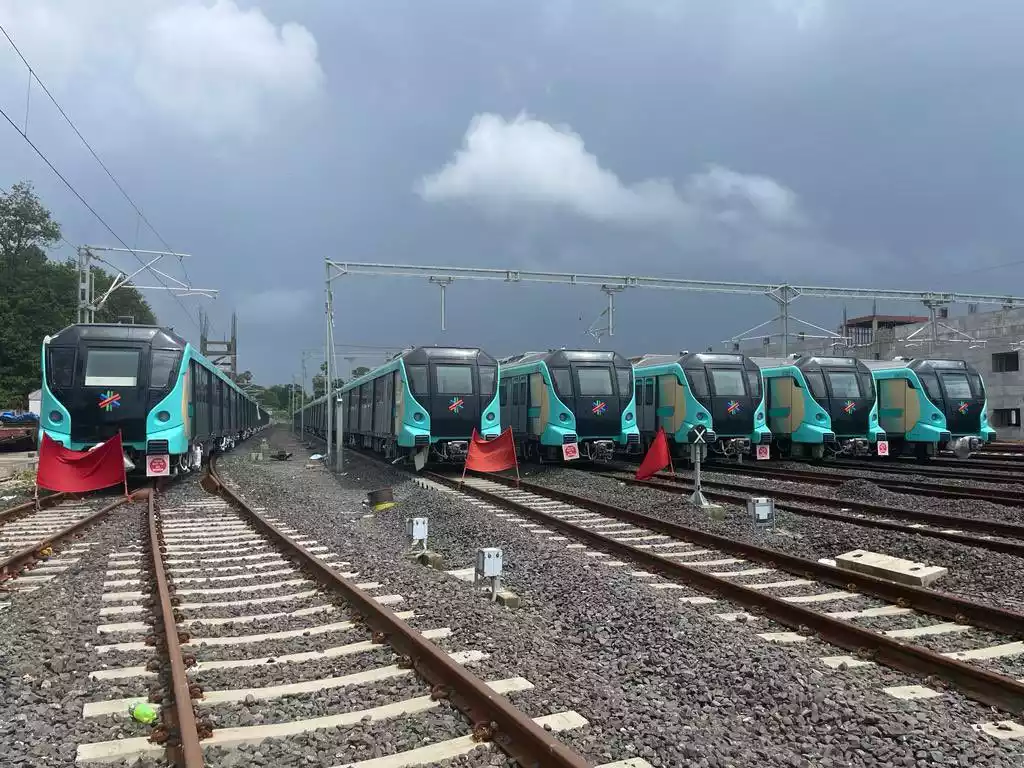
Mumbai’s underground Metro Line 3 is set to operate a denser service schedule from early January 2026, marking a key operational milestone for the city’s most ambitious mass transit corridor. The increase in daily train movements reflects rising commuter adoption of the north–south metro spine and signals a broader shift in how Mumbai is redistributing travel demand away from overcrowded roads and suburban rail lines.
From the revised timetable, weekday services on the Aqua Line will see a substantial expansion, while Saturdays will also witness a sharper rise in train frequency. The Sunday schedule will remain unchanged for now, reflecting comparatively lower ridership trends. Officials involved in operations said the adjustment follows continuous monitoring of passenger flow patterns, particularly during peak office hours and late evenings. Spanning 33.5 kilometres entirely underground, Metro Line 3 connects key employment and residential clusters—from the western suburbs through the city’s primary business district to South Mumbai’s historic commercial core. By linking dense office zones, interchange points, and residential neighbourhoods, the corridor has emerged as a critical alternative to some of the city’s most congested travel routes.
Urban transport planners note that increasing service frequency is often more impactful than expanding physical infrastructure in the short term. Shorter waiting times and predictable headways improve commuter confidence, encouraging a shift from private vehicles and ride-hailing services to high-capacity public transport. This has direct implications for reducing surface congestion, emissions, and fuel consumption in one of India’s most traffic-stressed cities. The operational scale-up also reflects a maturation phase for the Aqua Line, which is gradually transitioning from a new entrant to a core component of Mumbai’s daily mobility ecosystem. With ridership stabilising across multiple time bands, the focus has shifted to reliability, crowd management, and integration with other metro lines and suburban rail services.
Transport economists say such incremental enhancements are crucial for long-term mode shift. Unlike large capital projects, service optimisation delivers immediate benefits to commuters while maximising returns on existing infrastructure investment. In a city where travel time reliability directly influences productivity, even modest reductions in platform waiting can have outsized economic value. For commuters, the expanded schedule is expected to ease pressure during rush hours, particularly for those travelling between employment hubs and peripheral residential areas. Civic officials also see the change as a preparatory step ahead of future network extensions and interchange-driven ridership growth.
As Mumbai continues to invest in underground and elevated transit, the performance of Metro Line 3 will remain a key indicator of how effectively the city can balance growth with sustainability. The coming months will test whether higher frequency alone can absorb demand—or whether further service refinements will be needed to keep pace with a rapidly evolving urban commute.
Mumbai Metro Line 3 Adds Daily Capacity