


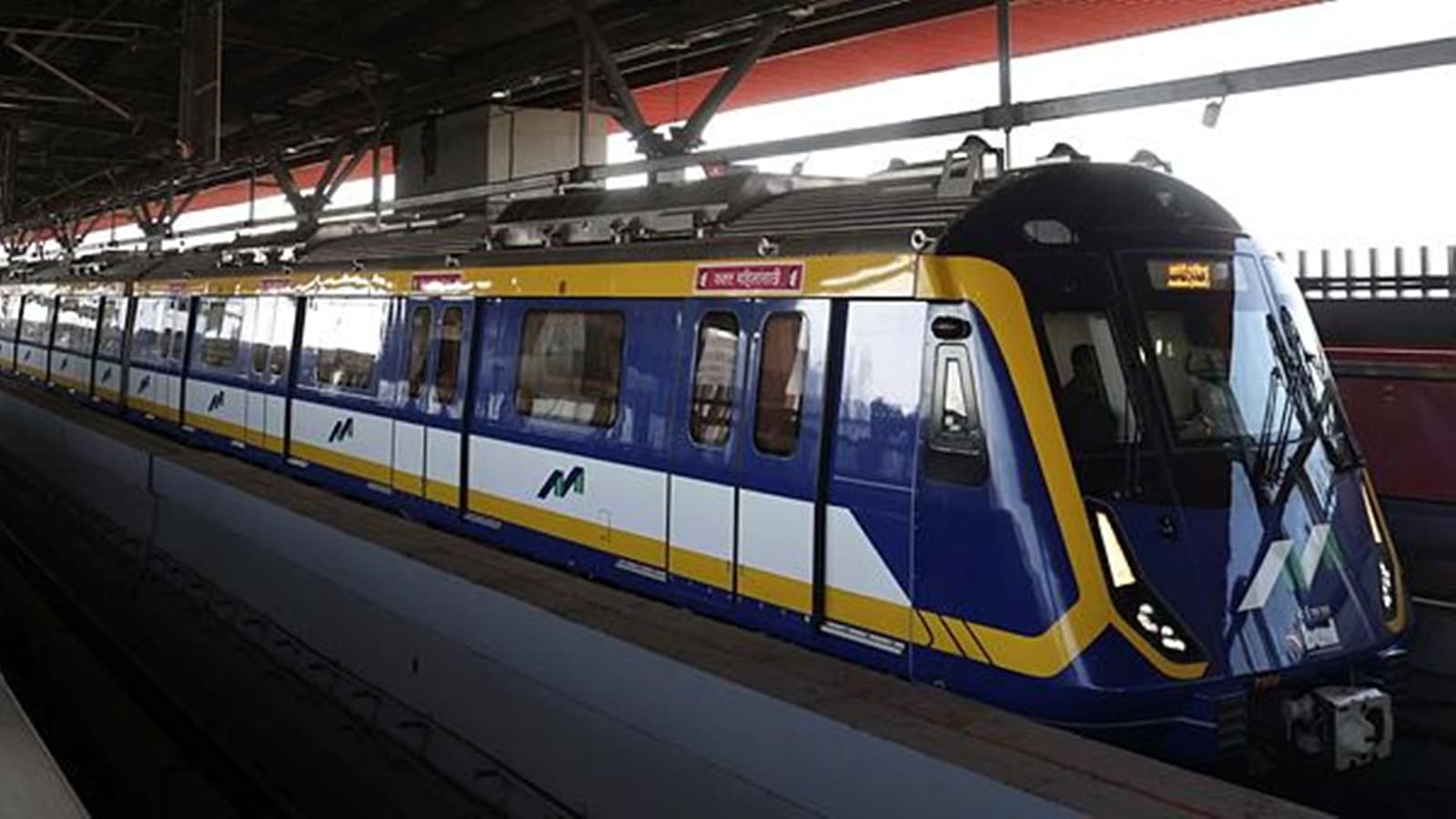
Mumbai is set for a major leap in urban connectivity as Metro Line 2B, the Yellow Line, moves closer to operational readiness. Spanning 23.64 km from D. N. Nagar in Andheri to Mandale in Mankhurd, this elevated corridor promises to redefine east-west mobility for millions of daily commuters.
Designed to serve key residential and commercial districts including Bandra, Kurla, Chembur, and Mankhurd, the Yellow Line integrates critical transit points across the metropolitan region. The Mumbai Metropolitan Region Development Authority (MMRDA) has confirmed that Phase 1 of the corridor—a 5.4 km stretch from Mandale to Diamond Garden—is expected to be opened to the public by the end of 2025. Civil works for the entire line have crossed the 80% mark, with the Mandale depot already 98% complete. The project, with an investment of over ₹10,986 crore, is central to Mumbai’s long-term transport vision. The corridor includes 20 stations and multiple interchange points, making it one of the most interconnected lines in the city’s expanding metro network. When fully operational by 2027, Metro 2B will link with six other metro lines, including the existing Metro Line 1 at D. N. Nagar, Line 2A, Line 3 near Bandra, Line 4 at Kurla, Line 7 at Chembur, and Line 8A in the future, alongside suburban rail connections at Kurla and Mankhurd.
The Yellow Line will deploy six-coach trains manufactured by BEML, incorporating features like regenerative braking, onboard surveillance, real-time communication systems, and mobile charging points. These will be serviced and maintained at the Mandale depot, which is designed to handle up to 72 rakes. Out of 96 sanctioned trains funded through loans from the Asian Development Bank (ADB) and the New Development Bank (NDB), 60 have already been delivered. Transport experts highlight that the Yellow Line could reduce travel times by up to 75% during peak hours, promoting a shift from road-based to rail-based commuting. For instance, commutes between Andheri and Chembur or Bandra and Mankhurd could see time savings of up to 20 minutes per trip. With a projected daily ridership of over 10 lakh passengers by 2031, the line is poised to significantly ease congestion on Mumbai’s road network.
Despite previous delays due to alignment changes and land acquisition challenges, the current pace of progress signals a renewed push toward delivery. For a city burdened by traffic density and rising pollution levels, Metro Line 2B represents not just an infrastructural upgrade but a vital climate-resilient solution aligned with India’s net-zero goals. As the countdown to partial commissioning begins, Mumbai stands on the cusp of a transformative chapter in its mobility landscape—one that promises faster, greener, and more equitable urban transport access.
Also Read : Adani Airports Launches Cityside Infra Development Across Eight Cities
