


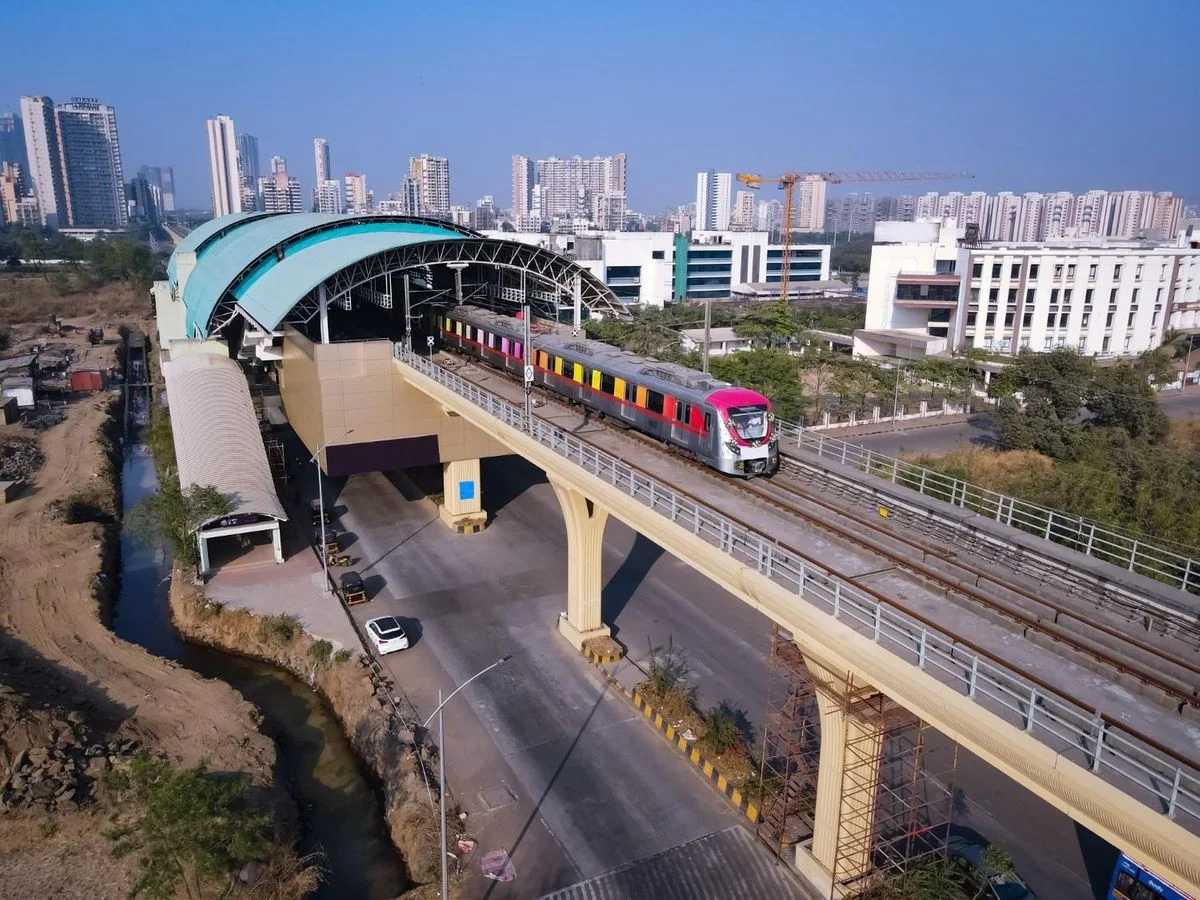
Mumbai’s upcoming Metro Line 14, spanning a 39‑kilometre Margenta corridor from Kanjurmarg to Badlapur, is poised to transform connectivity between Mumbai and Thane. With a ₹18,000‑crore investment, the route is designed to reduce road travel time by 1.5 to 2 hours, support nearly 700,000 daily passengers, and strengthen sustainable urban mobility across key residential, commercial, and industrial hubs.
As the Mumbai Metropolitan Region Development Authority (MMRDA) moves towards floating tenders and finalising a public–private partnership model, the project is entering a decisive phase. The Detailed Project Report, prepared by Milan Metro consultants, details a hybrid structure: an underground stretch from Kanjurmarg to Ghansoli and elevated tracks extending to Badlapur, ensuring efficiency while negotiating ecologically sensitive areas such as Parsik Hills and the Thane Creek Flamingo Sanctuary. MMRDA officials forecast significant reduction in congestion on arterial corridors, particularly during peak hours, as commuters shift from roads to this rapid transit link. Equipped to serve nearly seven lakh passengers each day, the corridor promises relief for suburban commuters currently dependent on overcrowded trains and lengthy road journeys.
The line will thread through densely populated and transit‑oriented nodes: Vikhroli, Airoli, Ambernath and Palava City. By bridging significant urban zones, it supports the editorial vision of eco‑friendly, gender‑neutral, and equitable urban mobility. Cleaner mass transit helps lower per‑capita carbon emissions and facilitates inclusive access across socio‑economic groups. With nearly 15 stations planned on the 39‑km stretch—and possibly extending to 45 km and 40 stations as per updated metro network plans—the line is set to establish itself as one of India’s longest metro corridors. MMRDA’s Metro PIU portal confirms the ambitious scope of the corridor as part of its broader 337 km metro expansion strategy
Crucially, the project’s proximity to environmental zones demands rigorous oversight. Dialogue with environmental experts and forest authorities is underway to secure required permits, especially given alignment near the Thane Creek Flamingo Sanctuary and Parsik Hills. Ensuring minimal ecological disruption will be imperative to maintain the sustainability credo of the initiative. Economic projections reveal promising outcomes. Reduced commute times translate to enhanced workforce productivity, alongside potential uplift in property values and local business growth along the route. With a catchment area encompassing rapidly growing suburbs, the infrastructure leap aids equitable urban development and reduces reliance on private vehicles, contributing to decongestion and air quality improvements.
MMRDA’s strategic decision to explore a PPP model is informed by previous experiences and global best practices. A spokesperson highlighted that lessons from earlier metro PPP efforts would influence vendor selection, risk‑sharing mechanisms, and technical structuring. If construction kicks off within a year as projected, Mumbai will witness a rapid rollout of its eastern corridor. Such progress aligns with MMRDA’s vision of achieving a 337 km metro network by 2026, which intends to double the region’s public transport capacity Yet, the project is not without challenges. Land acquisition remains complex in urban and peri‑urban zones. Operational integration with existing transit systems—such as suburban trains, bus services, and other metro lines—will require robust planning. Further, execution through sensitive ecosystems will demand transparency, innovation, and public engagement.
In summary, Mumbai Metro Line 14 is more than an infrastructure project; it is a critical platform to advance sustainable, low‑carbon, and people‑centric mobility in one of India’s most congested urban corridors. If delivered with adherence to equity, environmental safeguards, and administrative efficiency, it could serve as a model for metro expansion nationwide. As Mumbai readies its metro network for a decisive leap, the line from Kanjurmarg to Badlapur stands out—not just for its scale, but for its potential to redefine connectivity, reduce travel times, and bolster the vision of inclusive and climate‑resilient urban transport. Time will tell whether execution lives up to promise, but the blueprint aligns well with the needs of a region in search of modern, sustainable mobility.
Also Read : MMRDA Clears Few Illegal Bhiwandi Constructions Under Regularisation Scheme
