


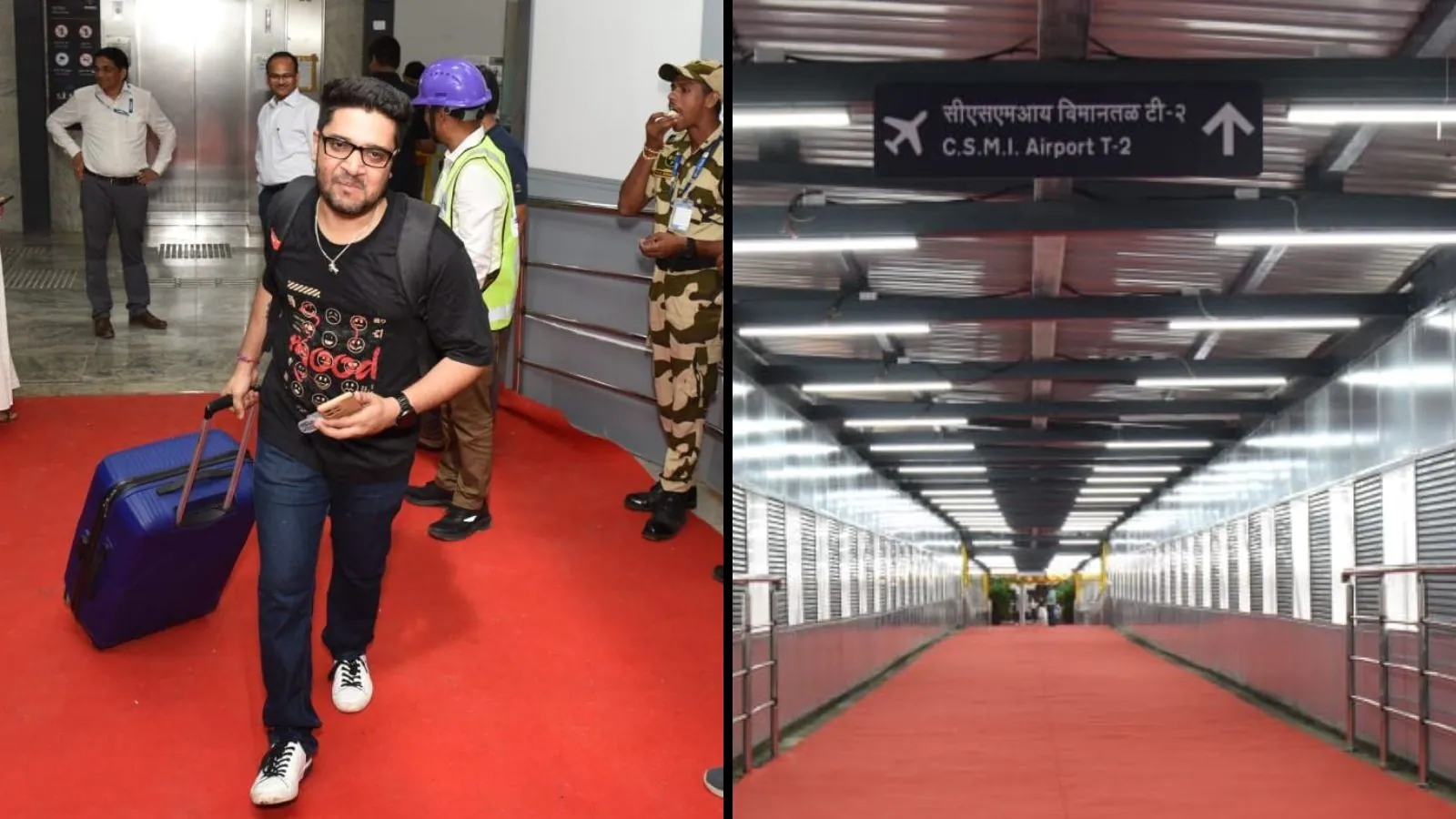
Mumbai Metro has unveiled a direct pedestrian bridge linking its underground Line 3 station to Chhatrapati Shivaji Maharaj International Airport’s Terminal 2, cutting the walking distance for air passengers from 450 metres to just 118 metres.
The newly inaugurated steel foot overbridge, measuring 88 metres in length and 4.3 metres in width, offers seamless access between metro and air travel. Standing 23 metres above the under-construction Metro Line 7A, the structure has been completed after meticulous planning and strict safety protocols to ensure it did not disrupt ongoing infrastructure works in the area. Officials from the Mumbai Metropolitan Region Development Authority (MMRDA) confirmed that the project was executed without halting parallel construction activities, reflecting a coordinated approach to urban infrastructure. The bridge is expected to significantly enhance passenger convenience by eliminating the need for travellers to cross busy roads with luggage or rely on motorised transport for last-mile connectivity.
An official explained that the engineering challenge was formidable, as the bridge had to be positioned at a considerable height above an active metro worksite. “Precision was critical at every stage of planning and execution to ensure safety and structural stability,” the official noted. The steel design was selected for its durability, strength, and minimal environmental footprint compared with conventional concrete solutions. With Metro Line 3 now partially operational, the bridge is seen as a vital connector that strengthens Mumbai’s sustainable urban mobility framework. Authorities highlighted that reducing dependence on vehicles for airport access directly contributes to lower carbon emissions and promotes greener travel behaviour among citizens.
Urban transport experts point out that seamless intermodal integration is the hallmark of modern cities, and Mumbai’s move brings it closer to global standards of airport connectivity. Many international airports already feature such direct metro-to-terminal access, which reduces congestion, shortens travel time, and enhances the commuter experience. For a city battling severe air pollution and vehicular traffic, such infrastructure interventions are not only about convenience but also about sustainability. The MMRDA emphasised that the bridge will benefit millions of passengers annually, particularly business travellers and international fliers, by providing faster, safer, and more reliable airport access. The authority also underlined that the project represents the intent to merge two large-scale transport networks—metro and aviation—without creating bottlenecks in other ongoing works.
For Mumbai, where urban density, traffic bottlenecks, and environmental concerns often challenge mobility planning, the new link is more than just an engineering achievement. It reflects a shift towards equitable and eco-friendly solutions that prioritise pedestrian safety and reduce the reliance on carbon-intensive last-mile options. The bridge is now operational, providing travellers with a quicker, safer, and more sustainable gateway between metro services and international air travel.
Also Read : Himachal reels under relentless monsoon fury, lives and lifelines hit
