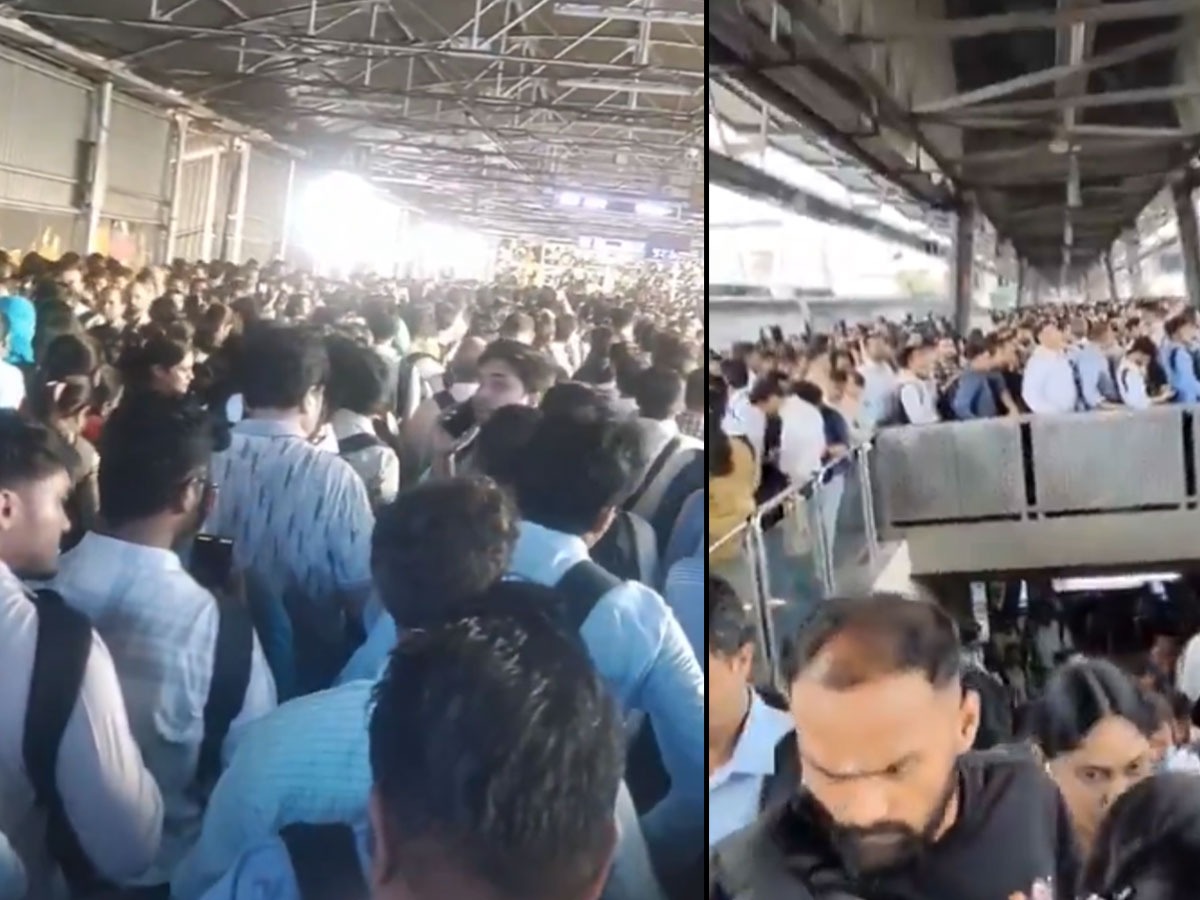
Mumbai’s east–west metro corridor experienced significant evening delays on Wednesday after a technical issue disrupted services between Versova and Azad Nagar, slowing operations and triggering large crowds across multiple stations. The incident on the Versova–Ghatkopar route, also known as Mumbai Metro One, caused peak-hour congestion and drew widespread commuter complaints online. Although services were restored within a short window, the disruption reopened concerns about system reliability in a city increasingly dependent on mass rapid transit for sustainable mobility.
According to an update issued by the metro operator on its official social media platform, trains were briefly running at extended intervals along the affected stretch, while the rest of the line continued to operate normally with one additional train deployed. Commuters, however, reported that services had slowed earlier than the official announcement, with some sharing videos of crowded platforms and queues spilling over staircases. A transport official said the glitch was “operational in nature” and was contained quickly, but acknowledged that even minor snags can have an outsized impact during evening rush hours. With ridership on the corridor rising steadily, the official added that building resilience into the system is essential for supporting a city where over half of daily trips are shifting towards public and shared mobility.
Commuters on the ground described a more difficult experience. Reports pointed to only one track functioning at a key station, with several passengers unaware of the nature or duration of the delay. Industry experts note that communication lapses, even short ones, can compound frustrations when thousands of people depend on punctual services to move between job centres, residential clusters, and last-mile transport options. By 5:41 pm, operators announced that normalcy had been restored, with services running as per schedule. While the prompt update helped diffuse confusion, many users expressed disappointment over the recurring nature of evening-hour disruptions across various public transport systems. They argued that Mumbai’s growing reliance on metro services requires faster system diagnostics, redundancy planning, and clearer real-time commuter information.
Urban mobility planners point out that breakdowns not only inconvenience passengers but also weaken trust in high-capacity, low-emission transport — a key pillar of Mumbai’s long-term climate and congestion mitigation strategy. As the city expands its metro footprint, ensuring uninterrupted services becomes crucial for reducing private vehicle dependence and supporting equitable access to mobility for women, daily-wage workers, students, and other groups who rely heavily on predictable transit. While Wednesday’s issue was resolved quickly, it underscores the need for continuous upgrades, transparent communication, and investment in reliable digital and mechanical systems to support a sustainable and commuter-centric metro network.
Mumbai Metro Glitch Disrupts Versova–Ghatkopar Services And Triggers Heavy Evening Crowds