


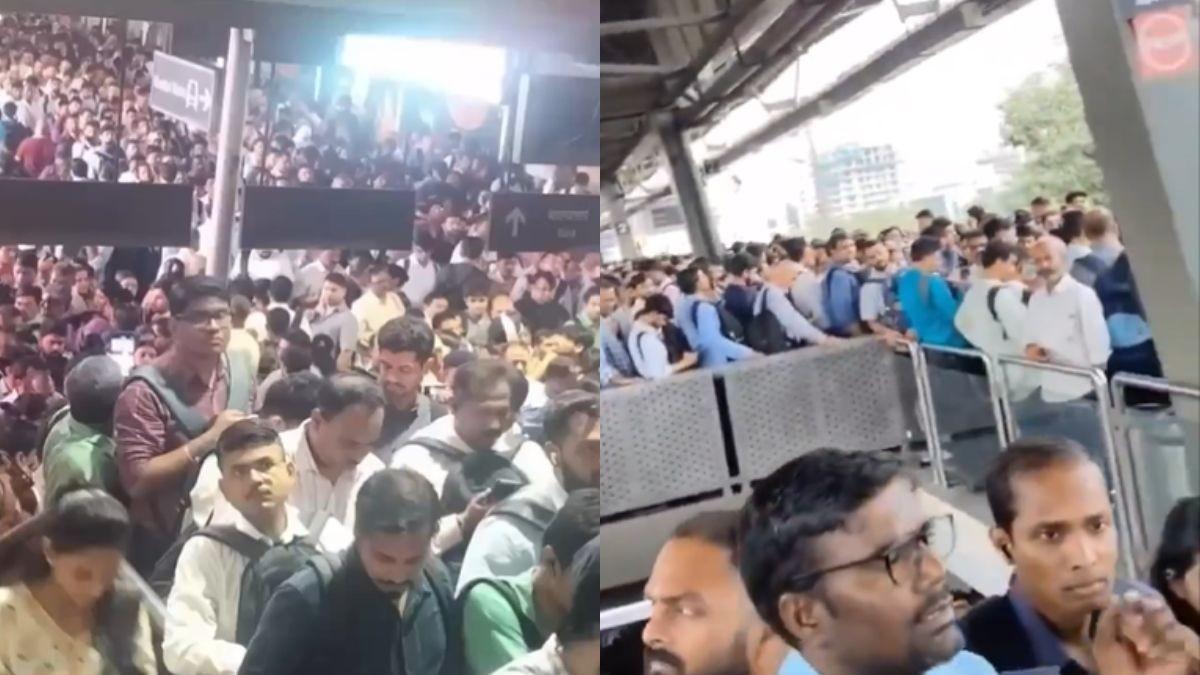
A single train delay on Mumbai Metro Line 1 on Monday morning triggered severe overcrowding at Ghatkopar station, underscoring longstanding commuter safety concerns despite ongoing capacity discussions. One train pulled out of service due to a speed issue, pushing the morning rush well beyond safe levels and prompting public outrage.
According to the system operator, the affected train failed to reach protocol speed and was withdrawn around 8:30 am, causing approximately 500 additional passengers to accumulate on the platform during a 45‑minute window. While backup (“hot‑standby”) trains were deployed, normalisation only occurred after a frustrating stalemate for commuters. The delay came amid a broader capacity crisis: each Metro 1 rake carries just four coaches, accommodating 1,800 passengers during peak hours. With 16 trains and 36 scheduled trips operating at a 3 min 20 sec frequency, the corridor still ferries approximately 65,000 commuters daily. However, demand has consistently outpaced safety margins.
Advocacy groups and commuter voices, ranging from civic associations to social media platforms, blasted the metro operator’s sluggish response. One commuter described the scene as a “stampede‑like situation,” arguing that revenue objectives were being prioritised over public welfare. Activists called for immediate introduction of six‑coach trains and increased frequency to avert future hazards. The operator has proposed solutions: they’ve requested funding via the National Asset Reconstruction Company for procurement of additional coaches and are evaluating the return of mixed‑loop services between Ghatkopar and Andheri. Though deployable in April, mixed‑loop trains were suspended in June due to declining ridership at western terminals.
Industry analysts say such operational bottlenecks are expected in high-density corridors but emphasise that swift regulatory oversight and flexible scheduling are essential. They welcomed the operator’s willingness to explore long‑term additions yet cautioned against protracted approvals that leave commuters vulnerable. Mumbai’s urban planners stress the need for proactive capacity planning, especially on crucial east‑west lines. The Ghatkopar delay highlights how even minor technical glitches can spiral into systemic pressure points. With commuter safety and gender-equitable access at stake, city officials are urged to fast-track infrastructure upgrades while maintaining governance over public services.
The incident serves as a stark reminder that Mumbai’s mass-transit systems must evolve continuously. While technical issues are inevitable, the response strategy—ranging from fleet expansion to redundancy planning—will determine whether the city’s metro fulfils both its sustainable ambitions and commuter safety imperatives.
Also Read : Gujarat Finishes 16th River Bridge for Mumbai-Ahmedabad Bullet Train Project
Mumbai Metro Glitch at Ghatkopar Sparks Peak Hour Rush Panic
