


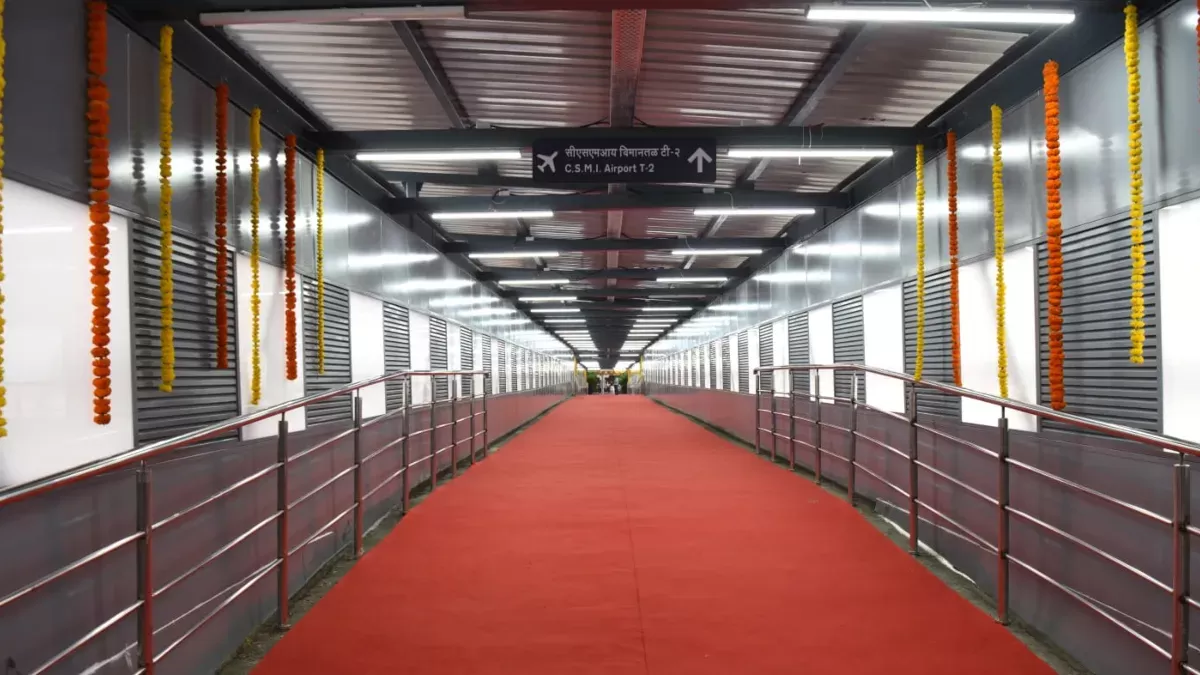
Mumbai’s urban transit and airport connectivity has received a major boost with the inauguration of a new foot overbridge linking Metro Line 3 directly to Chhatrapati Shivaji Maharaj International Airport’s Terminal 2. The 100-metre bridge significantly reduces the distance commuters need to cover from 450 metres to just 118 metres, enabling faster, safer, and more convenient access between the metro and the terminal.
The bridge connects the CSMIA–Terminal 2 Metro Station on the Aqua Line to Lift Entry/Exit A1 of the terminal building, allowing travellers to bypass heavy traffic areas along the final stretch. Transport officials highlighted that the facility has been designed with ample width to accommodate passengers carrying luggage while ensuring a smooth flow of foot traffic. The project forms part of broader efforts to enhance last-mile connectivity and promote sustainable, low-carbon urban mobility in Mumbai. Authorities emphasised that this new pedestrian corridor will not only improve passenger convenience but also support eco-friendly travel by encouraging metro usage over private vehicles. Experts noted that by reducing road congestion near the airport, the footbridge contributes to lower vehicular emissions and a more climate-resilient transport environment.
CSMIA, spread over 1,900 acres, is India’s second busiest airport and the world’s busiest single-runway facility. It handles direct flights to 54 international and 67 domestic destinations, making it a critical hub for both business and leisure travel. Transport planners highlighted that seamless integration of metro and airport infrastructure is essential for improving operational efficiency and enhancing commuter experience. The bridge is also expected to ease pressure on airport access points, particularly during peak travel hours. Urban mobility experts explained that direct, traffic-free access from metro stations to airport terminals aligns with global best practices in airport-city connectivity and reflects Mumbai’s growing emphasis on integrated, sustainable transport networks.
While the facility currently serves Terminal 2, officials are exploring further initiatives to link other metro corridors and terminal buildings, enhancing overall commuter convenience and promoting gender-neutral, accessible, and inclusive urban transport. Analysts suggest that such infrastructure upgrades can reshape travel behaviour, encouraging the use of public transit and reducing dependency on private vehicles. The operationalisation of the CSMIA footbridge is viewed as a critical step in Mumbai’s ambition to build a modern, efficient, and environmentally conscious urban transport ecosystem.
Also Read: Mumbai Metro-14 to Connect Kanjurmarg With Badlapur
