


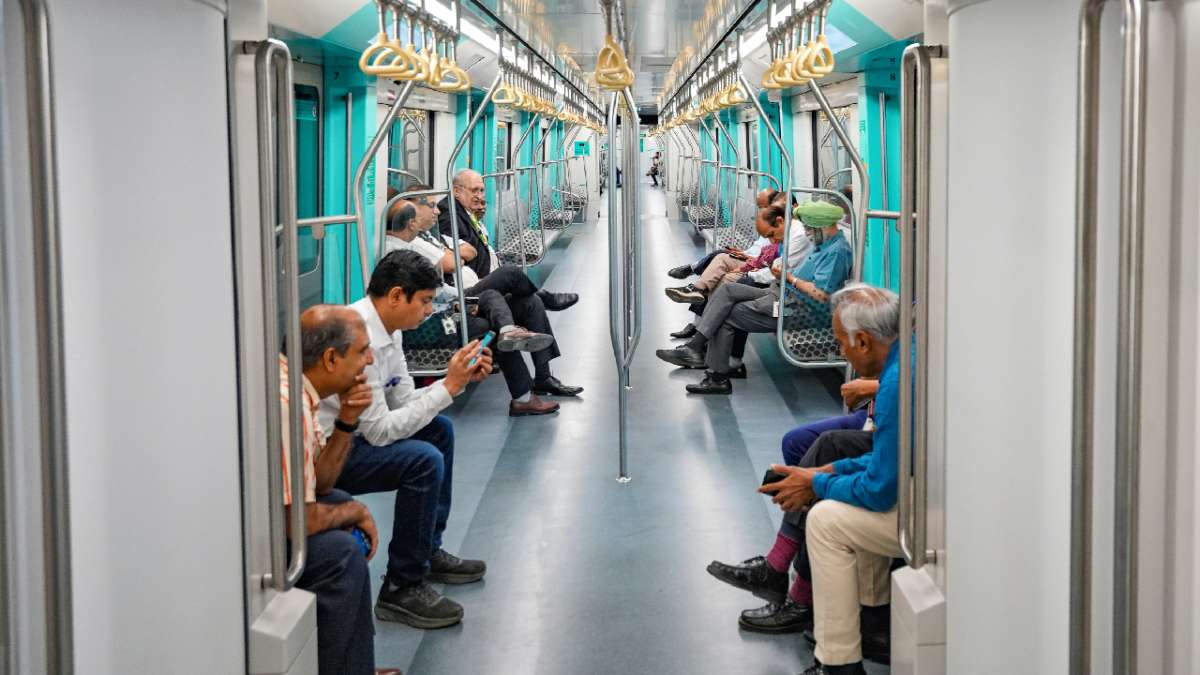
Mumbai has taken a decisive step towards reshaping its transport network with the approval of Metro Line 11, a 17.5-km corridor connecting Wadala to the Gateway of India. Valued at over Rs 28,000 crore, the project is expected to transform the mobility landscape of South Mumbai, integrating historic precincts with modern transit infrastructure while aiming to cut congestion on roads and suburban trains.
Officials confirmed that the alignment will be a mix of 13 km underground and 4.3 km elevated stretches, featuring 14 stations. The route will not only link Metro Line 4 at Wadala and Metro Line 3 at CSMT but also offer improved access to Dharavi through Sion, where a multimodal hub combining rail, metro and bus connectivity is on the drawing board. With this alignment, the metro will serve close to six lakh commuters daily by 2031, with capacity projections rising to over one million by 2055. The revised route has been designed to overcome the engineering difficulties of constructing through dense, older neighbourhoods. Instead, the line will cut across prominent destinations such as Regal Circle, Flora Fountain, Crawford Market, and Fort, before terminating near the Gateway of India. This change is expected to not only serve working commuters but also ease access for millions of domestic and international tourists. Possible stations near Marine Drive and Dhobi Talao could offer the first direct metro connection to the city’s coastal attractions.
The financial structuring of the project includes equity support of Rs 1,338 crore and interest-free central assistance of Rs 917 crore, with the larger share of funding to come from international agencies such as the Japan International Cooperation Agency (JICA) and state-managed loans. The Mumbai Metropolitan Region Development Authority (MMRDA) will implement the project, supported by technical planning from the Delhi Metro Rail Corporation. Each six-car train will run at speeds of up to 80 km per hour, with a peak headway of two and a half minutes. Experts noted that such high-frequency operations are critical for reducing the pressure on overcrowded suburban trains, which remain the backbone of Mumbai’s mobility system. The project is seen as essential to achieving the city’s larger transition towards zero-carbon, sustainable, and equitable transport infrastructure.
Metro Line 11 is also part of a broader Rs 75,000 crore infrastructure package that includes a circular metro in Thane, an elevated road linking Thane to Navi Mumbai International Airport, and thousands of new suburban train coaches under ongoing rail modernisation schemes. Officials said this integrated approach reflects a shift towards multimodal, low-emission transport systems that can help Mumbai transition to a cleaner and more inclusive urban future. While construction timelines remain challenging given the density of South Mumbai, planners argue that the long-term gains — from reduced vehicular pollution to decongested streets — will play a pivotal role in reshaping the city’s mobility ecosystem. For residents and visitors alike, Line 11 offers the prospect of a faster, cleaner, and more sustainable journey through the heart of Mumbai.
Also Read : Mumbai To Fully Switch BEST Bus Fleet Into Electric Vehicles By 2027
