


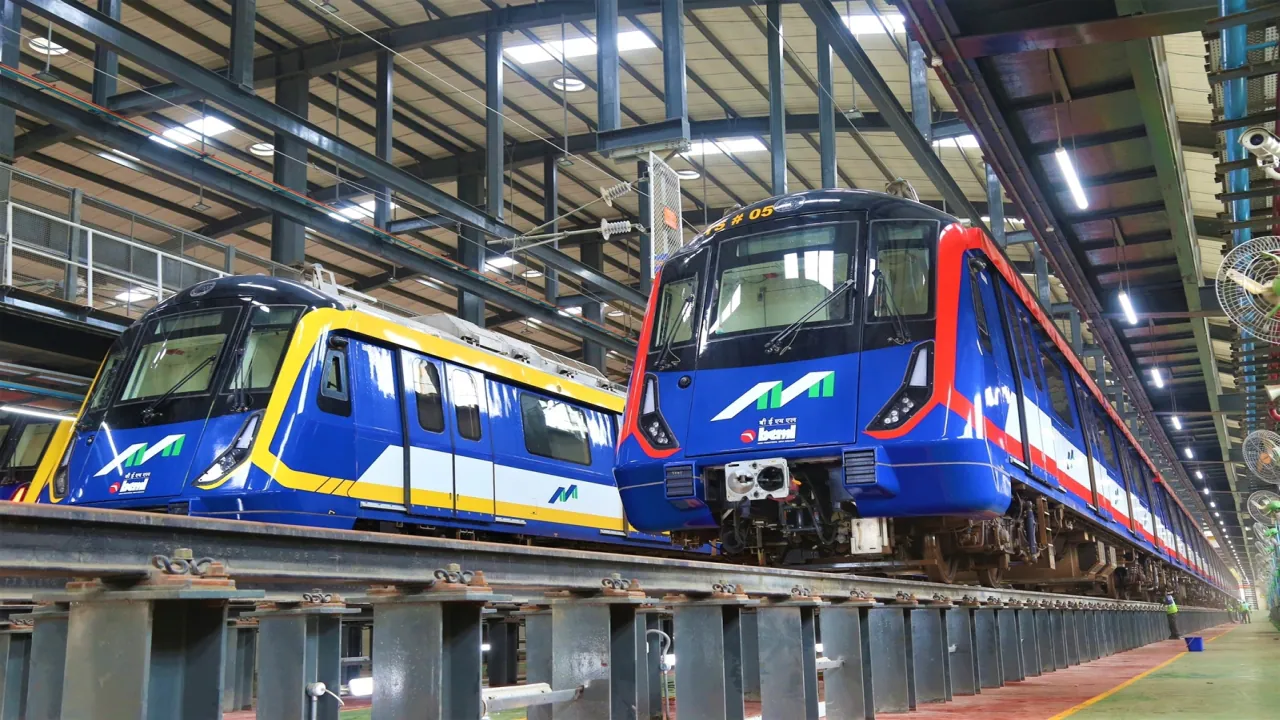
Mumbai is preparing for a transformative leap in public transport infrastructure, with the launch of four new metro corridors planned by the end of 2025. The expansion, led by the Mumbai Metropolitan Region Development Authority (MMRDA), promises to address long-standing issues of traffic congestion, poor east-west connectivity, and the overburdened suburban railway network.
According to senior officials, Metro Lines 2A, 2B, 5, and 9 are progressing steadily and are targeted for operational launch within the next 18 months. These lines will collectively add over 70 kilometres of high-capacity rapid transit, integrating key urban zones from Dahisar to DN Nagar, Mandale, Thane, Bhiwandi, Kalyan, and Mira Bhayandar. The enhanced reach is expected to connect residential suburbs to commercial hubs, including industrial estates and business districts. This infrastructural expansion will also improve multimodal integration, with planned interchanges connecting to existing Metro Line 1, the upcoming underground Metro Line 3 (Colaba-SEEPZ), and suburban rail nodes. Intermodal convenience is further set to improve with the launch of the ‘Mumbai One’ mobile application—a government-backed unified ticketing platform designed to enable QR-based access, UPI payments, route tracking, and integrated services across different transit systems.
Officials overseeing the mobility rollout stated that the app is being built with a long-term goal of full multimodal integration, including city buses and suburban rail, aligning with the state government’s Mobility as a Service (MaaS) vision. The app is also intended to reduce manual ticketing, cut queues, and promote cashless travel among Mumbai’s estimated 80 lakh daily commuters. The new metro corridors are expected to play a catalytic role in reducing road traffic and air pollution, particularly across urban stretches notorious for bottlenecks such as Western Express Highway and LBS Marg. Experts estimate that daily ridership across new corridors could eventually cross 20 lakh, easing pressure on BEST buses and the Western and Central Railways.
Real estate analysts have already flagged increased interest in areas along the upcoming lines, with Mira Road, Bhiwandi, and DN Nagar witnessing a spike in enquiries. Local officials pointed out that increased connectivity will not only improve quality of life for daily commuters but also stimulate equitable economic growth across Mumbai’s peripheries. Backed by international funding from agencies like the Asian Development Bank (ADB), Japan International Cooperation Agency (JICA), and the World Bank, the metro expansion has become emblematic of Mumbai’s smart city transition. With the underground Metro Line 3 also nearing completion, 2025 could mark a new chapter in Mumbai’s quest to become a seamlessly connected and sustainable metropolis.
Also Read : Mumbai Fines Seven Establishments For Illegal Waste Dumping Across City
