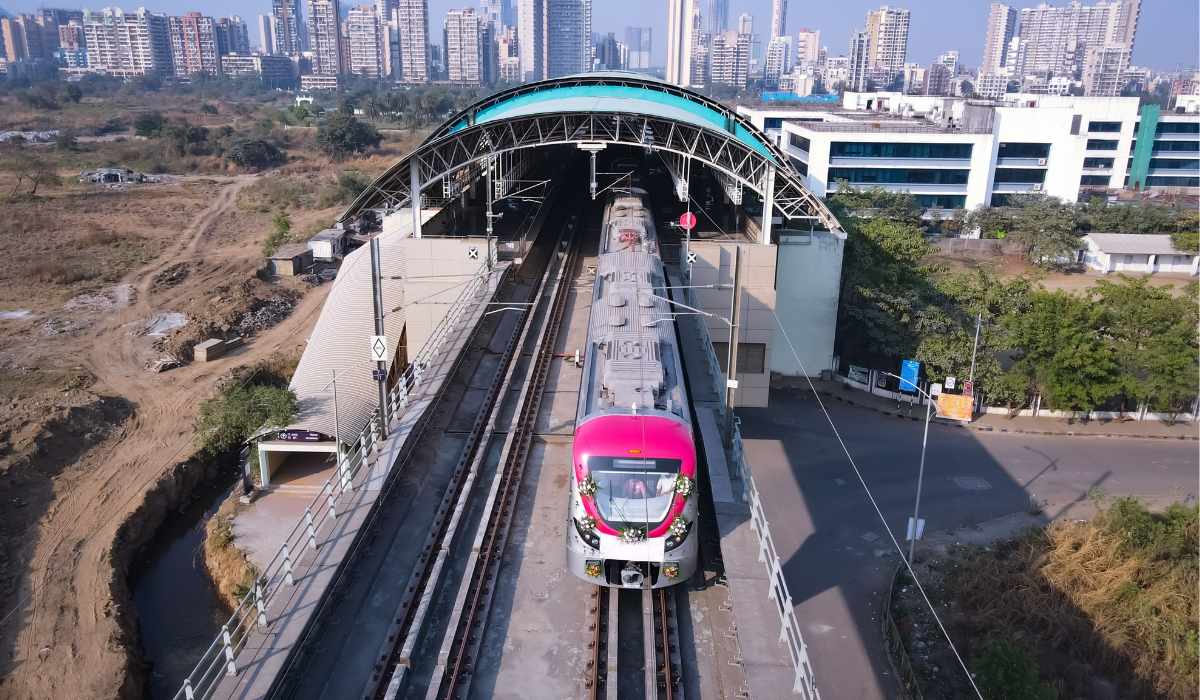
Partial operations on key stretches of the Mumbai Metro network are set to begin this week, marking a significant step in expanding rapid transit access across Mumbai. The phased opening of two new corridors is expected to improve connectivity between dense residential zones and major employment centres, while offering relief to overstretched suburban transport systems.
The rollout covers initial segments of Metro Line 2B and Line 9, both of which serve fast-growing suburban belts with limited high-capacity public transport options. Urban planners note that these areas have seen rapid population growth without proportional upgrades in transit infrastructure, resulting in long travel times and heavy dependence on private vehicles and informal transport. The Mumbai Metro expansion is particularly significant for east–west connectivity, a long-standing challenge in the city’s mobility network. By linking western suburbs with eastern industrial and residential clusters, the new corridor reduces reliance on circuitous road routes that often face severe congestion during peak hours. This shift is expected to lower travel uncertainty for daily commuters and improve access to jobs, education, and services.
In the northern suburbs, the new metro stretch connecting Dahisar and Mira Road addresses a critical mobility gap in the extended metropolitan region. These neighbourhoods, part of the rapidly urbanising Mira-Bhayandar belt, have struggled with inadequate transit links despite rising housing demand. The Mumbai Metro expansion in this zone is likely to support more balanced urban growth by making peripheral areas more accessible without increasing road traffic. Transport experts highlight that such phased openings, even before full project completion, can generate early benefits for commuters while allowing authorities to test system performance under real conditions. Officials overseeing the project have prioritised safety clearances, signalling integration, and station readiness before opening services to the public.
Beyond immediate commuter benefits, the Mumbai Metro expansion also carries wider environmental implications. By shifting a portion of daily trips from road to rail, the system can contribute to reducing vehicular emissions and fuel consumption—an important step in a city grappling with air pollution and climate vulnerability. High-capacity electric transit systems are increasingly seen as central to building low-carbon urban futures. However, experts caution that last-mile connectivity, fare integration, and multimodal coordination will determine the long-term success of these corridors. Without seamless links to buses, walking infrastructure, and intermediate transport, the full potential of the metro network may remain underutilised.
As additional phases of both lines progress towards completion, the focus is expected to shift towards network integration and service frequency. For a city where millions depend on daily public transport, the Mumbai Metro expansion represents not just new infrastructure, but a structural shift towards more equitable, efficient, and sustainable urban mobility.
Mumbai Metro Expansion Improves Suburban Connectivity