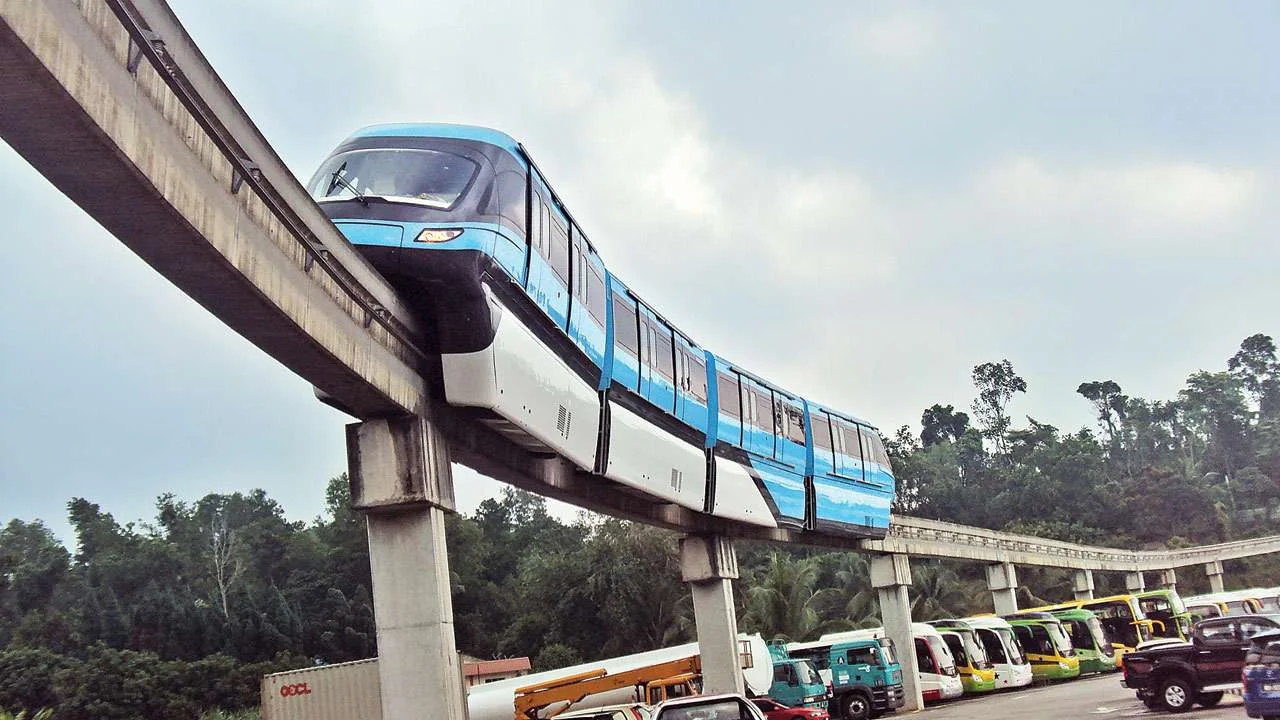
Mumbai Monorail Prepares For Safety-Led Relaunch In May
A significant leap in the evolution of the city’s urban rail infrastructure has been signalled with a new contract for advanced traction systems on Mumbai Metro Lines 5 and 6, underpinning efforts to enhance reliability, energy efficiency and sustainability across the network. Global electrification and automation firm ABB India has won the order to provide integrated propulsion and control solutions — a move that could strengthen local manufacturing of critical rail technology and support the wider vision of resilient, low‑emission urban mobility in the Mumbai metropolitan region.
The contract, awarded by rolling stock maker Titagarh Rail Systems Ltd, covers the supply of traction converters, auxiliary converters, traction motors and Train Control and Management System (TCMS) software for 40 six‑car trainsets destined for the Orange Line (Line 5), connecting Thane to Kalyan via Bhiwandi, and the Pink Line (Line 6), stretching from Swami Samarth Nagar to Vikhroli. Urban transport planners see traction systems — which convert electrical power into usable drive forces and manage onboard operations — as core to both performance and lifecycle energy use in mass transit. By integrating these technologies with efficient control software, the metro can achieve improved acceleration, reduced power loss and more responsive operations, benefitting daily commuters and contributing to lower operational emissions.
Importantly, the contract includes significant localisation of production: traction converters will be built in Bengaluru and traction motors in Vadodara, supported by engineering, testing and service teams on the ground. This aligns with India’s broader industrial policy objectives such as Make in India and Atmanirbhar Bharat, which aim to deepen domestic manufacturing capabilities for strategic infrastructure technologies while reducing dependency on imports. Industry experts say this development could help nurture a more resilient supply chain for metro rolling stock components, a segment that has traditionally had limited indigenous sources despite rapid expansion of urban rail networks nationwide. Enhanced local production not only shortens lead times for future contracts but also reinforces skill building in high‑precision engineering domains critical to sustainable transport systems.
From a network perspective, Lines 5 and 6 are especially pivotal as they traverse high‑growth corridors where improved connectivity can ease traffic pressure on congested suburban roads, link key residential and commercial hubs, and promote modal shift from private vehicles to mass transit — a cornerstone for reducing urban carbon footprints. Yet, successful delivery will depend on synchronising this equipment rollout with broader infrastructure milestones, including track laying, signalling integration, and depot readiness. Urban planners note that while technological upgrades underpin performance, user experience outcomes hinge on seamless integration across the entire mobility ecosystem.
Looking ahead, the traction systems project could serve as a template for future metro expansions in India, melding high‑performance engineering with local industrial development and climate‑aligned transport objectives. Scaling such collaborations can accelerate access to efficient, affordable public transit — a key ingredient in shaping sustainable, inclusive cities for the coming decades.