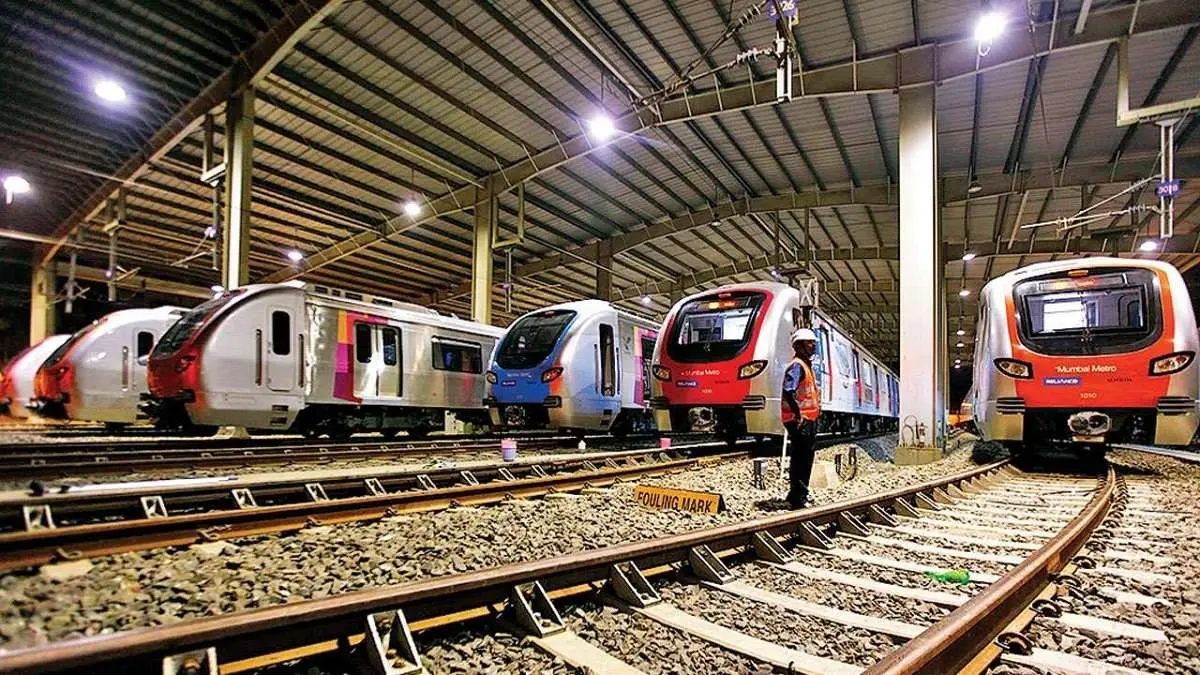
Mumbai’s expanding rapid transit network is set to mark a cautious milestone this Republic Day, with the Mumbai Metropolitan Region Development Authority (MMRDA) preparing to open a limited stretch of Metro Line 9. While the city had earlier anticipated multiple metro corridors becoming operational simultaneously, only a short section of Line 9 is now positioned for public use later this month, underscoring the complexities of building large-scale urban transport infrastructure in dense metropolitan regions.
The proposed opening involves a 4.4-kilometre segment connecting Dahisar and Kashigaon, aimed at easing east–west travel pressures in Mumbai’s northern suburbs and adjoining Mira–Bhayander region. Urban planners note that even partial operationalisation holds significance for daily commuters who currently rely heavily on congested arterial roads and informal transport modes. For a city grappling with rising emissions and limited road space, incremental metro access plays a critical role in shifting travel behaviour towards cleaner mass transit. Initial plans had envisaged Metro Line 9 and Metro Line 2B becoming operational before the end of last year, aligning with broader civic timelines. However, regulatory clearances and safety certifications have taken longer than expected. Officials familiar with the process said inspections by the Commissioner of Metro Rail Safety (CMRS) led to additional compliance requirements, which were subsequently addressed by the project authority. Final safety approval for the operational section of Metro Line 9 is now anticipated shortly.
In contrast, Metro Line 2B, which is designed to connect eastern suburbs with the western corridor and the island city, is likely to require several more weeks before it can carry passengers. Transport experts suggest that synchronising new lines is particularly challenging when multiple agencies, rolling stock readiness, signalling systems, and last-mile connectivity must align simultaneously. The partial launch of Metro Line 9 is nonetheless viewed as strategically important. Once the full corridor becomes operational and integrates with adjoining metro lines, commuters from the northern suburbs and satellite towns will gain a direct, seamless route towards major employment hubs and the international airport. This connectivity is expected to support more balanced urban growth while reducing dependence on private vehicles, a key objective in Mumbai’s long-term climate resilience strategy.
Beyond mobility, the metro expansion has implications for real estate patterns, economic activity, and social inclusion. Transit-oriented development around stations is already reshaping neighbourhoods, prompting discussions on affordable housing, pedestrian safety, and equitable access to public infrastructure. Urban policy specialists stress that phased metro openings should be accompanied by careful planning to ensure benefits are widely shared. As Mumbai continues to roll out its metro network in stages, the Republic Day opening signals progress rather than completion. The coming months will test how effectively new corridors integrate into daily life—and whether the city can translate infrastructure investment into cleaner air, shorter commutes, and a more liveable urban future.
Mumbai Metro Authority Plans Republic Day Opening