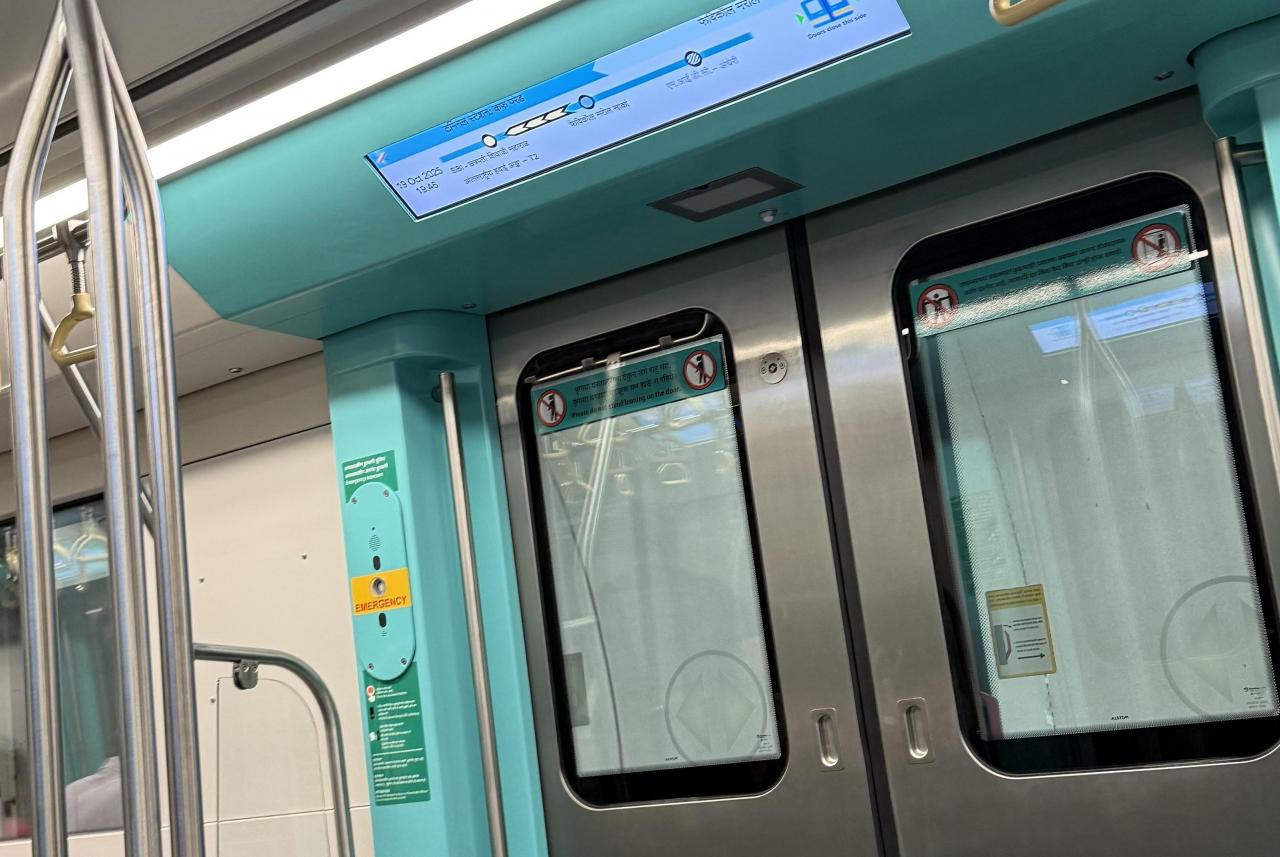
Mumbai’s Aqua Line Metro services experienced temporary disruption during the Monday evening peak, with commuters facing delays of up to 20 minutes following a technical issue affecting train doors. The incident, reported during high passenger volumes, highlighted the operational challenges that continue to accompany the rollout of new urban transit infrastructure in dense metropolitan environments.
According to metro officials, the disruption was reported around 5 pm on the southbound corridor, with stations in the Worli and Bandra stretch among those affected. A door closure malfunction led to extended halts at platforms, causing a cascading delay across multiple services. While the issue was resolved within a short period, the impact was felt sharply by office-goers relying on the Aqua Line for time-sensitive travel. Ground staff at a key interchange station later confirmed that normal operations were restored after on-site technical teams intervened. However, passengers reported longer-than-usual waiting times and crowded platforms during the disruption window. Urban mobility experts note that even brief system interruptions during peak hours can significantly amplify commuter stress, particularly on corridors positioned as alternatives to congested road networks.
The Aqua Line forms a critical component of Mumbai’s evolving mass transit network, designed to offer fast, low-emission connectivity across central business districts. Transport planners have consistently emphasised that reliability during peak periods is essential to encourage long-term modal shift away from private vehicles. “Operational consistency matters as much as network expansion,” said a senior urban transport expert, pointing out that early-stage reliability issues can shape public perception for years. Door-related technical glitches, while not uncommon in metro systems worldwide, underline the importance of preventive maintenance and real-time response protocols. Industry specialists say that modern metro operations increasingly rely on predictive diagnostics to identify component fatigue before failures occur, reducing service interruptions and improving passenger confidence.
The metro operator has not indicated whether the incident will trigger a broader technical review. However, officials reiterated that safety systems functioned as designed and that services resumed without compromising passenger security. Clear communication during such disruptions, experts add, is crucial in maintaining trust, particularly as Mumbai expands its network rapidly across multiple corridors. As Indian cities push towards climate-conscious transport solutions, the emphasis is shifting from merely adding kilometres of track to delivering dependable, inclusive and commuter-friendly services. For Mumbai, ensuring that the Aqua Line operates smoothly during peak demand will be central to its ambition of building a resilient, low-carbon urban mobility system that meets the daily needs of millions.
Mumbai Metro Aqua Line Trains Delayed Twenty Minutes After Door Closure Issue