


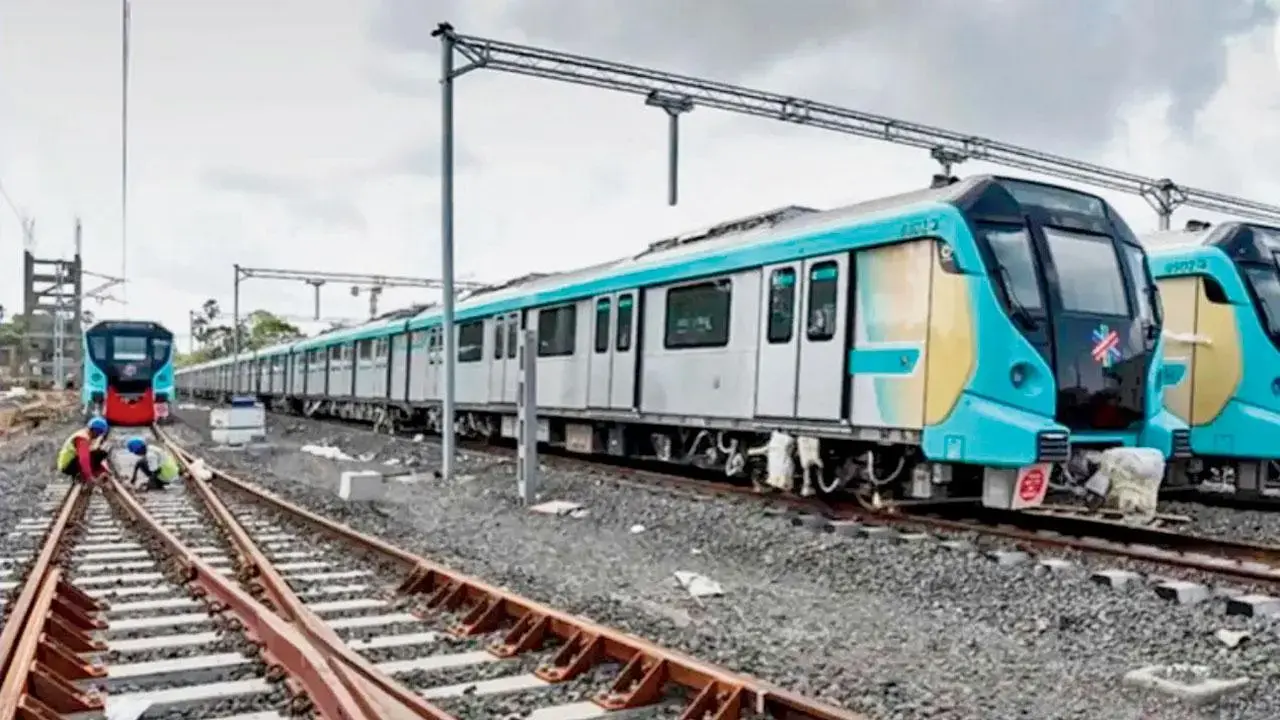
Maharashtra Chief Minister Devendra Fadnavis inaugurated the newly extended stretch of the Mumbai Metro Aqua Line-3, linking Bandra Kurla Complex (BKC) to Worli’s Acharya Atre Chowk.
This 33.5-kilometre fully underground corridor, connecting Aarey in the north to Worli in the south, is expected to redefine intra-city travel for millions of Mumbai’s commuters. Designed to operate beneath the city’s dense and congested urban fabric, the Aqua Line-3 corridor slices through some of Mumbai’s most significant commercial, industrial, and residential zones — from SEEPZ and MIDC to the airport terminals, Vidyanagri, Dharavi, Dadar, and the Siddhivinayak precinct. The newly inaugurated segment alone is forecast to bring down travel time between Aarey and Worli to just 39 minutes — a transformative shift from the often 90-minute surface commutes currently endured by residents.
This metro line is more than a public transport project — it represents a turning point in Mumbai’s sustainable infrastructure ambitions. As the city grapples with vehicular congestion, worsening air quality, and land-use limitations, the Metro Aqua Line-3 emerges as a cornerstone in building a low-carbon, mass mobility system. The line is equipped with modern regenerative braking systems and low-energy lighting, aligning it with India’s climate action commitments and Mumbai’s broader goal of becoming a zero-emissions city. Transport experts and urban economists have lauded the corridor as a key facilitator of decentralised growth. By enabling faster, more reliable commutes between economic centres like SEEPZ and BKC and residential neighbourhoods such as Aarey and Kalina, the metro is expected to stimulate real estate development, improve job accessibility, and promote a more equitable distribution of urban growth. Areas along the corridor are already witnessing renewed interest from homebuyers and commercial tenants alike, with market analysts forecasting a surge in property values in traditionally overlooked locations.
Rajkumar Singh, head of residential services (West) at Anarock, highlighted the strategic impact of this development. “Transit infrastructure like Metro Line-3 addresses Mumbai’s chronic spatial mismatch between jobs and housing. It will open up new opportunities for balanced urban expansion, reduce pressure on overstretched roadways, and unlock land value in emerging zones,” he said. However, the metro’s benefits go beyond economic metrics. For Mumbai’s diverse population, this expansion enhances safety, reduces travel fatigue, and provides affordable access to education, work, and healthcare — crucial for a city where millions rely on public transport daily.
With further phases of Mumbai’s metro network on the anvil, this successful implementation sets a precedent for future lines to prioritise sustainability, universal accessibility, and integration with other mobility systems. As the city builds upwards and outwards, it must continue investing in efficient, people-first infrastructure that aligns with the global vision of equitable, green, and resilient cities.
Also Read: Mumbai Metro Aqua Line-3 Reaches Worli Enhancing Connectivity
