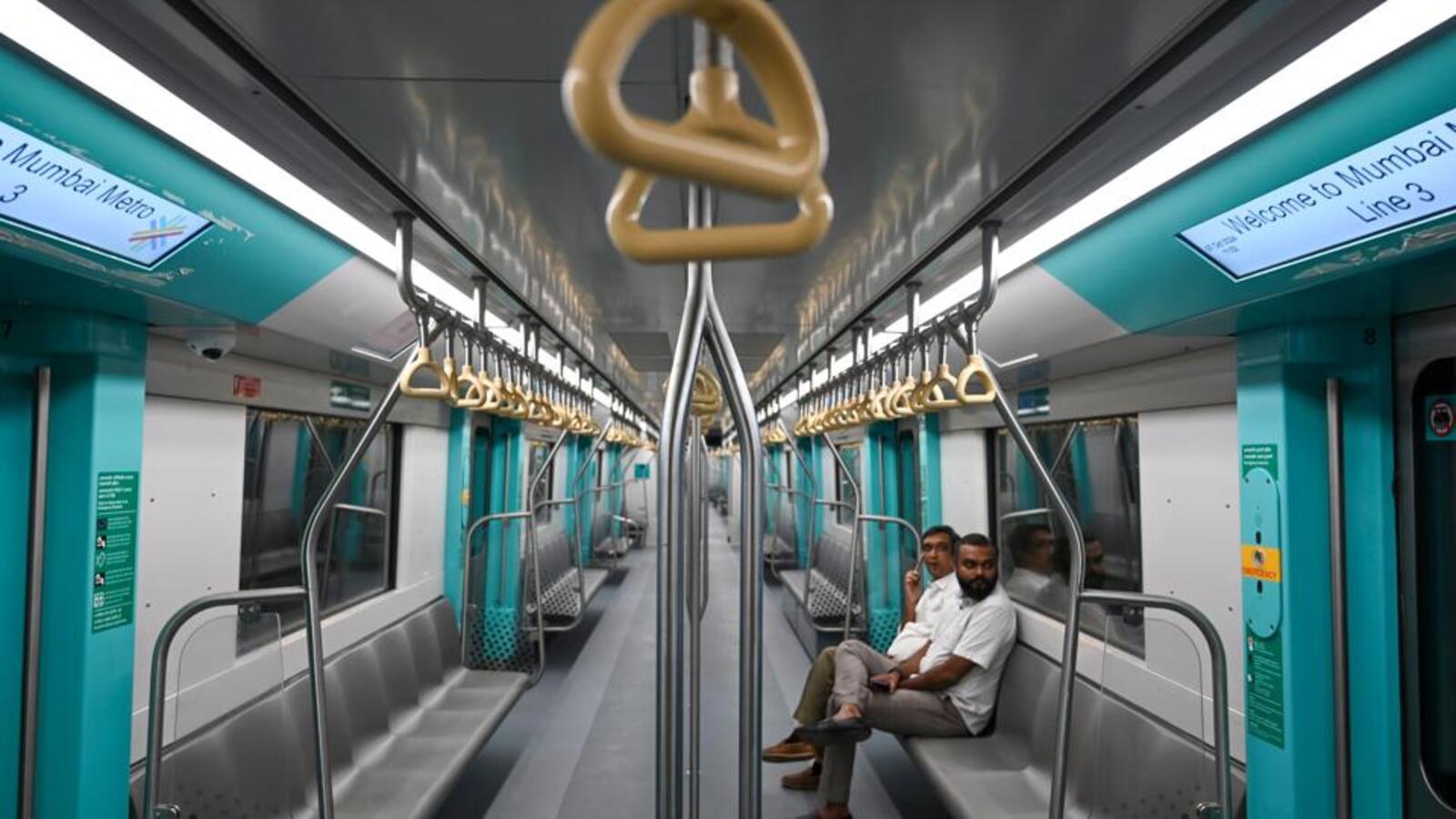
Mumbai Metro Aqua Line 3 Records Highest Ridership On October Fifteenth
Mumbai Metro’s Aqua Line 3 has firmly established itself as a preferred transit choice for city commuters, recording 1,82,197 passengers on October 15, reflecting increasing public confidence in the underground corridor. The latest figures, released by the Mumbai Metro Rail Corporation (MMRC), indicate that ridership has steadily grown since the line’s operational launch earlier this year, highlighting the corridor’s rising importance in urban mobility.
The Aqua Line, Mumbai’s first fully underground metro route, spans approximately 33.5 kilometres and connects 27 key stations, including prominent business hubs, residential areas, and transit points across South and North Mumbai. By linking areas such as Colaba, Bandra, and SEEPZ, the corridor aims to reduce pressure on the city’s congested roadways and suburban rail systems, providing commuters with faster, more reliable, and eco-friendly transport options.
Officials noted that the steady increase in ridership demonstrates a shift in commuter behaviour, particularly among office-goers and daily travellers seeking efficient alternatives to surface traffic congestion. With sustainable mobility at the forefront, the underground design and electrified operations contribute to lower carbon emissions and reduced environmental impact compared to conventional road transport.
In parallel with ridership growth, MMRC has rolled out WhatsApp-based ticketing for the Aqua Line, enabling commuters to generate QR-based tickets instantly. Passengers can send a simple message or scan station QR codes to book up to six tickets per transaction, with multiple payment options including UPI, promoting convenience and paperless travel. The initiative reflects broader efforts to integrate technology-driven solutions and encourage sustainable commuting practices in Mumbai’s metropolitan region.
Furthermore, the launch of the Mumbai One mobile application integrates ticketing for metro, bus, and suburban rail services, reinforcing seamless multimodal travel across the city. Experts suggest that such integrated systems, combined with the Metro’s extensive coverage, are crucial for enhancing commuter experience while advancing urban sustainability.As Mumbai continues to grapple with rapid population growth and urban congestion, the Aqua Line 3 exemplifies how modern metro infrastructure can shape efficient, environmentally conscious city transport. Officials maintain that ongoing investments in infrastructure, digital ticketing, and service optimisation will further consolidate Metro Line 3’s role as a cornerstone of Mumbai’s sustainable transit network.