


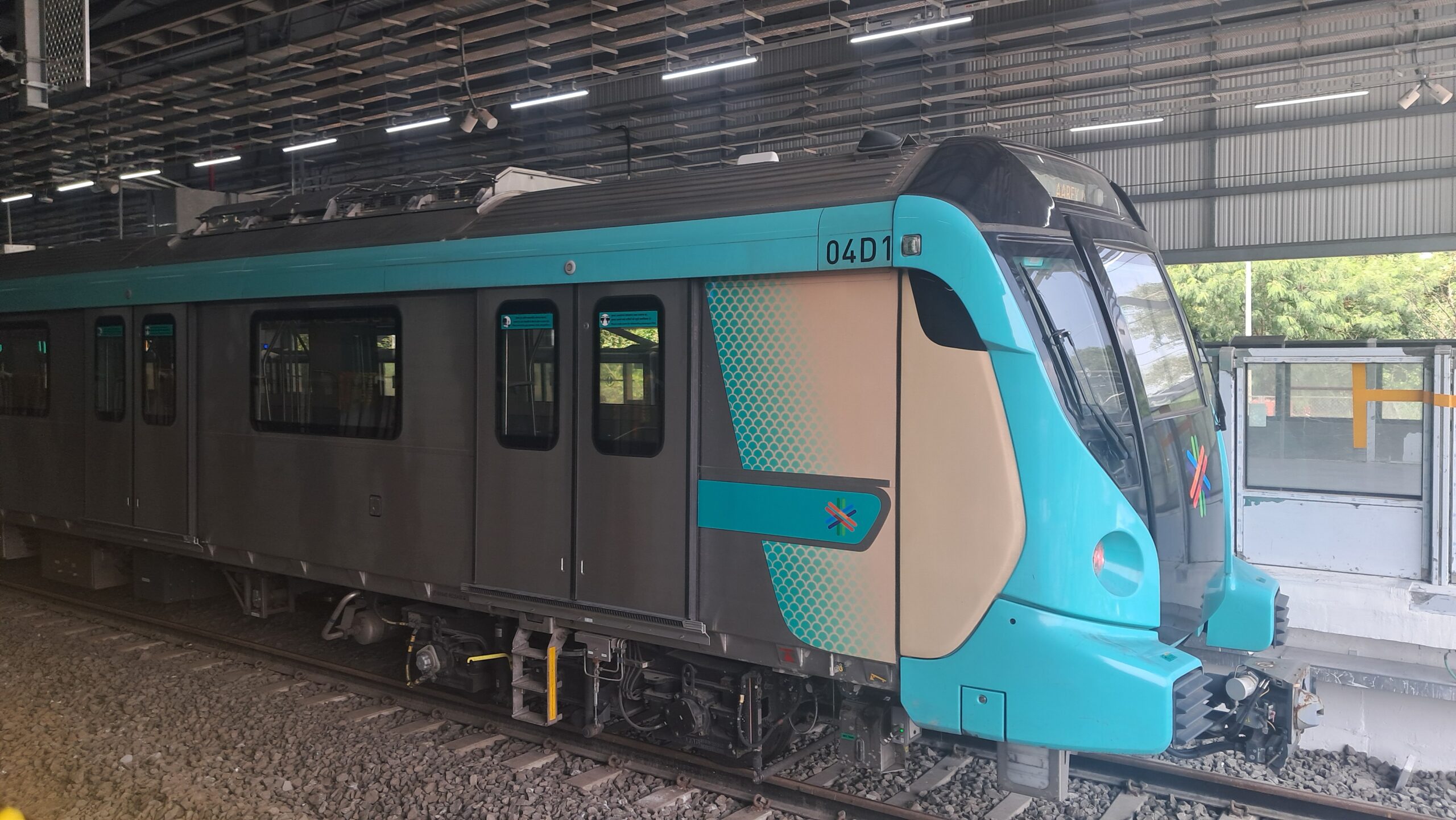
Mumbai’s Metro Aqua Line-3 has taken a significant step forward with the inauguration of its extension from Bandra Kurla Complex (BKC) to Worli’s Acharya Atre Chowk.
Chief Minister Devendra Fadnavis led the ceremony today, marking the completion of the 33.5-kilometre underground corridor that now connects key business and residential districts across the city. The newly operational stretch traverses high-density areas such as SEEPZ, MIDC, Marol Naka, Chhatrapati Shivaji Maharaj International Airport (CSMIA) Terminals 1 and 2, Santacruz, Vidyanagri, BKC, Dharavi, Dadar, and Siddhivinayak Temple, culminating at Acharya Atre Chowk in Worli. This extension reduces the commute time from Aarey to Worli to just 39 minutes, offering a swift and efficient alternative to the city’s notorious traffic congestion.
The Aqua Line-3 is expected to serve approximately 1.3 million passengers daily upon full operation, with trains running every three to four minutes. The line’s integration with other metro corridors and its proximity to major commercial hubs are anticipated to significantly enhance urban mobility and reduce dependence on private vehicles. Real estate experts predict that the improved connectivity will stimulate demand in both commercial and residential sectors along the corridor. Areas such as Worli, Dadar, and Mahim are expected to see increased interest from professionals seeking shorter commutes to business districts like BKC and Andheri. While ultra-high-net-worth individuals may prefer alternative routes like the Mumbai Coastal Road, the Aqua Line-3 is poised to benefit middle-class professionals and executives residing in South Mumbai. Developers like Lodha, Godrej, Sunteck, and Puravankara are expected to capitalize on the enhanced accessibility to drive both luxury and mid-segment housing projects in the region.
The Aqua Line-3 also aligns with Mumbai’s sustainability goals. The underground design minimizes land acquisition and preserves surface-level spaces, contributing to the city’s zero net carbon and eco-friendly objectives. Additionally, the line’s energy-efficient features, including regenerative braking systems and smart LED lighting, reduce electricity consumption and support the development of sustainable urban infrastructure. As the Aqua Line-3 extension becomes operational, it is expected to alleviate traffic congestion, reduce carbon emissions, and promote balanced urban development. The project exemplifies Mumbai’s commitment to creating equitable and sustainable cities through strategic investments in public transportation infrastructure.
Also Read: Bengaluru Metro Fare Report to Be Shared Soon
