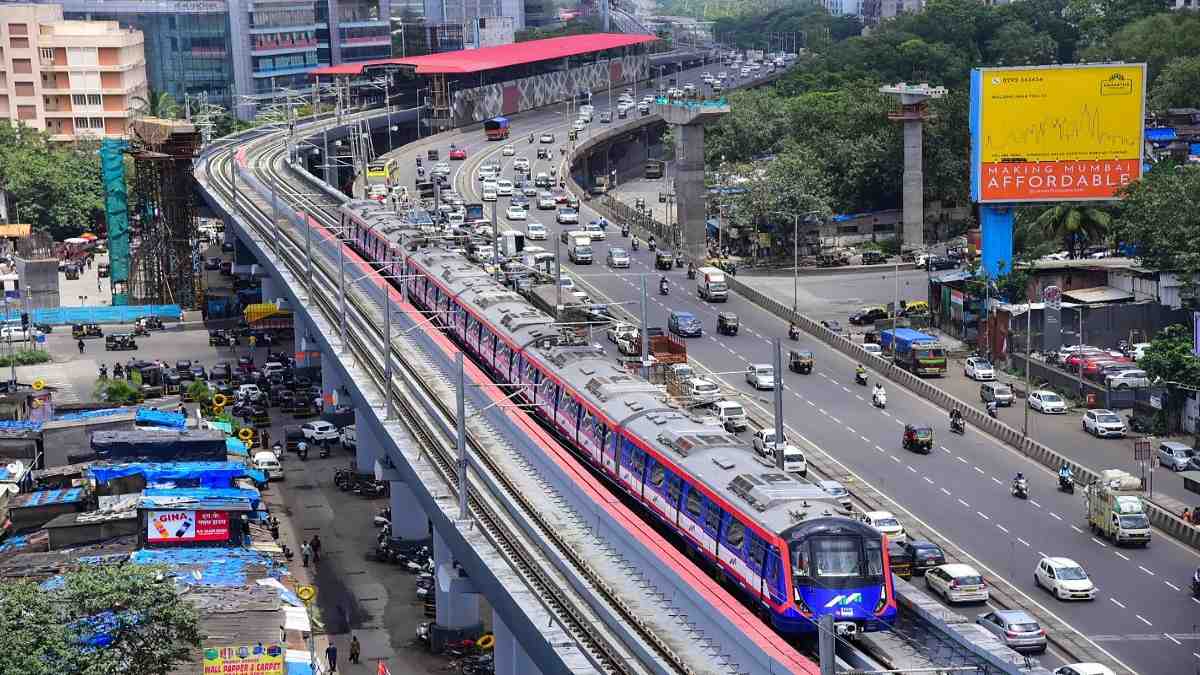
India’s urban rail manufacturing ecosystem took a leap forward this week as a strategic collaboration between a domestic rolling‑stock maker and a global technology provider was formalised to design, test and install advanced driverless metro propulsion systems. The move is expected to accelerate technological self‑reliance in metro rail equipment and improve service quality on major city networks, including in the Mumbai metropolitan region, where rapid transit demand continues to surge.
Under the agreement, the Indian partner will work closely with its international collaborator to deliver propulsion systems — the electrical heart of metro trains — specifically tailored for 25 kV AC driverless metro corridors. In addition to joint design and production responsibilities, the deal includes a phased transfer of expertise to enable local manufacturing of converters, traction motors and the Train Control and Monitoring System (TCMS), which governs real‑time operation and automation levels up to fully driverless (GoA4) standards.Urban transport planners say this development is important for systems like Mumbai Metro Lines 5 and 6, where company contracts for dozens of six‑car trainsets are already under execution. These elevated corridors aim to knit together outlying suburbs with core employment hubs, reducing road congestion while supporting equitable access to jobs and services. By deepening local production of critical propulsion and control systems, the collaboration can help stabilise supply chains and cut long‑term lifecycle costs for rail operators.
Industry analysts note that propulsion and TCMS technologies are strategic components of modern rapid transit systems, enabling higher speeds, regenerative braking and energy efficiency — all of which contribute to lower emissions per passenger journey. Integrating such systems locally aligns with policy goals to promote sustainable urban mobility, a priority as Indian cities grapple with congestion, air quality challenges and climate resilience.This partnership also supports broader national initiatives such as Make in India and Atmanirbhar Bharat, which aim to reduce dependence on imported rail systems and cultivate indigenous technological expertise. Over time, the co‑production of propulsion subsystems is expected to generate high‑value manufacturing jobs and reinforce India’s capacity to export advanced rolling stock components to global markets.
Corporate performance on stock exchanges reflected investor confidence in the deal, with producer shares rising following the announcement. Market observers interpret this as a signal that stakeholders see long‑term demand for advanced metro technologies — not just in Mumbai but across India’s expanding urban rail map.However, experts caution that technology transfer must be paired with robust workforce training and quality control frameworks to fully realise the benefits of localisation. Urban planners emphasise that achieving efficient automation and safe driverless operations requires a strong ecosystem of testing infrastructure, skilled engineers and ongoing maintenance capabilities.
Looking ahead, as Indian metros grow in scale and complexity, locally developed propulsion systems and digital TCMS platforms could play a pivotal role in enabling safer, low‑carbon mass transit. Strengthening this portion of the rail value chain will be integral to delivering fast, reliable and climate‑aligned mobility solutions in high‑density urban corridors.