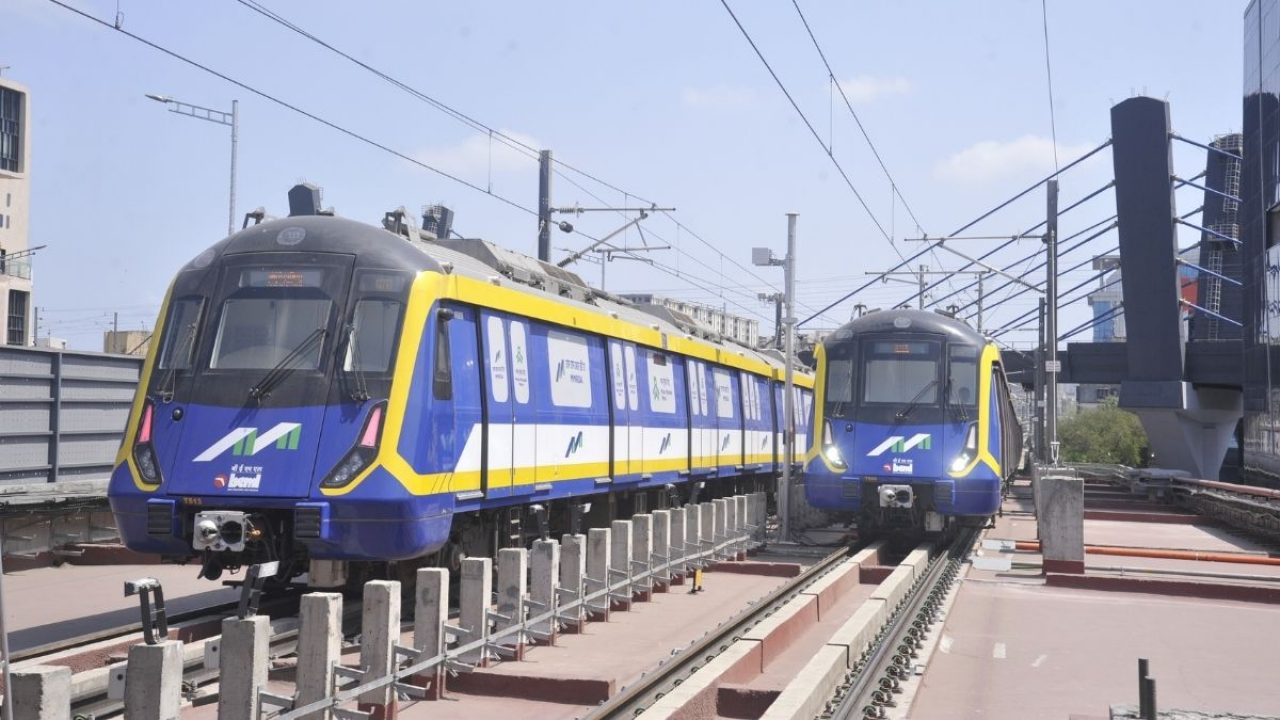
Mumbai’s much-anticipated Metro Line 9, which links Dahisar East to Mira-Bhayandar, is rapidly moving closer to becoming operational.
According to the Mumbai Metropolitan Region Development Authority (MMRDA), over 85 percent of the Overhead Equipment (OHE) electrification along the Dahisar East to Kashigaon stretch has been completed. Energization is expected to be finalized by May 10, clearing the path for trial runs and eventual public rollout. Designed to alleviate vehicular congestion and cut emissions in northern suburbs, Metro Line 9 is poised to reshape commuter behavior across key nodes of Dahisar, Mira Road, and Bhayandar. The corridor’s completion is expected not only to improve travel times but also to contribute to a cleaner, greener urban environment—critical in a city where road traffic accounts for a major chunk of carbon emissions. MMRDA has strategically divided the project into two key phases. The first phase connects Dahisar East to Kashigaon, while the second extends the line to Subhash Chandra Bose Stadium. Currently, efforts are concentrated on completing Phase 1, with the agency indicating a target for operational readiness by the end of the year. Construction has been progressing under an accelerated timeline, with officials instructed to avoid delays and adhere to strict sustainability benchmarks.
Metro Line 9 is part of a broader policy commitment to expanding Mumbai’s metro network in ways that align with the city’s long-term sustainability goals. With eight elevated stations—Dahisar East, Pandurang Wadi, Mira Gaon, Kashigaon, Sai Baba Nagar, Meditya Nagar, Shaheed Bhagat Singh Garden, and Subhash Chandra Bose Ground—the line is expected to serve as a lifeline for thousands of daily commuters. It will also enhance access to underserved suburban communities and offer an equitable public transport solution amid rising fuel costs and road congestion. Crucially, the metro is also seen as a lever for economic stimulation in adjacent areas, unlocking new commercial opportunities and encouraging more climate-resilient development. Experts believe that once operational, Metro Line 9 could serve as a replicable model for sustainable infrastructure planning in other Indian megacities.
In a city facing acute challenges of air pollution, overburdened roadways, and socio-economic disparity in transit access, the development of Metro Line 9 sends a strong message: urban growth and environmental responsibility can go hand in hand. While its full impact will unfold in the years ahead, the immediate goal remains clear—get trains running by year-end and offer Mumbaikars a cleaner, faster, and more inclusive mode of travel.