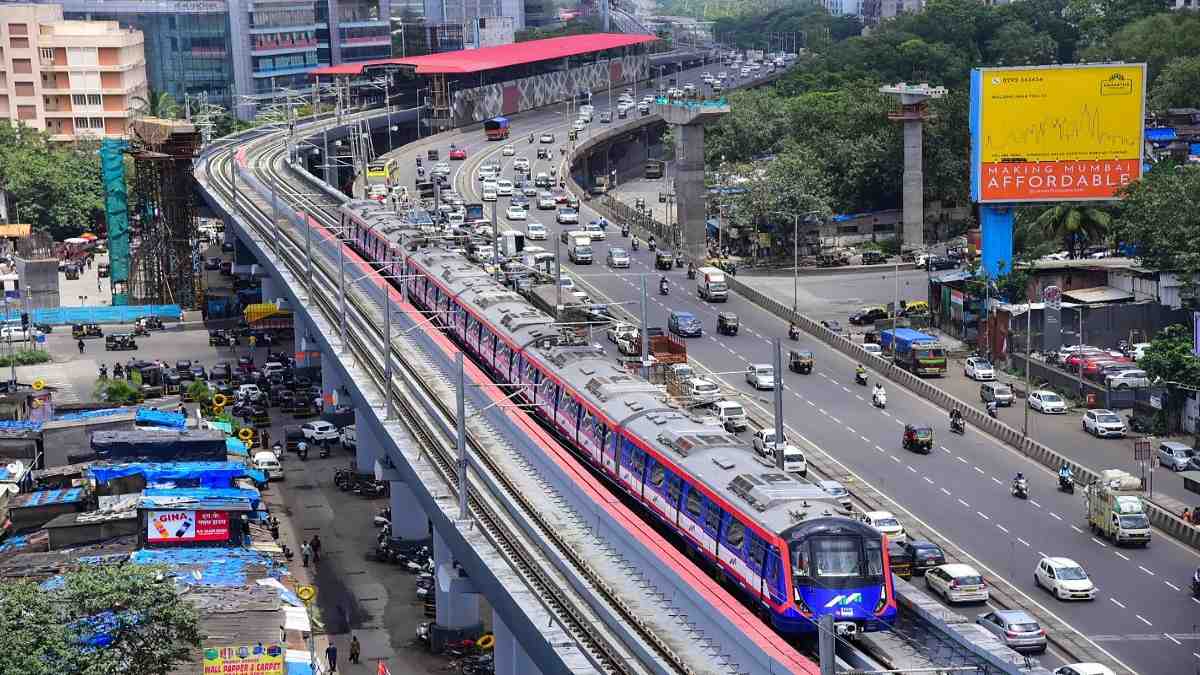
Mumbai’s long‑anticipated Metro Line 9 is poised to begin limited passenger operations on Republic Day (26 January), marking a critical milestone in the city’s phased metro expansion and offering early relief to daily commuters in the fast‑growing northern suburbs. The Mumbai Metropolitan Region Development Authority (MMRDA) is finalising safety certification for a 4.4‑kilometre stretch between Dahisar East and Kashigaon, with operations expected to start pending clearance from the Commissioner of Metro Rail Safety (CMRS).
Metro Line 9 — part of the broader network connecting Mumbai with Mira‑Bhayandar — has encountered delays as authorities navigated technical, regulatory and inspection requirements. Originally slated for inauguration late last year alongside other corridors, only this portion appears ready for near‑term service. MMRDA officials have indicated that Metro Line 2B, another major link, may require at least another month of finalisation before carrying passengers. The phased opening aligns with Mumbai’s broader strategy to relieve chronic congestion on regional transport arteries. Line 9’s initial segment includes stations at Dahisar East, Pandurangwadi, Miragaon and Kashigaon, which will immediately improve connectivity for residents and workers in these densely populated suburbs. Over the longer term, once fully operational and integrated with Metro Lines 7 and 7A, the corridor is expected to offer a continuous rapid transit link toward Chhatrapati Shivaji Maharaj International Airport Terminal 2, enhancing access between Mumbai and the Mira‑Bhayandar belt.
Urban planners point out that incremental commissioning — even before complete corridor readiness — can deliver near‑term benefits when demand outpaces supply on existing transport options. With daily ridership pressures on local trains and roads, even partial metro services ease pressure on suburban rail networks and support more sustainable travel choices. Experts also highlight that connecting peripheral suburbs with core business districts and key transit nodes is essential for inclusive urban mobility. However, partial openings come with operational challenges. Mumbai’s metro expansion has faced scrutiny over safety features; for example, Line 9 will initially begin service without platform screen doors (PSDs), diverging from newer corridors equipped with this safety infrastructure. This trade‑off reflects the urgency to commence service amid mounting commuter demand, but also raises questions about longer‑term safety and crowd management protocols.
The broader network expansion remains ambitious. Line 9’s full 13.5 km route, once complete, promises to integrate seamlessly with other lines to distribute passenger flows more efficiently and strengthen last‑mile connectivity. Planned upgrades and extensions across the metro system, including Line 2B and airport‑linked segments, are expected to complement this initial phase, positioning Mumbai’s transit network to better absorb future growth.
For residents commuting from Mira‑Bhayandar and northern suburbs, the phased launch offers immediate, if limited, benefits in travel time and convenience. Still, unlocking the full potential of Line 9 will depend on timely delivery of remaining infrastructure, coordinated operations with existing services and sustained investment in safety and accessibility — key factors for sustainable, equitable urban mobility in India’s largest metropolis.