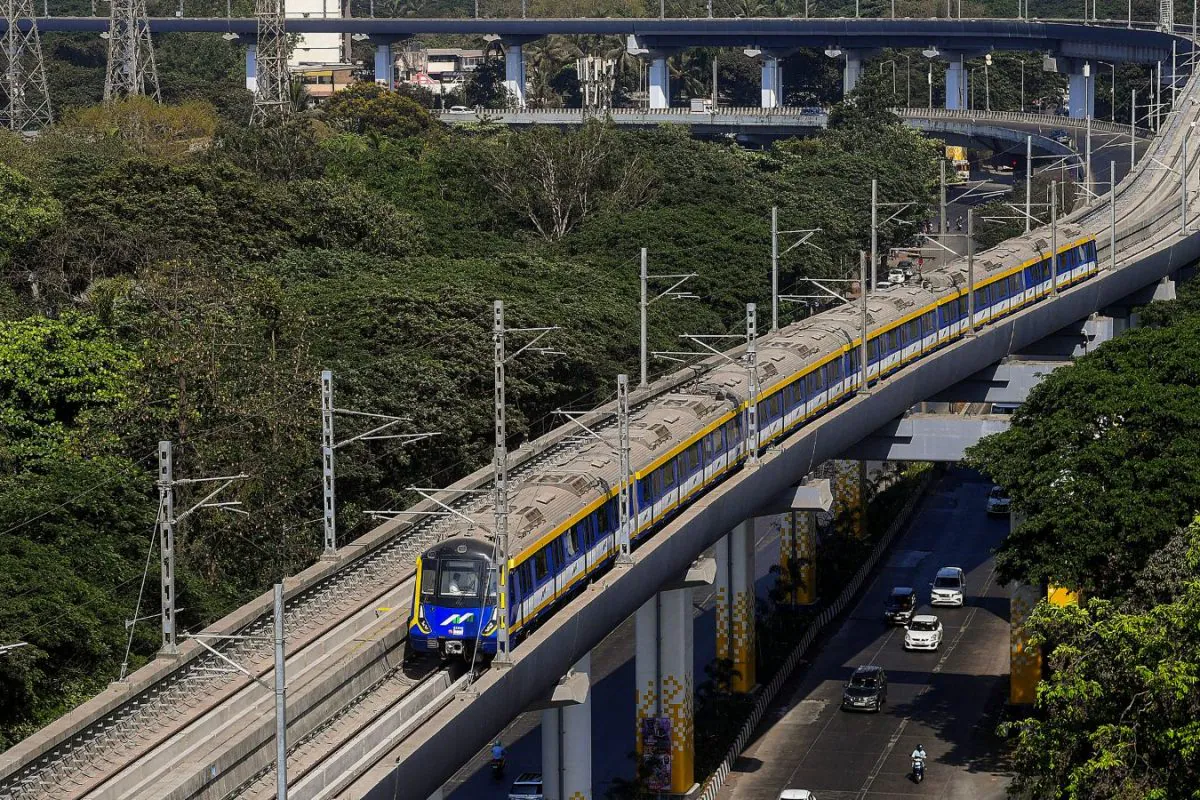
In Mumbai’s eastern suburbs, an unusual form of civic vigilance has emerged along elevated metro corridors still under construction. Following a fatal construction failure earlier this month, residents are increasingly scanning overhead structures, documenting what they believe to be visible defects, and demanding answers from the Mumbai Metropolitan Region Development Authority (MMRDA). The shift reflects deeper anxieties about safety, accountability, and the long-term resilience of critical urban infrastructure.
The trigger was a mid-February incident on an under-construction section of Metro Line 4, where a concrete component collapsed onto moving traffic, resulting in loss of life and injuries. Since then, social media platforms have been flooded with images and videos highlighting perceived cracks, gaps, and uneven joints in girders, parapet walls, and deck slabs across multiple locations in Mumbai and neighbouring Thane. While not all observations indicate structural distress, the scale of citizen monitoring has put project authorities under unprecedented public scrutiny. MMRDA officials acknowledge receiving a surge of digital complaints, many accompanied by close-up visuals of construction elements. Project teams have been dispatched to inspect flagged sites, particularly along Metro Line 4 corridors passing through densely populated neighbourhoods. According to officials overseeing the works, several of the reported “cracks” were identified as surface-level artefacts — such as hardened cement slurry or visible joints between precast segments — inherent to large-scale cast-in-situ and precast construction methods.
Urban infrastructure experts note that modern metro systems rely heavily on modular construction to speed up delivery and reduce disruption. These methods often leave visible seams where elements are integrated on site. However, experts also stress that public confidence depends not just on technical compliance, but on transparent communication. In cities already grappling with climate stress, traffic congestion, and aging infrastructure, even the perception of risk can undermine trust in public projects. Residents groups and mobility advocates are now calling for independent structural audits by reputed engineering institutions. Their argument is rooted less in opposition to metro expansion and more in the belief that elevated, load-bearing infrastructure in high-density corridors must meet the highest safety benchmarks. With Metro Line 4 expected to play a critical role in reducing road congestion and transport emissions, its structural integrity carries economic, environmental, and social implications far beyond the construction phase.
In response, senior officials indicate that MMRDA is preparing detailed explanatory material, including infographics and short videos, to illustrate how metro viaducts, girders, and parapets are designed, built, and tested. The intent is to demystify construction processes and address misinformation before it escalates into public alarm. As Mumbai continues its push towards mass transit-led, low-carbon mobility, the episode underscores a larger lesson for Indian cities: infrastructure delivery today is as much about engineering excellence as it is about public engagement, transparency, and institutional credibility.
Mumbai Metro 4 Works Face Public Scrutiny