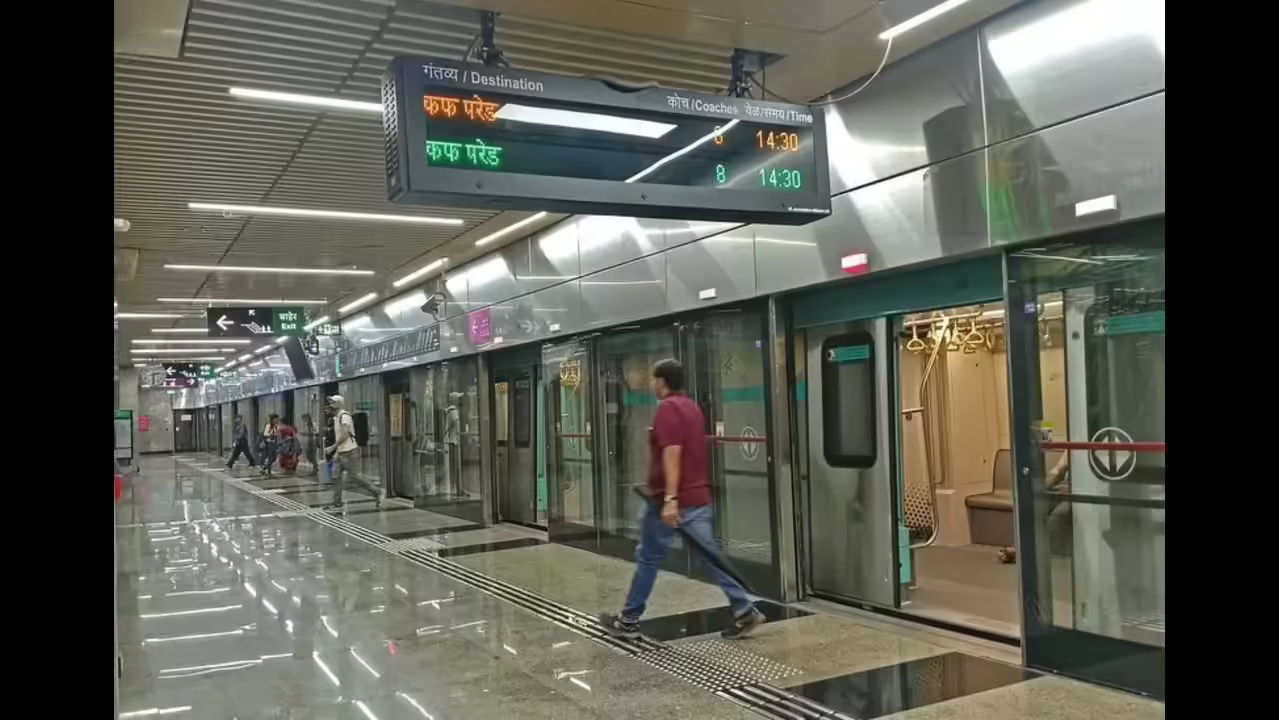
Two months after the CSMT-Cuffe Parade stretch of Mumbai’s underground Metro 3 line became fully operational, early data indicates a significant reduction in road congestion across South Mumbai. Approximately 1.8 lakh passengers now use Metro 3 daily, with around 60,000 commuting on the CSMT-Cuffe Parade segment alone, reflecting a tangible shift from road-based transport to the high-capacity Colaba–Bandra–SEEPZ corridor.
Traffic police report smoother movement along previously congested streets such as Mahapalika Marg, Hazarimal Somani Marg, and D N Road. Peak-hour traffic, traditionally gridlocked between 9.30am–11am and 5pm–7.30pm, has eased, reducing wait times at key junctions to a single signal cycle in some areas. “We have observed a noticeable dip in vehicle volumes since Metro 3 became fully operational,” said a senior traffic official. For daily commuters, Metro 3 has introduced both reliability and time savings. “From Cuffe Parade to CST in under ten minutes, it’s incomparable to road travel,” said one commuter who previously relied on taxis. Another resident noted the convenience and comfort of AC coaches, citing a complete switch from BEST buses. Metro 3’s predictable schedules and climate-controlled environment have prompted widespread adoption across both office-goers and local residents.
While the impact is positive for road congestion, it has led to reduced business for local taxi operators and kaali-peeli drivers. A veteran driver reported a drop of up to one-third in short-distance rides in the Fort-Cuffe Parade corridor, although long-distance bookings have partially offset this decline. Similarly, BEST bus conductors observed lower passenger numbers during non-peak hours as commuters opt for Metro 3. Urban planners note that the shift highlights the role of high-capacity, reliable transit in reducing street-level traffic. A Metro official remarked that forthcoming studies on travel patterns will help optimise future transport planning. Despite these improvements, some residents highlight residual congestion near feeder points like Coastal Road entry ramps, suggesting that comprehensive urban mobility solutions must consider broader network effects. Accessibility concerns, especially for the elderly navigating station escalators, remain a practical challenge.
Industry experts suggest that as Metro 3 matures and ridership grows, further reductions in road traffic are likely. The line is expected to enhance connectivity between southern commercial hubs and suburban districts, simultaneously supporting sustainable mobility and lowering carbon emissions from vehicular traffic.
Mumbai Metro 3 Sees One Third Users CSMT Cuffe Parade Stretch