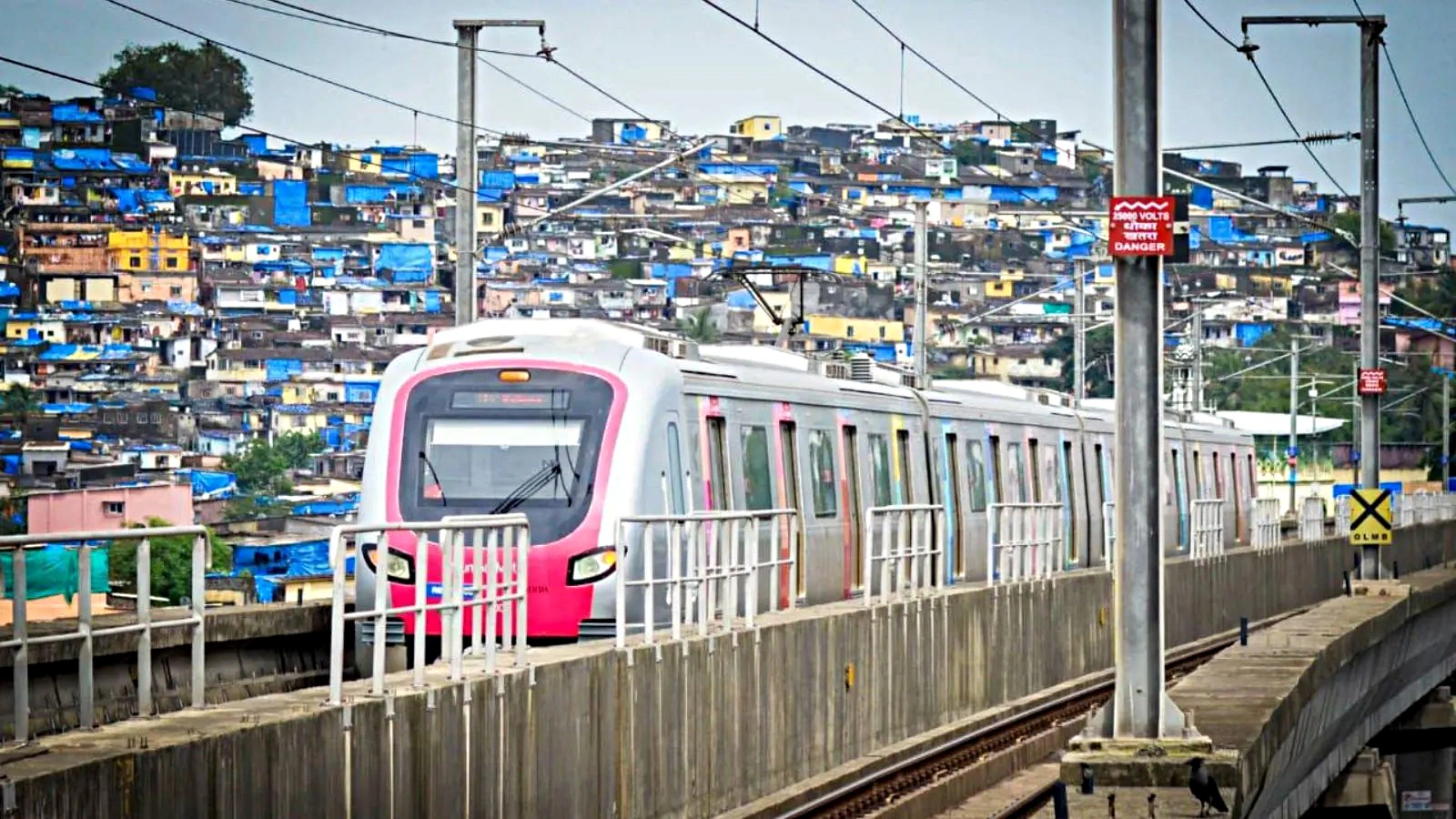
A brief but significant service interruption on Mumbai’s underground Metro Line 3 during Monday morning peak hours has drawn attention to operational resilience in the city’s newest mass transit corridor. The disruption, which lasted close to 20 minutes, occurred along the Aarey–MIDC stretch and temporarily halted train movement across the line, affecting commuters during one of the busiest travel windows of the day.
Passengers onboard reported that trains remained stationary with doors open for an extended duration before services gradually resumed. While announcements cited a technical issue, the incident triggered delays across both directions, as the corridor currently operates with interconnected track systems that can transmit disruptions along the entire route. The Mumbai Metro 3 disruption comes at a time when the city is increasingly relying on underground metro systems to reduce surface congestion and support low-emission mobility. Line 3, often referred to as a critical north–south connector, is designed to shift a substantial share of daily commuters away from road-based transport. However, even short disruptions can ripple across commuting schedules, particularly in dense business districts where punctuality is closely tied to economic productivity.
Urban transport analysts note that early-stage operational challenges are not uncommon in newly commissioned systems, especially those involving complex underground engineering and advanced signalling technologies. Still, consistent service reliability remains crucial to building commuter confidence. “In high-capacity transit networks, predictability is as important as speed,” said a transport planning expert, pointing to the need for robust maintenance protocols and real-time response systems. Compounding commuter concerns is the ongoing issue of limited mobile network connectivity within parts of the underground corridor. In recent days, passengers have reported a lack of reliable telecom signals across stretches of Line 3, raising questions about communication access during service interruptions or emergencies. In dense underground environments, uninterrupted connectivity is increasingly viewed as a safety as well as convenience requirement.
From a broader infrastructure perspective, the Mumbai Metro 3 disruption underscores the importance of integrating operational readiness with infrastructure rollout. As cities expand their metro networks to meet climate and mobility goals, the focus is shifting beyond construction milestones to service quality, user experience, and system redundancy. For businesses and real estate stakeholders, dependable metro connectivity plays a key role in shaping location attractiveness and investment decisions. Corridors served by high-frequency, reliable transit systems typically see stronger demand from both commercial occupiers and residential buyers. Any uncertainty in operations, even if temporary, can influence commuter perception in the early stages of adoption.
Authorities are expected to review the cause of the disruption and implement corrective measures to prevent recurrence. As Mumbai continues to invest in underground and multimodal transport networks, ensuring seamless operations will be essential to delivering on the promise of efficient, inclusive, and climate-aligned urban mobility.
Mumbai Metro 3 disruption raises reliability concerns