


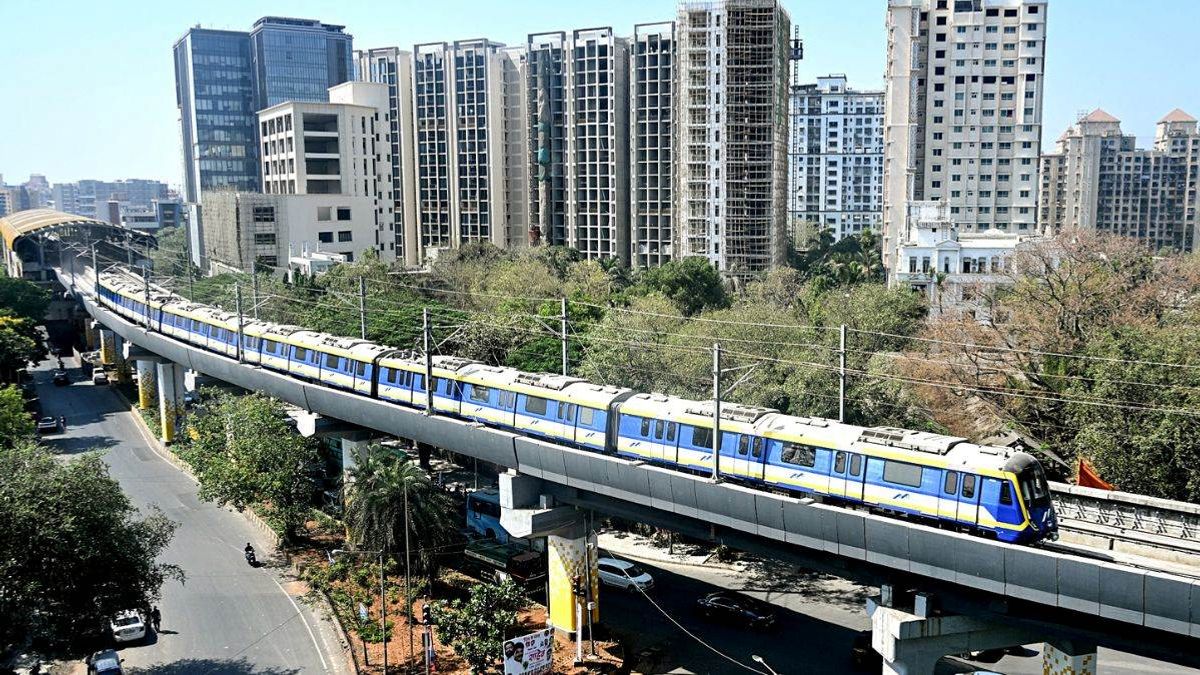
Mumbai’s urban transport network is set for a transformative expansion with the proposed Metro-14 line, linking Kanjurmarg and Vikhroli in eastern Mumbai to Badlapur in Thane district. Stretching between 38 km and 45 km, the corridor is expected to cut current road commute times of 1.5–2 hours to mere minutes, offering faster, sustainable, and climate-resilient travel across the region.
The alignment combines underground, elevated, and at-grade sections, running underground from Kanjurmarg to Ghansoli before transitioning to elevated tracks up to Badlapur. Planned stations include Kanjurmarg, Vikhroli, LBS Marg, Chikoli, Shil Phata, Mahape, Ghansoli, Airoli, Turbhe, Digha, Ambernath, and Badlapur. Transport officials note that these stations will serve as crucial interchange points with Line 4 (Wadala–Thane), Line 6 (Jogeshwari–Vikhroli–Kanjurmarg), and the Kanjurmarg suburban railway station, promoting seamless multi-modal connectivity. The Detailed Project Report (DPR), approved and peer-reviewed by IIT Bombay, estimates the project cost between Rs 135 billion and Rs 180 billion. Development is planned under a Public Private Partnership (PPP) model, with construction expected to commence within the next year. Experts anticipate a daily ridership of 700,000 passengers, highlighting Metro-14’s potential to reshape commuting patterns and support regional economic growth.
Officials emphasised that environmental clearances are under review, as the alignment passes near sensitive zones, including Parsik Hills and the Thane Creek Flamingo Sanctuary. Authorities assure that sustainable construction practices will be adopted to minimise ecological impact, aligning with Mumbai’s broader objective of developing low-carbon, inclusive, and equitable urban transport. Urban planners point out that Metro-14 will play a significant role in enabling Transit-Oriented Development (TOD) along Chikoli and other stations, fostering integrated land-use planning that balances commercial, residential, and green spaces. The line is expected to reduce private vehicle dependency, lower emissions, and provide reliable, safe, and accessible commuting options for all sections of society.
While operational details such as train schedules, ticketing, and fare structures are yet to be finalised, officials stress that the project prioritises commuter convenience, efficient last-mile connectivity, and sustainable urban mobility. Analysts highlight that by combining underground and elevated networks, Metro-14 offers a future-ready, climate-conscious solution to one of Mumbai’s most congested corridors. Metro-14 is positioned to not only improve transport efficiency but also enhance quality of life for residents across eastern Mumbai and Thane, representing a critical step in building a greener, more resilient metropolitan transport system.
Also Read : Delhi Moves To Replace 2743 CNG Buses With Electric Buses By 2031
