


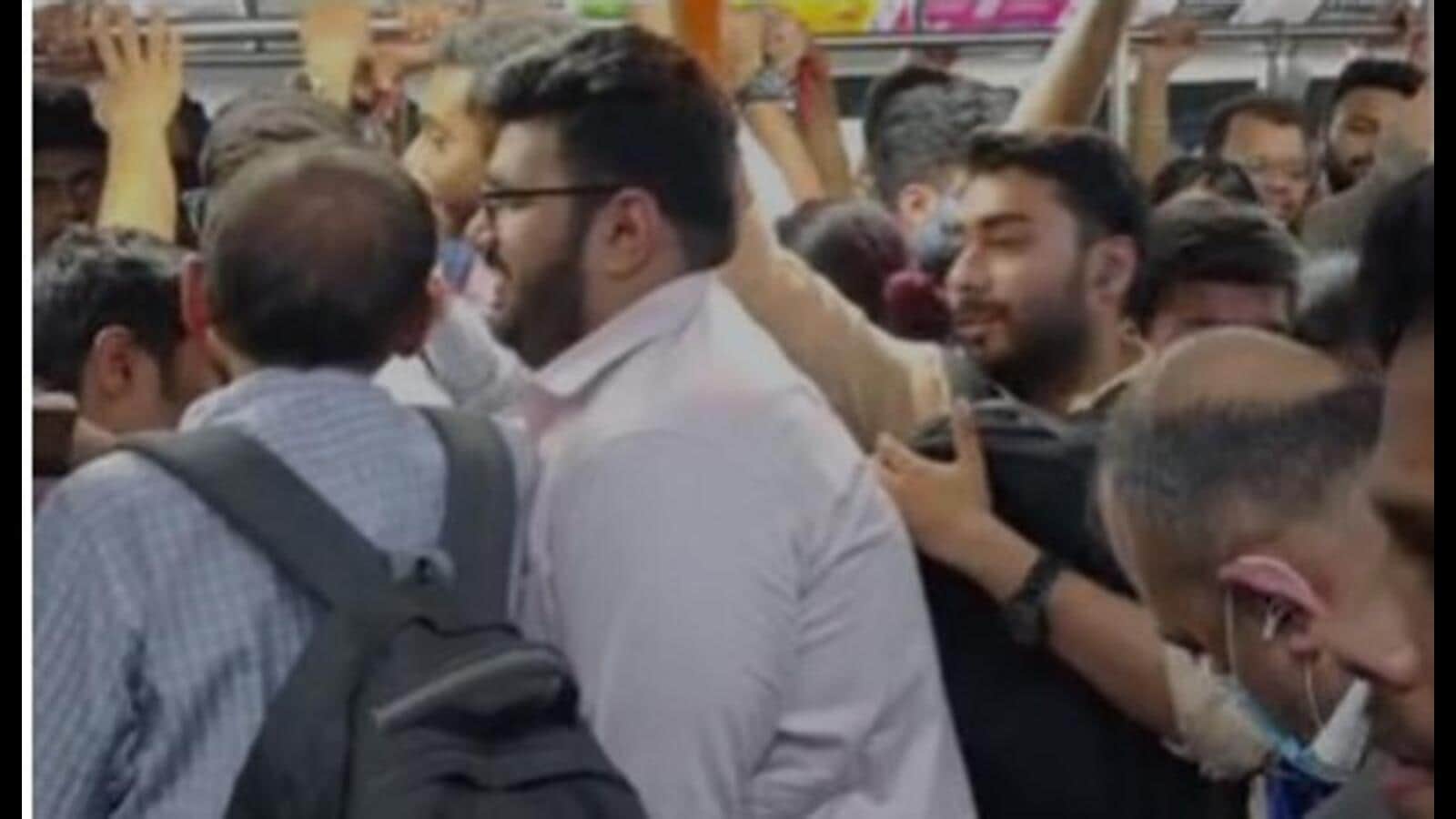
Mumbai’s first metro corridor was thrown into disarray on Wednesday evening after back-to-back technical glitches disrupted services and created severe overcrowding at multiple stations. The disruption, lasting nearly an hour during peak travel time, left commuters stranded, highlighting persistent concerns over reliability and safety in one of the busiest urban transit systems.
According to officials, the first snag occurred around 5.15 pm, delaying services along the 11.4-km Versova-Andheri-Ghatkopar corridor. A second malfunction followed two hours later when the doors of a Versova-bound train reportedly failed to close. While both issues were rectified within minutes, the successive nature of the breakdowns caused platforms at DN Nagar, Azad Nagar, Ghatkopar and Marol to become dangerously overcrowded. Eyewitnesses described a stampede-like atmosphere as passengers struggled to board already packed trains. Some commuters were forced to deboard mid-journey or wait through multiple trains to secure space. Experts observed that repeated disruptions on a high-ridership line not only compromise commuter confidence but also raise questions about system preparedness to manage emergency situations.
The timing of the disruption was particularly striking, coming just hours after the state cabinet approved four new metro projects across Maharashtra, including the ambitious ₹23,487 crore Metro 11 line in Mumbai. While the approvals signal commitment to expansion, critics argue that urgent investment is equally needed in upgrading and maintaining the city’s existing metro infrastructure to prevent breakdowns. Transport specialists noted that Metro 1 has consistently recorded among the highest ridership figures in the country but has not expanded its fleet to adequately manage peak-hour loads. Despite calls from citizens for longer trains and more frequent services, operational capacity remains limited. Some urban mobility experts stressed that system resilience, including backup rolling stock and robust maintenance, is as critical as expansion in ensuring a sustainable and commuter-friendly network.
The incident also reignited the debate on the balance between building new corridors and improving existing ones. Officials acknowledged that while Metro 1 is privately operated under a public-private partnership, closer coordination with regulatory bodies may be required to ensure service reliability. They emphasised that technical snags, though common in urban rail systems worldwide, need stronger mitigation measures in a densely populated city like Mumbai where overcrowding can quickly escalate into safety hazards. No official statement was issued by the operating company on Wednesday evening. However, mobility experts believe that recurring glitches underline the urgency for stronger accountability mechanisms, transparent reporting, and an integrated strategy to ensure both safety and efficiency in public transport.
For millions who rely on the metro daily, the expectation remains that the system must not only expand to reduce dependence on private vehicles but also deliver consistent and reliable service. As Mumbai positions itself as a future-ready city with sustainable transit, ensuring reliability of the existing network may prove as critical as building new lines.
Also Read : Mumbai To Launch 18 Car AC Local Trains Under Rail-State Collaboration
